We are thrilled to introduce the six books that have made the 2026 Women’s Prize for Non-Fiction shortlist. Examining themes of migration, conflict and othering, to creativity, wellbeing, and connection, this ‘timely and timeless’ shortlist is a testament to how vital women’s writing is to our understanding of the world, and our imagining of tomorrow.
The six exceptional books examine their very different subjects through a deeply personal lens. There are far-reaching, global stories – spanning Asia, Europe and the Middle-East – but by giving a voice to individual experiences and perspectives, they reveal new universal truths. This year’s list shows the breadth of excellent non-fiction writing, demonstrating that it can be simultaneously rigorous and poetic, informative and compelling, authoritative and deeply human.
Each of the six shortlisted writers – whose expertise and experience amongst them includes a scientist, dance critic, political correspondent, novelist, and filmmaker – take readers on an illuminating journey across different histories, geographies, politics and cultures, that both spotlights and scrutinises humanity’s cruelty, resilience, courage and adaptability.
The importance of championing these titles, and women’s non-fiction more widely, is demonstrated by our new data* that indicates the systemic bias towards male writers in non-fiction writing persists in the UK print market. While women writers of non-fiction are starting to gain some market share** in “authoritative” genres like Popular Science (22% in 2025, up from 11% in 2023) and Philosophy (10% in 2025, up from 5% in 2023), male writers continue to dominate most non-fiction disciplines. This is particularly true of Business & Management (93%), Sport (90%), and Politics & Current Affairs (82%). The bias is also evidenced by consumer habits – women are significantly more likely to purchase titles written by women (75%) than men (25%).
Whittling our remarkable longlist down to just six titles was by no means an easy task, but after careful consideration, we are proud to present a shortlist that celebrates six exceptional books and six hugely talented writers, and offers readers collectively a timely and timeless interrogation of our world today. Our shortlist shows the power and necessity of women’s writing at a time when recent statistics suggest a decline in non-fiction print sales in the UK. These books are an urgent antidote to mis- and dis-information, written with high standards of scholarship. They offer rich and original insights, in what often feels like a fragmented and uncertain world. They are six books of authority, told with humanity.”
Thangam Debbonaire, Chair of Judges
We awarded the first Women’s Prize for Non-Fiction in 2024 because women’s voices were systemically underrepresented in most narrative non-fiction disciplines, as well as being overlooked in review coverage, award recognition and receiving lower advances. New research we’ve commissioned at the Women’s Prize Trust shows that – whilst some progress has been made in certain disciplines recently – progress is slow and male writers continue to dominate in most non-fiction genres, and so more needs to be done to develop the talent pipeline. This exceptional shortlist – so thoughtfully selected by our judging panel, to whom I give my utmost thanks – shines a light on the brilliant women writing such bold and accomplished non-fiction, for the pleasure of all booklovers, everywhere.”
Claire Shanahan, Executive Director of the Women’s Prize Trust
The full list in alphabetical order by author surname is:
- The Finest Hotel in Kabul: A People’s History of Afghanistan by Lyse Doucet (published by Hutchinson Heinemann, Cornerstone, Penguin Random House UK)
- Art Cure: The Science of How the Arts Transform Our Health by Daisy Fancourt (published by Cornerstone Press, Cornerstone, Penguin Random House UK)
- Artists, Siblings, Visionaries: The lives and loves of Gwen and Augustus John by Judith Mackrell (published by Picador, Pan Macmillan)
- Hotel Exile: Paris in the Shadow of War by Jane Rogoyska (published by Allen Lane, Penguin Press, Penguin Random House UK)
- Mother Mary Comes to Meby Arundhati Roy (published by Hamish Hamilton, Penguin General, Penguin Random House UK)
- Nation of Strangers: Rebuilding Home in the 21st Century by Ece Temelkuran (published by Canongate)
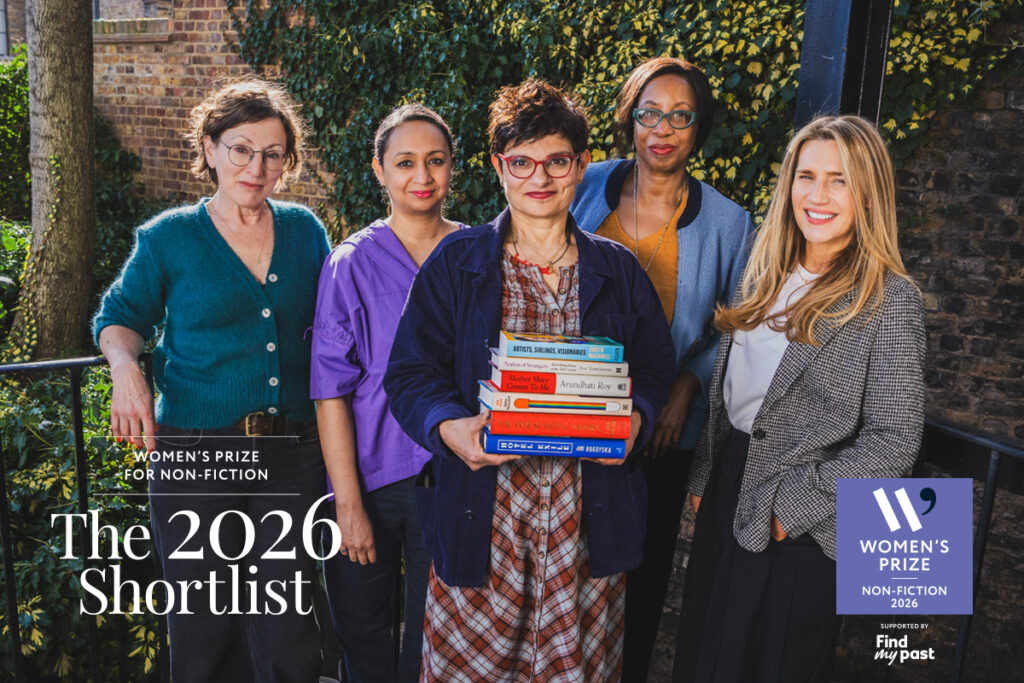
This year’s Chair of Judges, Thangam Debbonaire, CEO of UK Opera Association, cultural strategist and politician, is joined by Roma Agrawal, engineer, author and broadcaster, Nicola Elliott, founder of NEOM Wellbeing, Nina Stibbe, novelist and memoirist, and Nicola Williams, Crown Court judge and thriller author. Further information about the judging panel can be found here.
The winner of the 2026 Women’s Prize for Non-Fiction will be revealed on Thursday 11 June 2026 at the Women’s Prize Trust’s summer party in Bedford Square Gardens, London (along with the winner of its sister prize, the 2026 Women’s Prize for Fiction). The winner of the 2026 Women’s Prize for Non-Fiction, sponsored by Findmypast, will receive £30,000 and a limited-edition artwork known as the ‘Charlotte’ sculpted by Ann Christopher RA FRSS, and both gifted by the Charlotte Aitken Trust.