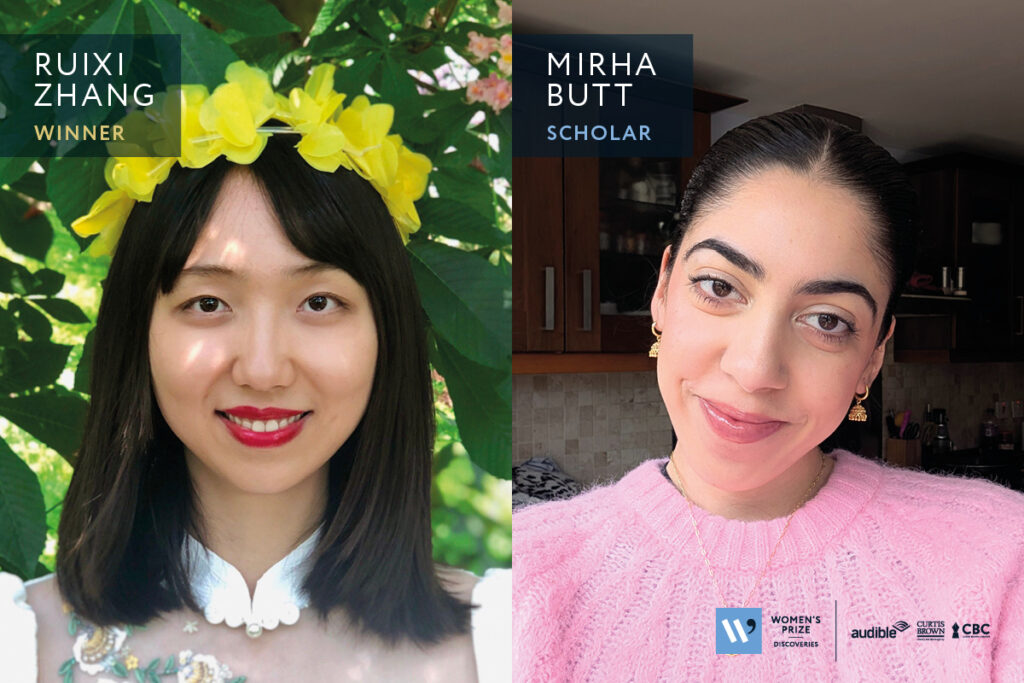
Ruixi Zhang has just been announced as the Discoveries 2026 winner for her standout novel-in-progress, Confessions of an Alien and Mirha Butt has been named this year’s scholar, winning a free scholarship to attend a three-month Writing Your Novel course with Curtis Brown Creative to develop her ambitious novel-in-progress, Notes From The Valley of Unclaimed Daughters.
Learn more here and read our interviews below to learn more about them!
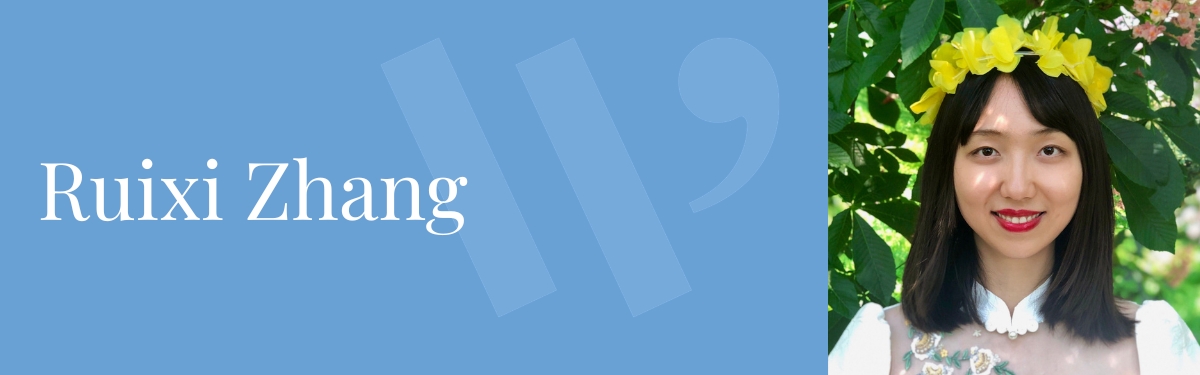
Ruixi Zhang, Confessions of an Alien
Ruixi Zhang is an exophonic writer based in London. Born and raised in China, she studied English and psychology at Wellesley College, a women’s university in the US, before coming to the UK for an MA in comparative literature at the University of Oxford. Her debut short story appeared in Colorado Review. Her novel-in-progress was longlisted for the Bridport Prize in 2025. An alumna of the HarperCollins Author Academy, she has been awarded the Curtis Brown Creative Breakthrough Scholarship and the Faber Academy Scholarship.
How does it feel to be named the Discoveries 2026 winner?
I am immensely grateful to the Discoveries judges and team, who see something in this dark little story that has, for the past three years, lived in my head and kept me awake at night writing. I also feel indebted to every mentor who has helped me cultivate my intellect and creativity along the way. Winning Discoveries marks for me the beginning of a long and exciting journey. I can’t wait to tell more stories in the years to come!
When did you begin writing?
When I was a kid, I wrote stories and sentimental essays in Chinese. I began writing fiction in English in my early 20s, when I learned about authors like Yiyun Li, whose works showed me that it was possible to write beautifully in a foreign language. Around the same time, I also took a psychology course at university, in which we were asked to create a therapist and a patient character, and write fictitious transcripts of their conversations. That was the first time I wrote anything fictional in English, and the reason why I still enjoy writing dialogue the most!
How would you describe your novel-in-progress in one-line?
A young Chinese woman sells herself into long-term prostitution by marrying a white man she cannot love in exchange for a visa, but life in the “First World” is not what she has hoped for.
What initially inspired your novel-in-progress?
My novel was inspired by an image that popped up in my mind: Having just given birth to the child of a white man, a Chinese woman holds the newborn in her arms and is overtaken by a sense of alienation. This novel is the baby. Crafted in a language that is not mine, at times, it feels alien to me. It has invaded and colonised my mind, so that for days and nights I can only think in its language and logic. I have to write to make sense of this process of colonisation, and by doing so, resist it.
What key themes do you explore in your writing?
Alienation and loneliness. I am eternally fascinated by the interiority of outsiders. In my novel-in-progress, there are a few characters who live on the margins for different reasons. I also like to read and write about unhappy marriages, all the illusions, delusions, and disillusionments created by two people who are stuck together in a small, confined space.
Which female authors inspired you to write?
Eileen Chang, Toni Morrison, Elena Ferrante, Ottessa Moshfegh. I love the psychological observations in their books, so sharp and full of insights. Many of their female characters have been called “unlikable”, which, I think, just means that they are unconventional women who are not afraid to show their teeth – all the more reason to like them!
What made you enter Discoveries 2026?
I entered Discoveries for the first time in 2025. I was not selected, which motivated me to improve my novel and enter again in 2026. I took the ‘Writing Your Novel’ course and the ‘Edit & Pitch Your Novel’ course with Curtis Brown Creative which was made possible by the Breakthrough scholarship (thank you!). I received invaluable feedback from my tutors Chris, Lauren, Anna, and my peers, which helped me interrogate every scene and hone my pitch.
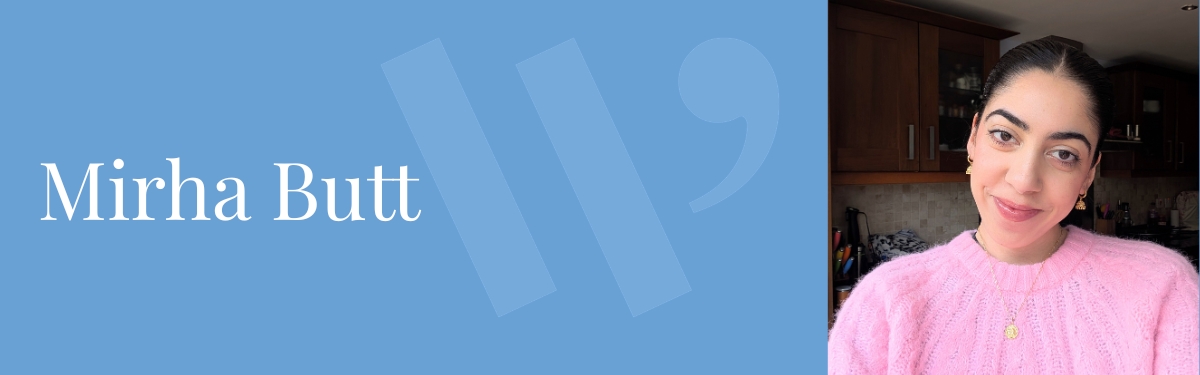
Mirha Butt, Notes From The Valley Of Unclaimed Daughters
Mirha Butt is a London-based public policy and research professional and a recent graduate of LSE, raised in Watford. She is also an identical twin and the proud owner of a cat called Bibble. Her work centres the complexities of female relationships, whether in friendship, motherhood, sisterhood, or elsewhere.
How does it feel to be named the Discoveries 2026 scholar?
It feels surreal to have something so personal and quietly important to me recognised in such a huge way! As someone who’s learned writing purely through reading and writing itself, I’m also so excited for the opportunity to further develop my novel through Curtis Brown Creative’s ‘Writing Your Novel’ course. I’m hugely grateful to Discoveries, the team behind it, and the wonderful alumni and fellow longlistees I’ve met along the way.
When did you begin writing?
I started writing when I was twelve, inspired in part by my mum, an English teacher who raised me on the belief that reading is good for the mind and soul. My first few attempts were, frankly, dreadful, but I adore them for the same reason I adore the work I write now: every word helped make me the writer I am.
How would you describe your novel-in-progress in one-line?
Set against the 1990’s Kashmiri insurgency, this multigenerational exploration of womanhood under occupation follows a mother’s tragic unravelling and her daughter’s dangerous reckoning.
What initially inspired your novel-in-progress?
It began with my grandfather, who was born in Azad Kashmir and has a deep commitment to dignity, human rights, and freedom from occupation. From there, the novel grew into an attempt to understand how conflict echoes through families, especially through women’s lives. It became a story about memory, inheritance, and the things women carry for each other.
What key themes do you explore in your writing?
I’m drawn to complicated womanhood, female relationships, and the beauty and pain of loving other women – in friendships, motherhood, sisterhood, and everything in between. I also explore grief, desire, inherited trauma, resistance, and the way ordinary life keeps going even when history is trying to kick the door down.
Which female authors inspired you to write?
So many, but I keep returning to writers like Arundhati Roy and Kamila Shamsie for their ability to write politically urgent stories with so much emotional depth and beauty, and their refusal to flatten women into simple stories.
What made you enter Discoveries in 2026?
I wanted exposure, community, and a reason to stop quietly doubting myself in a corner. As a young woman of colour, I’ve had a lot of imposter syndrome, so Discoveries felt like a real chance to meet like-minded writers and industry experts.