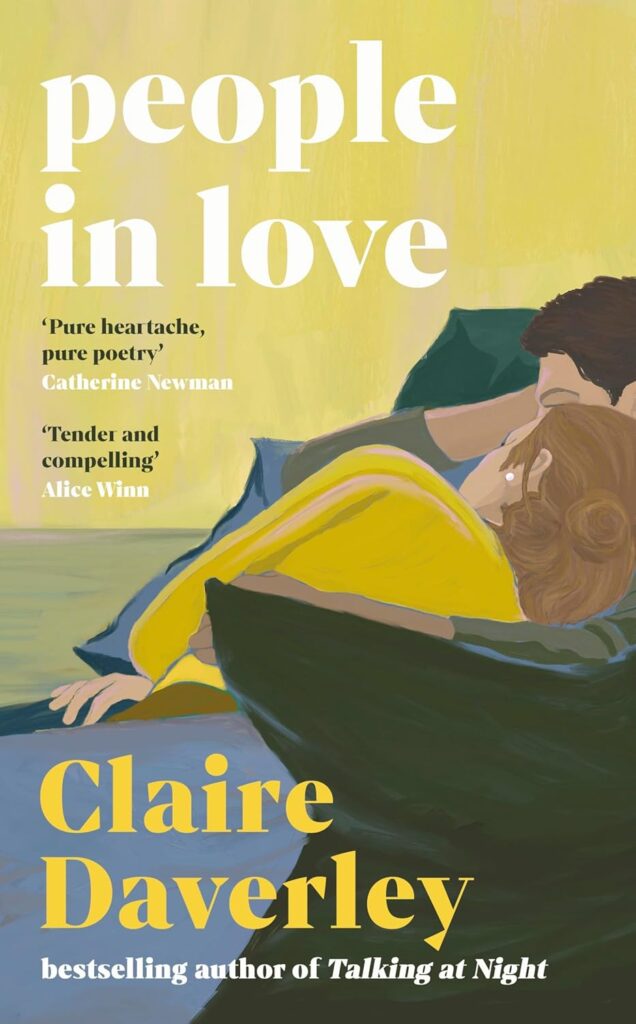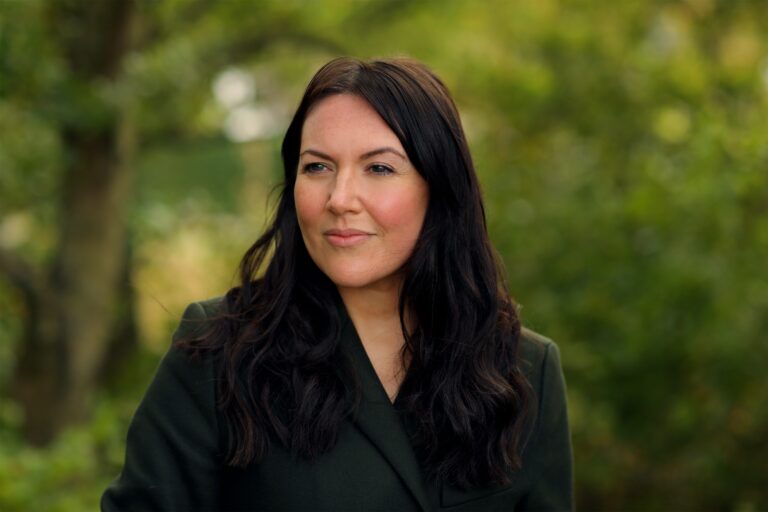
To celebrate the release of People in Love, we caught up with Claire Daverley to learn more about her writing process and workspace.
Where do you write?
Anywhere. I like to write on public transport, in the car, at the hairdresser’s… I often find the words flow best that way, stealing hours between other things. Maybe because it feels like the pressure is off, that way! But day to day, I tend to write at my desk, usually early in the morning if I can.
What do you have on your desk?
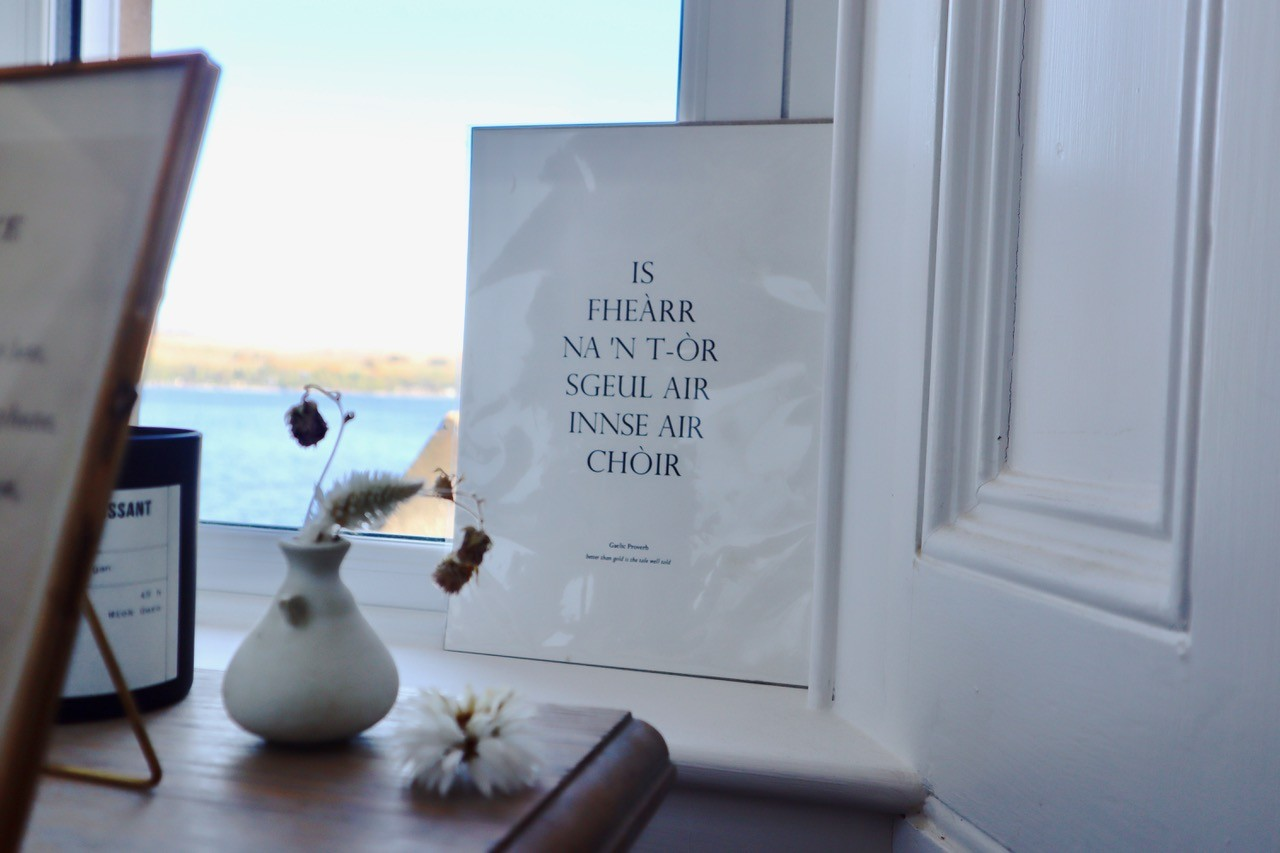
Books, pens, several journals. Gemstones. A candle that was a gift from my editor and smells of ‘buttery croissants’ – highly distracting, as it means I crave pastries when I burn it. A cup of tea. A white vase filled with dried flowers. A framed poem, oh, and a tiny plastic chameleon (don’t ask).
Which is the most inspiring object in your workspace?
You mean aside from the plastic chameleon? I think it would be the print I have propped to the side of my desk, which says: Is fheàrr na’n t-òr sgeul air innse air choir.
It’s a Gaelic proverb which translates to “better than gold is the tale well told”. I come back to it, time and again, for a myriad of reasons. The storytelling itself is the gold, but sometimes that’s easy to forget – or can at least dim a little, in the midst of publication. But the best bit, for me, is the writing itself, behind closed doors.
What does your writing process, from gathering idea to finishing a manuscript, look like?
Each project seems to have a unique texture, or require a different approach. But I’d say my common denominators are needing to sit and listen to a kernel of an idea, before I start writing. I scrawl down scraps of dialogue or character for several months, then try to sketch out a skeleton structure – keeping it vague, because the story needs space to grow, but enough of a guide that I’ve got some semblance of direction. And then I begin. Or I begin without realising, really, because certain scenes get written in my phone notes or in notebooks, so before I know it, I’ve tricked myself into starting a novel I was pretending only to play with.
I tend to write chronologically, after that, and edit as I go; I’m quite ruthless with the delete button. I always make a playlist, early on, which ends up being a soundtrack that anchors me throughout the gestation period, the drafting, and the edits. It keeps me tethered, as well, to the atmosphere I wanted to create from the start.
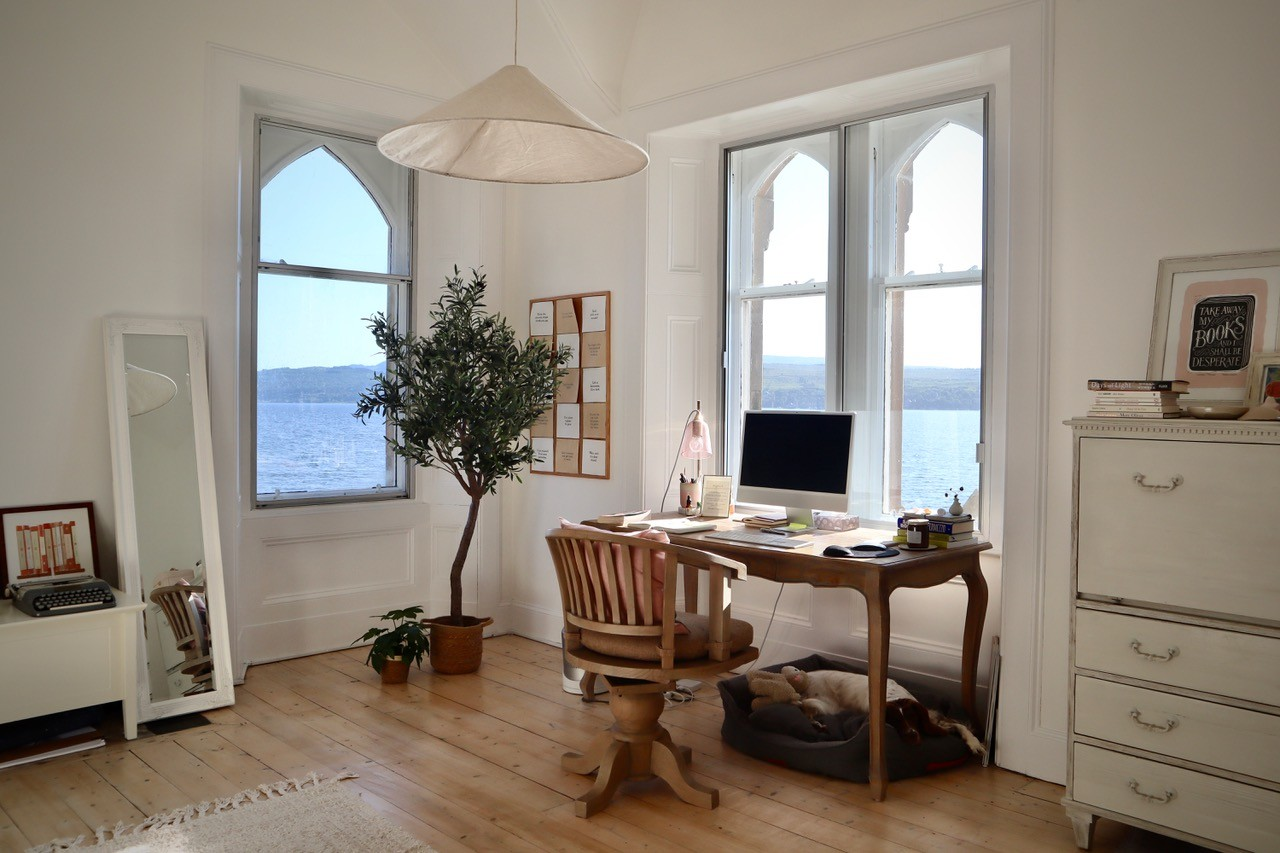
What can you see from your window?
I’m very lucky with my view. I moved to Scotland a few years ago, and my desk looks out onto a sea loch that’s peppered with gulls, eider ducks and oyster catchers – and if I happen to glance up at the right moment, the occasional seal or harbour porpoise. If I lean back in my chair, I can see mountains out of the left window, as well. I spent a lot of years writing with a less-than-dreamy view (i.e. facing a wall), so I don’t think a beautiful outlook necessarily has any bearing on the words I write, but I’m certainly grateful for it, now I’m here. Especially at dawn, when the sun comes up and stains the sky all sorts of special.
Have you ever had a particularly good piece of writing advice?
Plenty. I am hungry for writing advice, always. I have two that stick in my mind, though: the first, from a writing tutor of mine, was to write from your stomach – something you can sit with, for a really long time. Over several drafts. Several years, even.
And the second was a message from the creativity memoir Big Magic by Elizabeth Gilbert, and that was to lead with stubborn gladness. Through rejections or failures or the trickier days when writing feels hard – less like flowing water and more like stuck toothpaste – treat it with lightness, wherever possible. Show up for it. And wherever you can, marvel at how wonderful it is that you get to do that. That’s how my novels get written, anyway: from the stomach, and with stubborn gladness, through both the good and hard days.