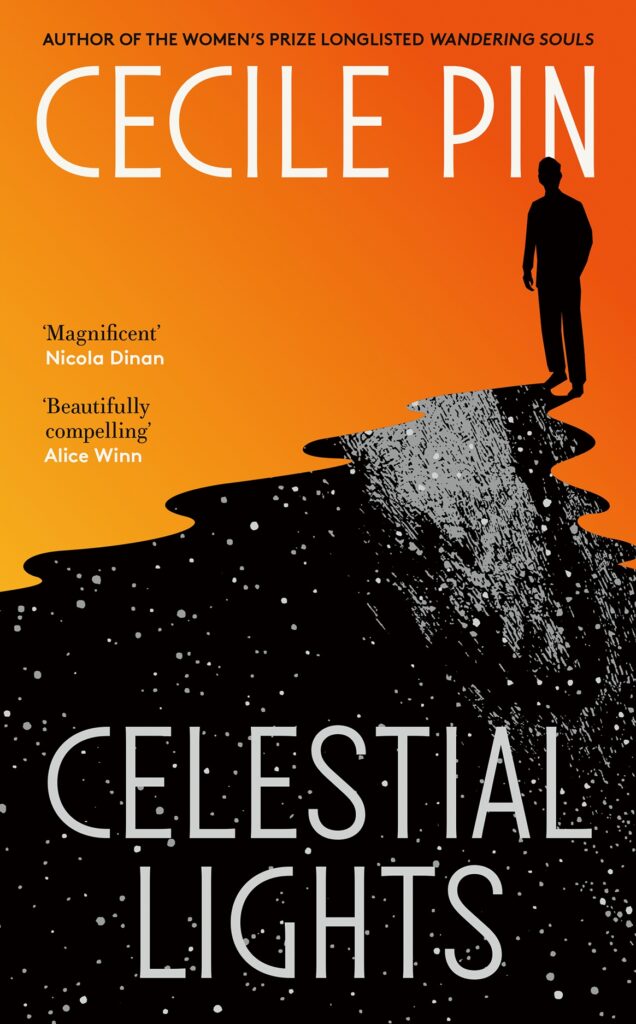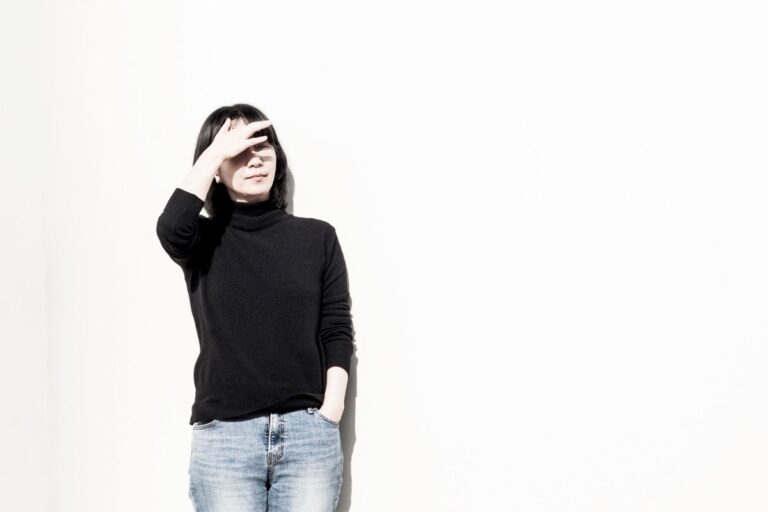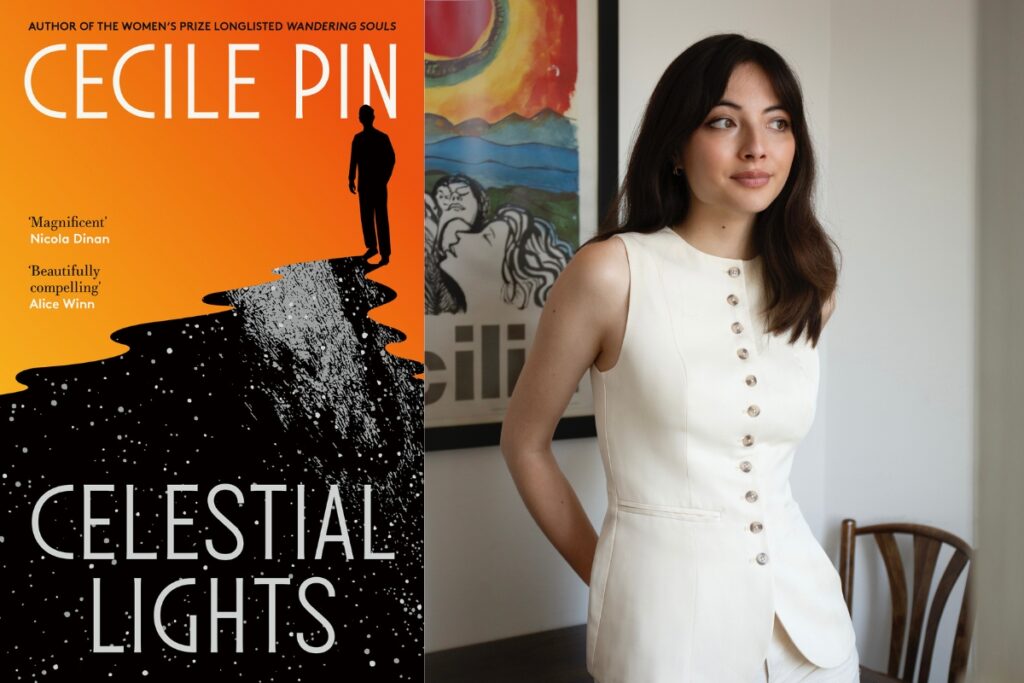
In 2023, Cecile Pin was longlisted for the Women’s Prize for Fiction for her novel, Wandering Souls. Three years later, Cecile is back with her new novel about ambition, love and space, Celestial Lights. To celebrate its publication, we caught up with Cecile to learn more about her new book, and hear more about what she’s been up to over the last three years.
Read our interview with Cecile from 2023 here.
It’s been three years since your novel Wandering Souls was longlisted for the Women’s Prize for Fiction. What do you remember from that time – how did it feel to be longlisted?
It felt surreal, and great! I’d admired the Prize for years, and I always looked forward to seeing who would make the longlist. I also learnt of the nomination right before Wandering Souls’ publication – I felt very fortunate to be able to launch my debut with the Prize’s backing.
Has your writing, or approach to writing, changed over the past three years? If so, how?
I think it’s constantly evolving, in some ways – I feel like the more I write, the more I realise how little I know about writing! I’m trying to be better with sticking to a routine, and to work during the day instead of late at night. And I’m also realising more and more how much of writing is re-writing: the first, second drafts do not have to be perfect – it’s all about slowing down and taking the time to hone your story and your craft.
What did being longlisted for the Women’s Prize for Fiction do for you?
I still get readers – from the UK, US and beyond – tell me they read the book after seeing it was on the longlist. I’m so grateful it helped bring Wandering Souls to a wider audience, especially as it was a story that was so personal and important to me. And as a debutante, the Prize helped me feel connected to such an amazing heritage of women writers, including to my fellow longlistees, many of whom I’ve kept in touch with.
Your new novel, Celestial Lights, is out this month – how would you describe it in one sentence?
Celestial Lights is a story of ambition and sacrifice, of fate and love, that follows Ollie, one of the most renowned astronauts of his time, as he reflects on his choices and relationships during a ten-year mission to a moon of Jupiter.
What inspired you to write Celestial Lights? When did the idea for the novel first come to you?
I’ve always found the cosmos fascinating – it surrounds us, is all-encompassing, and holds so many mysteries. I was particularly interested in writing a novel that held some speculative, sci-fi elements, while still feeling very humane and grounded.
While sketching out the novel, I was reading Emily Wilson’s translation of The Odyssey: an epic, perilous journey, with a commanding protagonist at its centre, burning with a desire for glory… it was hard not to draw a parallel with the character that I was writing. And – perhaps because they were particularly relevant to me at that time – I began thinking more about notions of personal sacrifice and ambition, and what happens when they come into conflict. Whether it’s artists shutting themselves away from the outside world to complete their work; athletes forsaking retirement at the expense of their health and family life; journalists and soldiers risking their lives in war zones… I noticed how present the conflict between our personal, familial lives and our private ambitions is in our culture, and I wanted to write a character wrestling with that, too.
Which book by a woman has had the most influence on your work?
So many! For this book in particular, I read and re-read works with sci-fi elements, like Sea of Tranquillity by Emily St. John Mandel, The Memory Police by Yōko Ogawa, and The Employees by Olga Ravn. I also read a lot of first-person narrations, as it was my first time making use of it. Some I particularly admire are Transcendent Kingdom by Yaa Gyasi, Demon Copperhead by Barbara Kingsolver, and The Mars Room by Rachel Kushner.
Is there a particular place you like to write, or spent a lot of time writing your new novel?
I’ll sometimes do edits at a café or library, but I write mostly at home: sometimes in bed, sometimes on my couch or dining table, and sometimes – but rarely – at my desk.
Do you have any advice for aspiring authors?
The advice I probably give me the most these days is: have fun with it, finish that first draft, put it in a drawer for a month or two, and then redraft and start again…