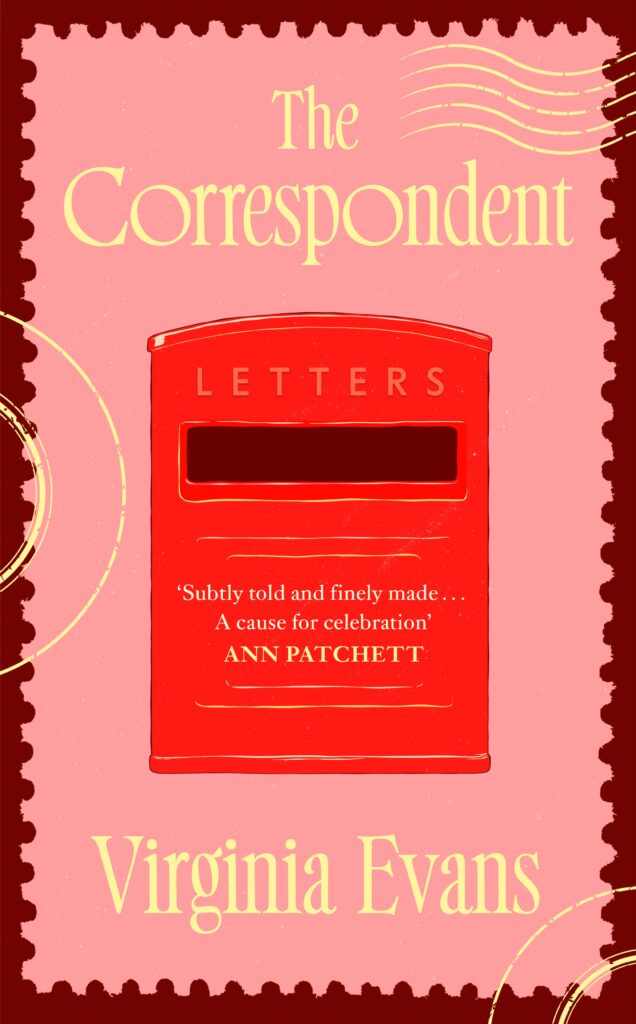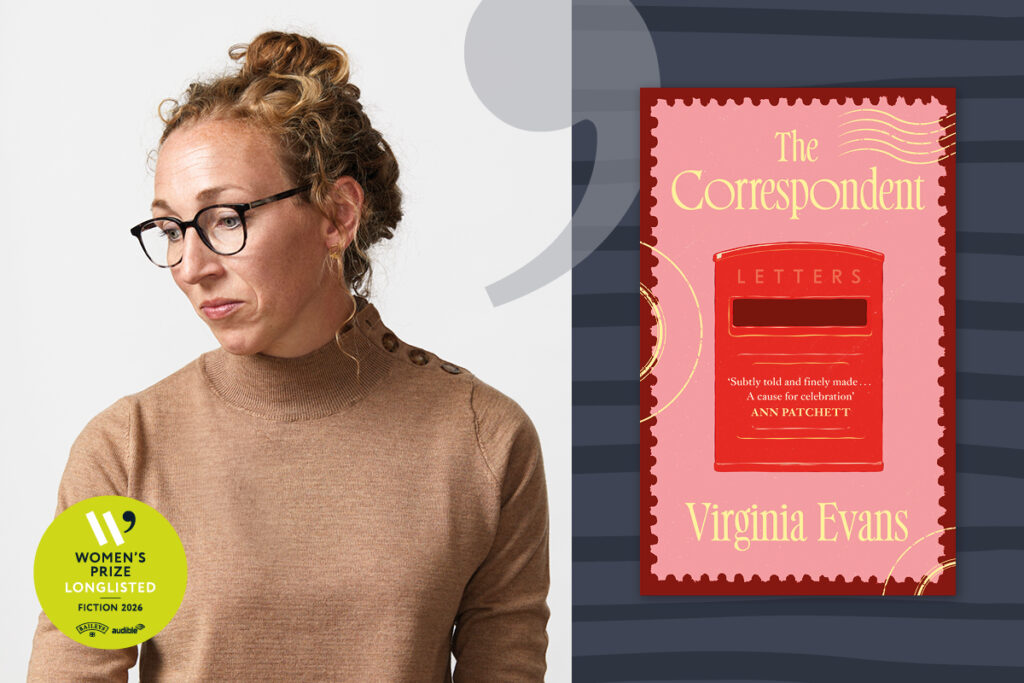
In The Correspondent, Virginia Evans showcases the power of the written word through a 73-year-old protagonist who uses letter-writing to make sense of the world around her, confronting the hubris of youth with the wisdom of old age.
2026 Women’s Prize for Fiction judge, Annie Macmanus, said: “The Correspondent by Virginia Evans is written all in letters, from the perspective of a woman in her seventies. It is immediately original, incredibly compelling and has real emotional heft.”
To learn more, we spoke to Virginia about her inspirations, creative process, favourite authors and more.
Congratulations on being longlisted for the 2026 Women’s Prize for Fiction; how does it feel to be longlisted and what does it mean to you?
I am humbled and ecstatic to be in the ranks of all the tremendous writers who have been in the running for this Prize over the years.
How would you describe your book to a new reader?
The Correspondent is a portrait of the life of Sybil Van Antwerp, told through her correspondence over the course of her lifetime. You enter Sybil’s world when she’s in her early seventies. Sybil is retired. She lives alone, far from her children, and keeps a rather quiet life, but she has a wealth of rich and varied relationships she maintains through letters. Over the course of the story, you uncover Sybil’s story, where she has been and the things that have happened, thinking perhaps her adventures are coming to a conclusion, only to find that her adventures are really only beginning. Her last chapters are her best ones.
What was the idea that sparked your novel?
I was interested in writing a book of letters after reading Helene Hanff’s 84, Charing Cross Road. I thought the vehicle used by Hanff was deliciously readable, deep while concise. I wanted to take that structure, but broaden and deepen it to tell a more epic and total life story.
What did the writing process, from gathering ideas to finishing your book, look like?
I wrote the book over the course of a year during Covid. It was an organic, rather internal process. I wrote the letters in order, building out the narrative as I went. I didn’t research much, though I researched later, when revising, for matters of legal accuracy. Once I had the bones and the muscles of the story firm, I went back and revised, moving things, adjusting, adding, taking away, researching.
Which female author would you say has impacted your work the most?
What is the one thing you’d like a reader to take away from reading your book?
Hope that no matter what happens, it will be OK. There is always space to change and grow. Relationships can be repaired. No matter how terrible it gets, it can still be beautiful in the end.
Could you reveal a secret about your creative process? This could be where you like to write, a unique writing ritual you have to unlock creativity, or how you go about writing.
I like total silence. My brain goes into a parallel universe. When the paragraphs quicken and begin to take flight, I sit on my knees.
Why do you feel it is important to celebrate women’s writing?
We women hold the history of the world in our bodies. Women, through conversation, love, relationships, attention, care, have the power to keep stories as well as tell them, and the stories of women are often the ‘inside’ or the ‘underside’ or the ‘interior’ of larger stories being told. I want to hear the perspectives of women, the agonies of women, the wisdom of women and the wild, euphoric, agonising, brilliant feelings and thoughts of women.