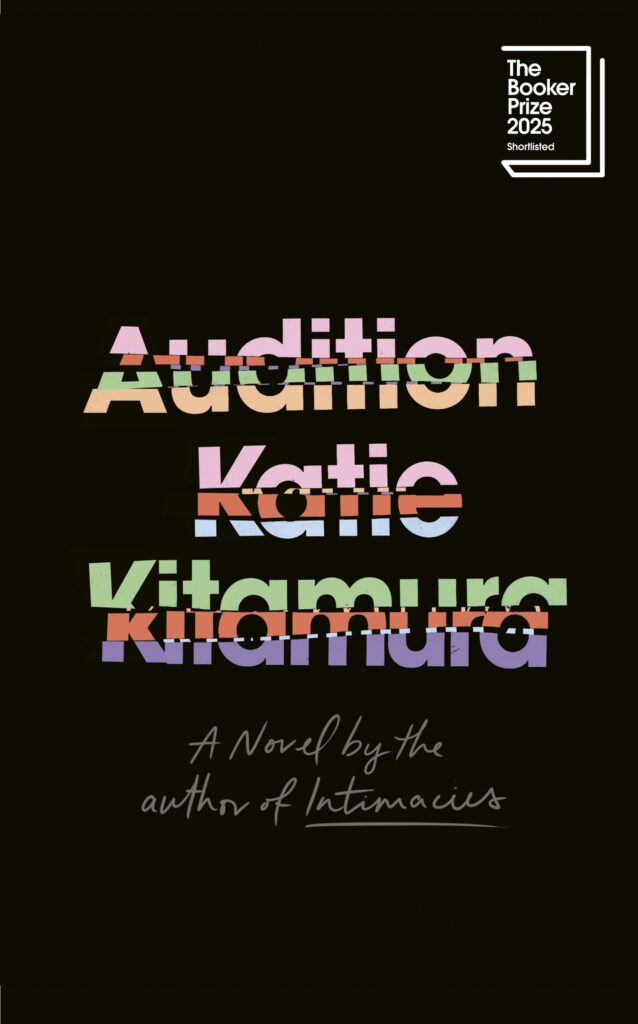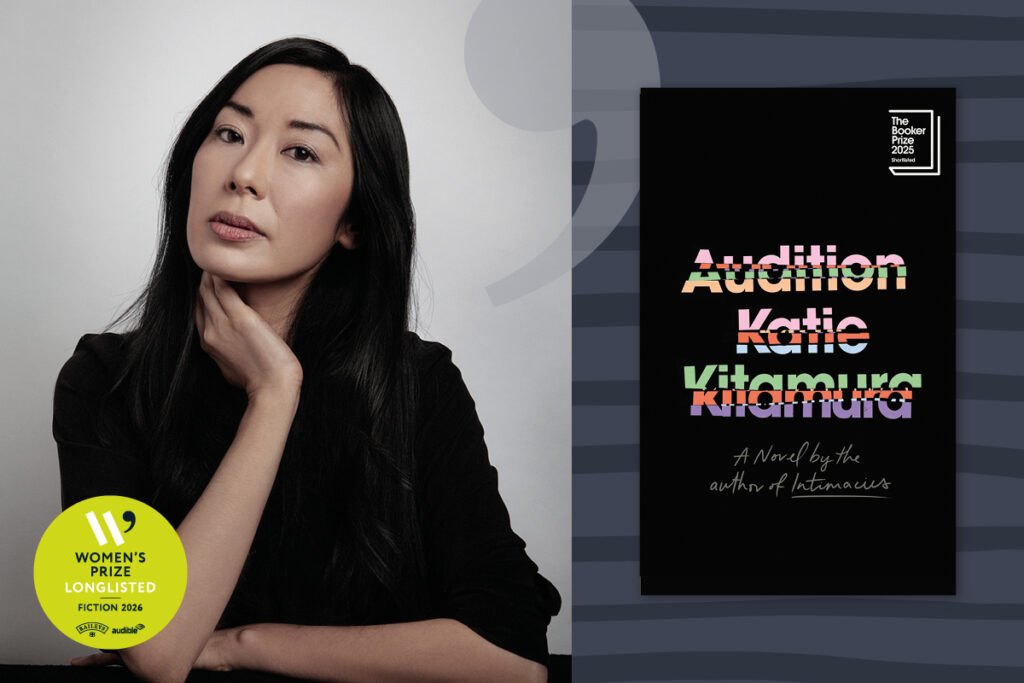
Katie Kitamura’s Audition takes readers on a hypnotic and exhilarating journey of intrigue as she interrogates the roles we play – as parent, partner, creator, muse – and the truths every performance masks, especially from those who think they know us most intimately.
Longlisted for the 2026 Women’s Prize for Fiction, judge Cariad Lloyd said: “Sparse, modern and fresh, Audition by Katie Kitamura follows an actress’s meeting with a young man who claims to be her son, something she believes to be impossible. Masterfully written, this book is a true original.”
To learn more, we spoke to Katie about her inspirations, creative process, favourite authors and more.
Congratulations on being longlisted for the 2026 Women’s Prize for Fiction; how does it feel to be longlisted and what does it mean to you?
I am thrilled. Audition is a novel about female experience, so it’s particularly meaningful to see it in on a longlist of books, written by women and selected by women.
How would you describe your book to a new reader?
Audition is about an actress – successful, married and settled in her life. That life is upended when a young man approaches her and tells that he believes he is her son. From that point, two narratives unfurl – two versions of events, and two distinct realities.
What was the idea that sparked your novel?
I saw a headline reading, ‘A stranger told me he was my son.’ I didn’t actually click on the link and read the article, because I wanted to sit with the strangeness of the headline and understand why it spoke to me so powerfully. I was fascinated by the idea of a single encounter that changes everything you understand about yourself and your place in the world.
What did the writing process, from gathering ideas to finishing your book, look like?
This was really a book that was written from the middle of my life. There were a lot of gaps and necessary pauses – I don’t write much during the school holiday, for example, because I’m with my children. In some ways, I think I was trying to find a structure for the book that would do more than accommodate that schedule, that would both reflect and make the most of the reality of my life. Because of its particular structure, this novel benefited from enforced rest periods between drafts.
Which female author would you say has impacted your work the most?
I love Natalia Ginzburg and Marguerite Duras. There’s an ethical imperative to their work, a refusal of simplicity, that is inspiring.
What is the one thing you’d like a reader to take away from reading your book?
That a book is a collaboration between the reader and the writer.
Could you reveal a secret about your creative process? This could be where you like to write, a unique writing ritual you have to unlock creativity, or how you go about writing.
For a long time, my desk was wedged between the foot of my bed and the baby’s crib. I think I probably spent too much time lamenting the fact that I didn’t have more space – both physical and mental – to write. But at a certain point I realised that was okay. It liberated me in many ways. Now, I write when I can, where I can, and I don’t try to police the line between my life and my work.
Why do you feel it is important to celebrate women’s writing?
Because many of the best writers working today are women.