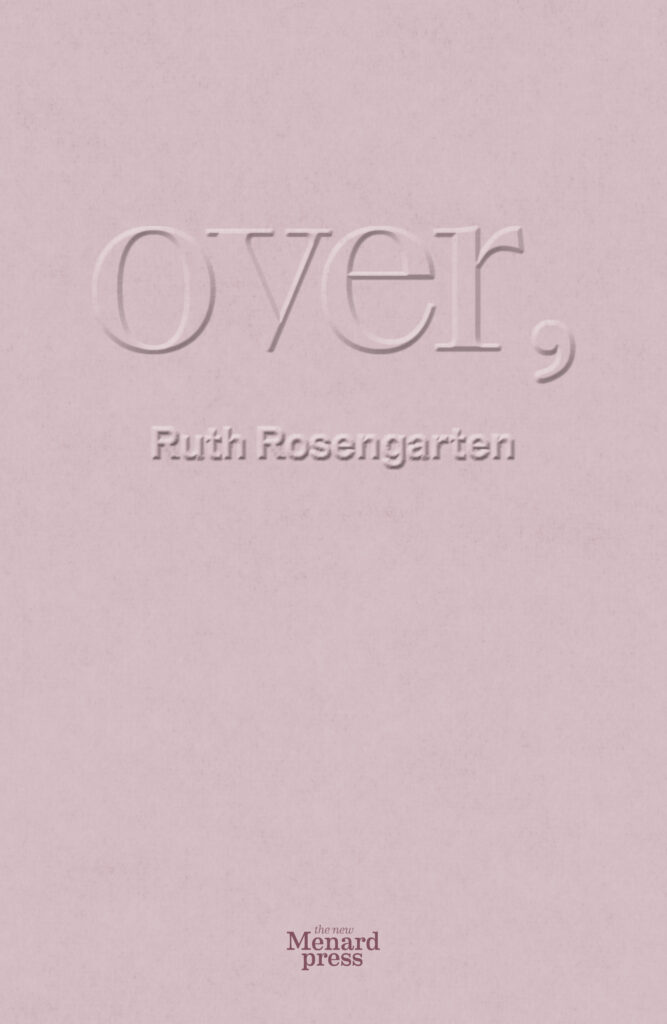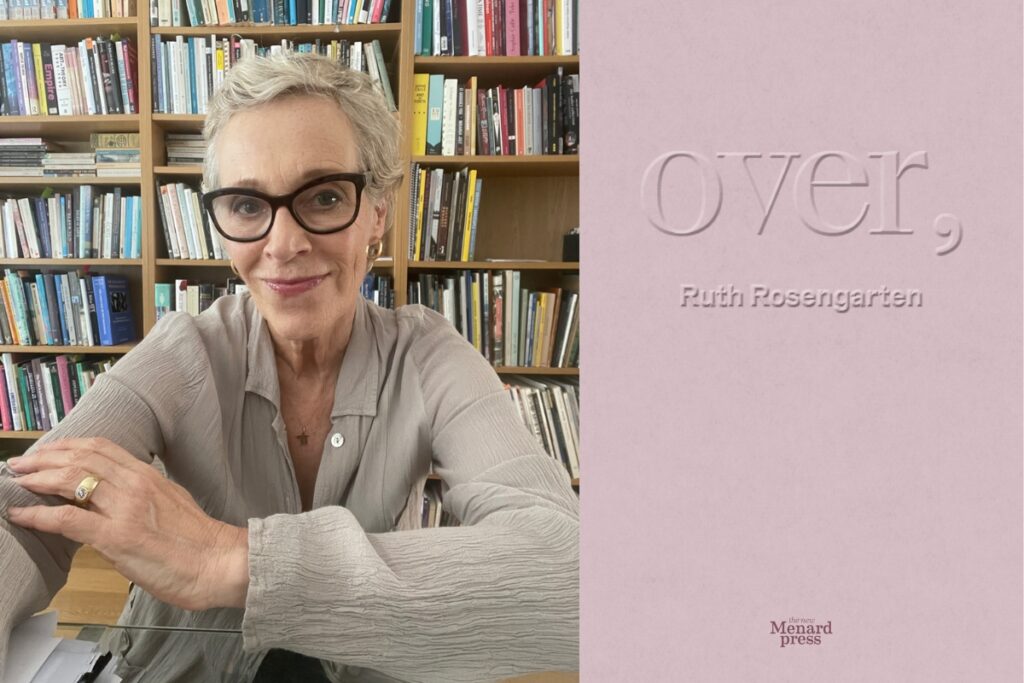
2022 Discoveries shortlisted Ruth Rosengarten’s debut novel, Over, tracks the aftermath of a breakup during COVID. To celebrate its publication, Ruth has shared with us five books on break-ups, read by the protagonist ‘The Woman’, as she comes to terms with the end of her relationship. Read the piece below to discover the ways in which these reads shaped Ruth’s writing.
The reader is told at the outset of my book Over, that The Man sends The Woman an email saying it’s over. The rest of the book, written in short, non-chronological fragments from The Woman’s perspective, pieces together hypotheses of what just happened and why. The Woman spends her depressed days reading in bed: Over, is as much an account of reading as it is an account of a relationship coming to an end. The following five books all feature in The Woman’s reading. My choice of five books spans novel, prose poem, experimental fiction and an art installation documented in a luscious tome.
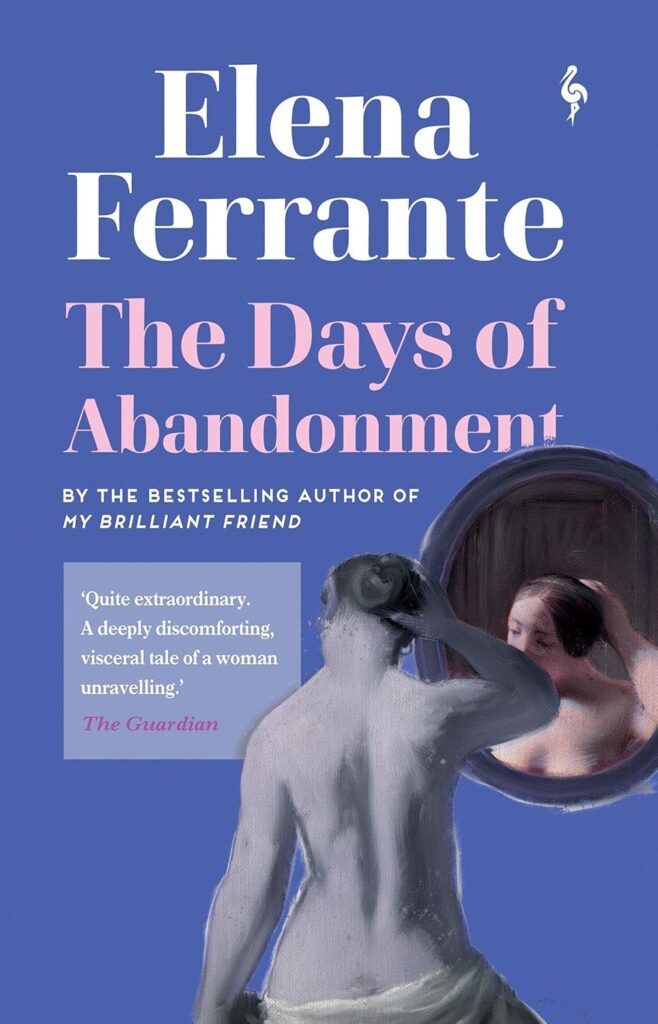
Elena Ferrante’s The Days of Abandonment is the exposure of a woman’s crisis of identity: who is Olga, now that she is no longer loved? The writing has an extraordinary immediacy. The story of something that has already happened unfolds before the reader now: nothing is a foregone conclusion. When Olga locks herself in her apartment and can’t get out, a sequence about domestic entrapment reads, to me, as the most precise account of how abandonment actually feels from the inside: a narrowing, a suffocation, the world becoming both unbearably present and completely inaccessible. What I wanted to learn from Ferrante was how to stay inside that state without aestheticising it — how to write pain that hasn’t yet become meaning. No sentimentality, and no self-pity.
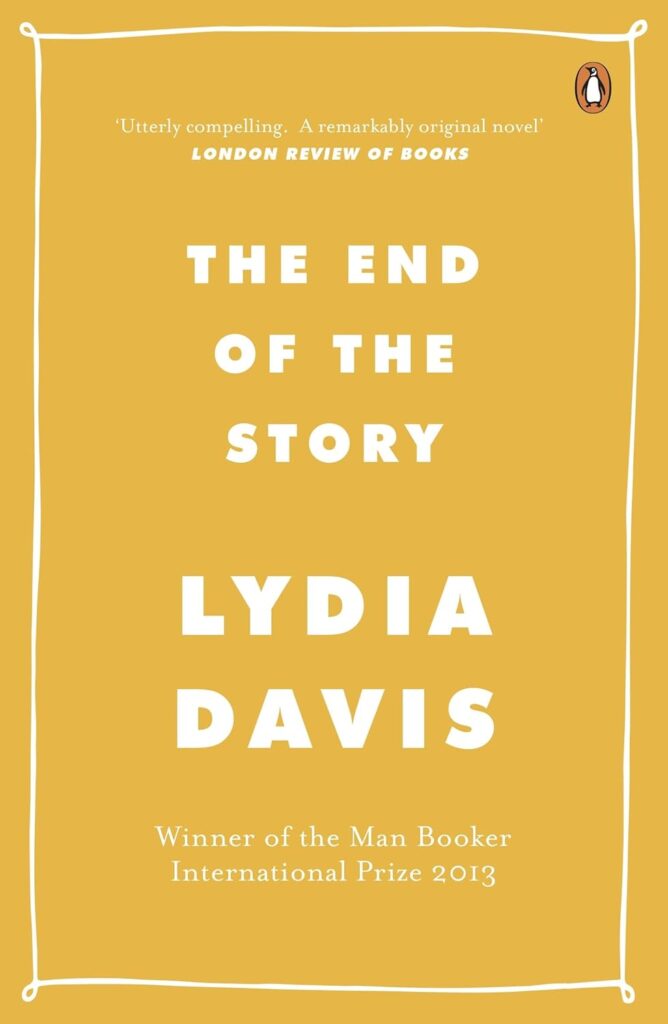
Lydia Davis is the great diagnostician of the mind refusing to let go. The narrator of The End of the Story is a woman attempting to write a novel about a past relationship with a younger man who left her for another woman. Davis captures the visceral pervasiveness of absence, how it drives an obsession. The narrator keeps circling back, revising her account, undercutting her conclusions. That recursive structure felt both fresh and knowing, exposing how an obsessive return to the narrative isn’t a failure of moving on but the actual texture of that experience: you’re always writing and rewriting the story, trying to find the version that makes sense. How does a story like this—meandering, apparently drawn from ongoing life—end? Isn’t every story’s ending an artifice, a thing elaborately staged for the purported satisfaction of narrative closure? I’m averse to the patness of the notion of closure, hence the comma in my title.
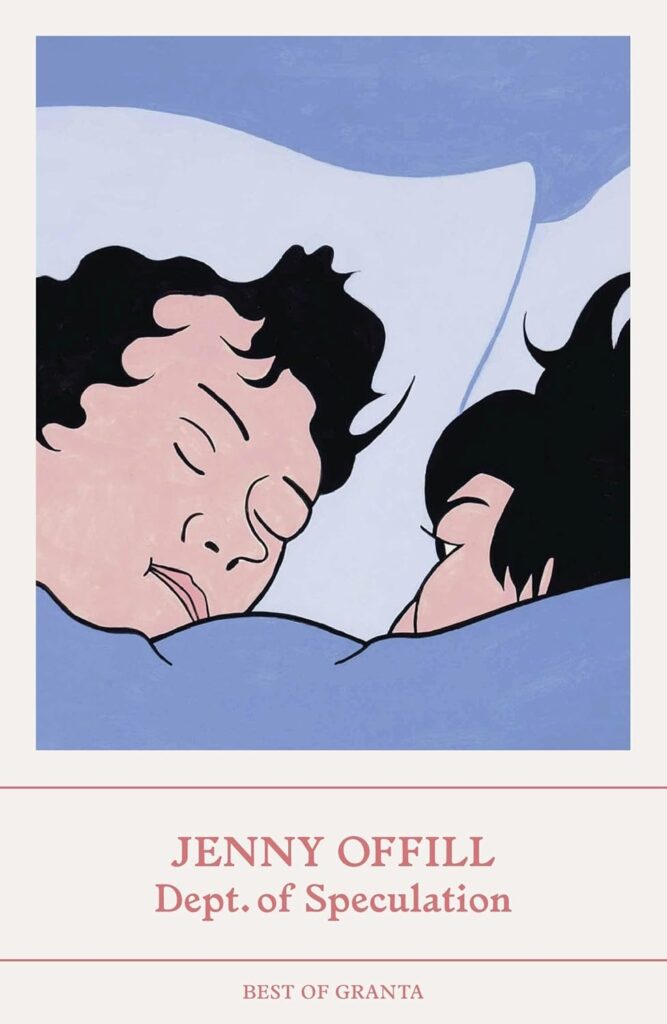
Like The End of the Story, Jenny Offill’s Dept. of Speculation is about a relationship heading towards its own wreckage. In different ways, these books both explore how to write about the wreck. Both these books speak directly to my need to see plot shattered into fragments. I always intended to write OVER, in fragments and, like Lydia Davis and Anne Carson, Jenny Offill showed me that fragmentation is a form of honesty, not evasion: the white space is doing hard work. Again, the narrator is an unnamed woman, again a writer. There’s a sense of concreteness of detail and feeling, yet the book also feels abstract and analytical. I am intrigued by how bits of writing that are almost essayistic can slip into more emotive writing. I loved in Offill the sense that what we’re reading is less a character study than an account of a mind in the act of trying—and failing— to process and contain experience through writing.
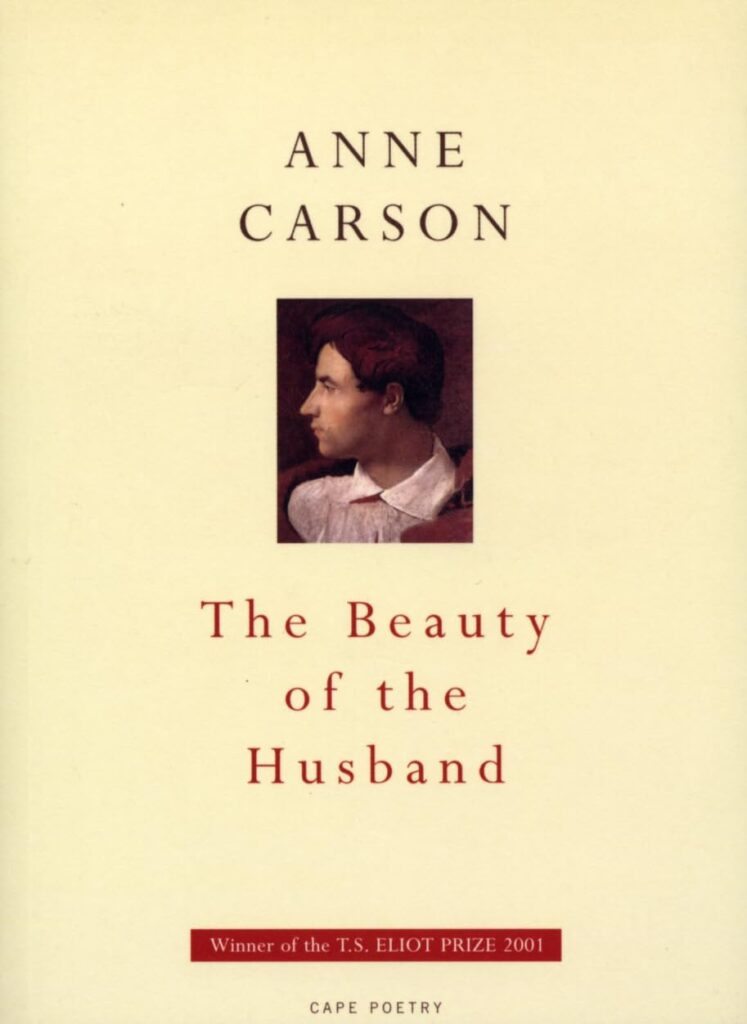
Anne Carson’s The Beauty of the Husband is the account of a marriage unravelling in what she calls “a fictional essay in 29 tangos.” It is also a meditation on the Keatsian truth/beauty binary. I love the way Carson can turn desperation into something very cool, and thereby all the more devastating. Like other poet-essayists (Mary Rueffle, Lisa Robertson, Maggie Nelson and Claudia Rankine, to name a few), Carson refuses to settle into a single genre. The book asks what it means to love someone you know to be dishonest: not naively, but fully, eyes open. What I took from it was a way of holding beauty and damage together without resolving the tension, and I love Carson’s use of classical reference not as ornamentation but as a way of thinking: the past as a structure for feeling the present.
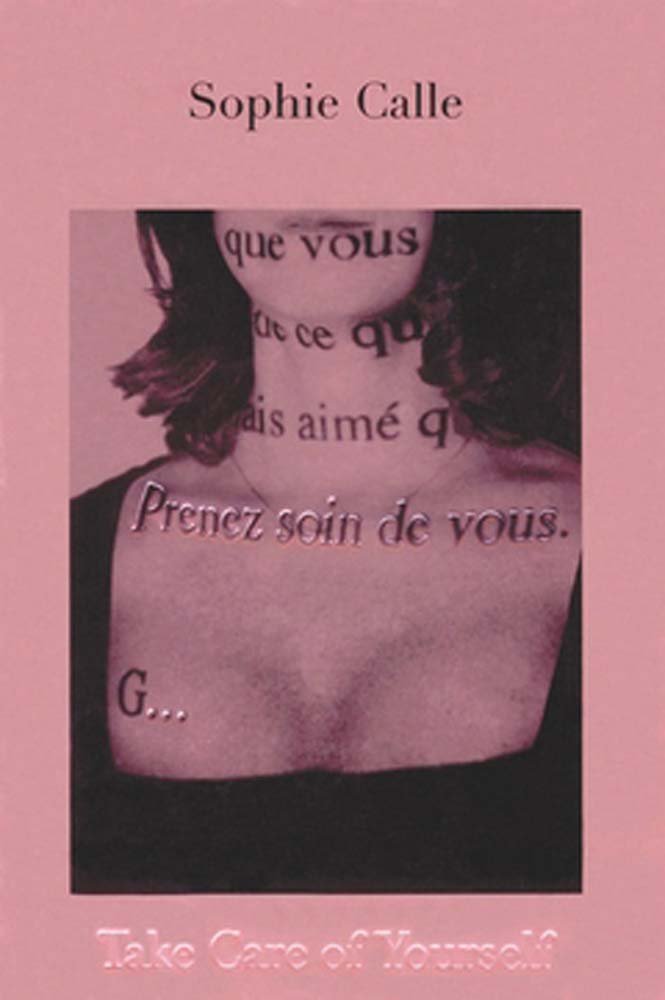
French artist Sophie Calle turned being ditched by a lover into a durational and performative artwork. I received an email telling me it was over, she begins. She asks 107 women (including two made from wood and one of feathers), chosen for their profession or skills, to interpret this letter, which the lover signs off telling her to take care of herself. Take Care of Yourself is about exertion: an effort of exegesis crazily pursued. Its objective: through an accumulation of interpretations—many voices in counterpoint—to understand something that eludes Calle’s own power of comprehension. This work multiplies perspectives without dissolving the original wound, in a way that no novel quite can. I have known and loved this work for a long time; I included it in my book because of the way it holds the personal and the analytical in the same frame, showing us that for the exploration of pain, the confessional lyric is not the only form available.