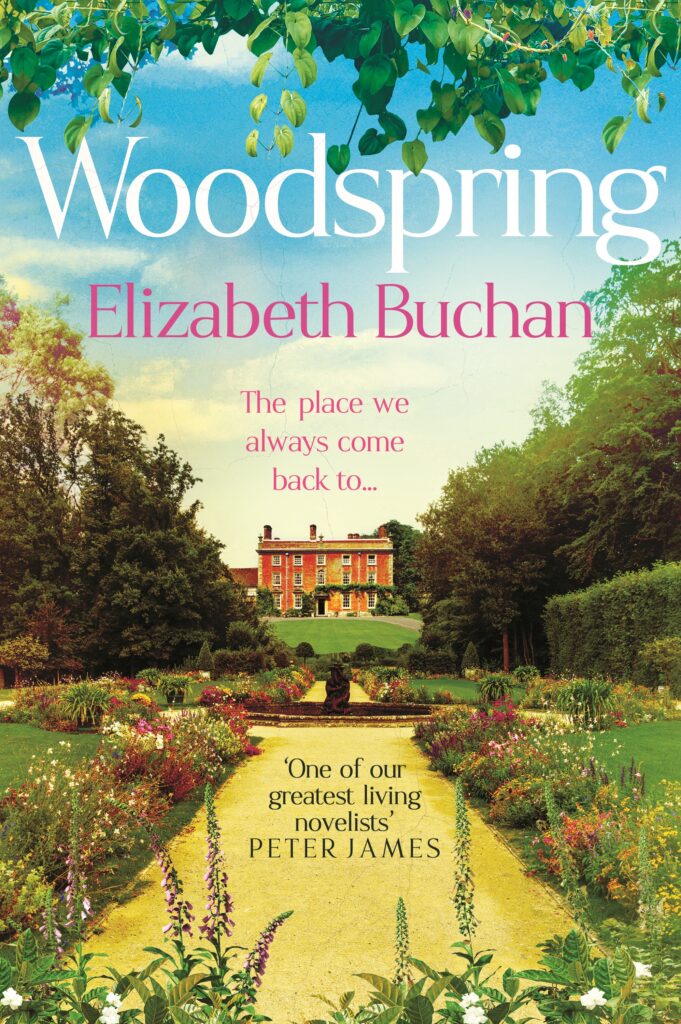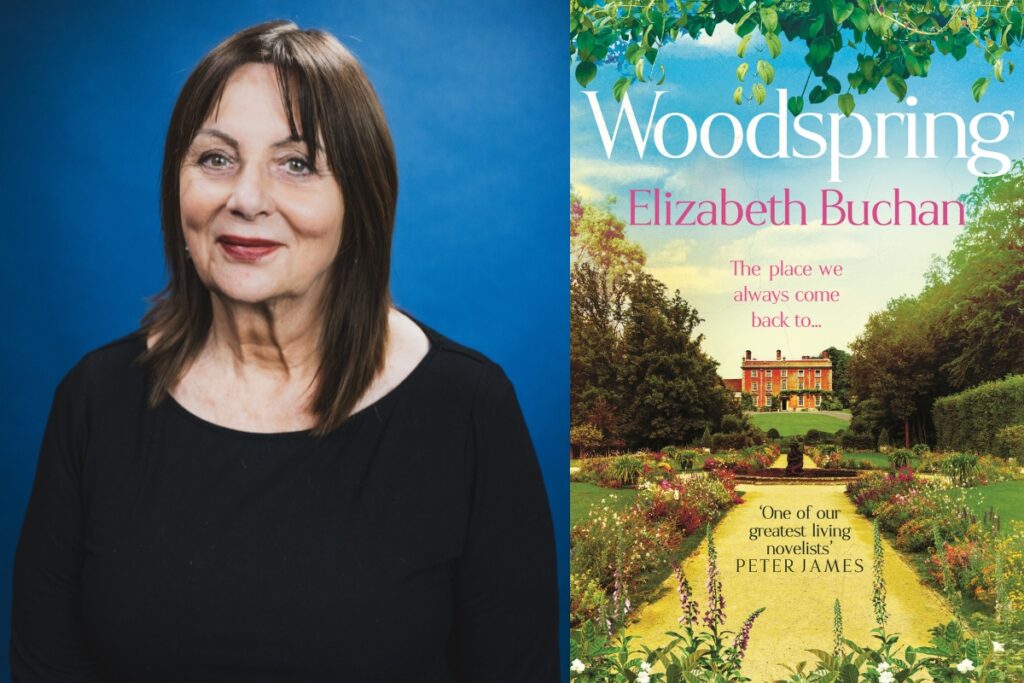
To mark the publication of her new novel, Woodspring, 2025 Women’s Prize for Non-Fiction judge Elizabeth Buchan, shares with us her research process for both her fiction and non-fiction.
What does your writing process, from gathering ideas to finishing a manuscript, look like?
My novels usually gestate from one central idea. For example: ‘living well is the best revenge’. From there it is a question of deciding on the plot, its ratchets, themes and sub-themes. Over and above, and a driver for the melding of those ingredients, is the supremely important evolution of your characters. I always write three drafts. The first, where I construct the skeleton. That is to dovetail those components into a narrative on which I can work. The second is where I work on the characters in conjunction with the themes. This phase can take me by surprise as both characters and themes may have developed in a different way to what I first thought. I have learnt to be flexible and to rethink if necessary. The third draft, the fun draft, is to ensure that the narrative is balanced and, in the case of the historical novel, not weighed down by too much research which can be tempting. Marshalling your research, treating it subtly and making it work seamlessly within the context of the novel is one of the key objectives of developing your writer’s skills.
Where do you start with researching? Do you delve into records straight away?
It can vary. If it is a historical novel, and once I have decided what it is about, I will read extensively around the subject to educate myself in the social and political context before I begin the structuring and planning. Primary sources are a must if possible. Working on my novel about an SOE agent who is infiltrated into occupied territory during the Second World War, I managed to track down a couple of surviving SOE agents willing to talk about their experiences which meant I was able to pick up the language they used and first-hand anecdotes. If it is a contemporary novel, I tend to look up specific information as I write. For example: if a character is enmeshed in a divorce what are their rights vis a vis the custody of the children? If you are searching online and using AI, it is crucial to check the sources.
Where do you research – online, on location, in libraries? If online, which platforms do you use to research?
My first port of call is always the bookshelf. Over the years, I have amassed favourites to which I always return. Some of them are quite niche… A Manual of Secret Warfare: The Arms and Techniques of the Resistance being one! I can’t bear to move it on. Having consulted what books I have, I chase down, via the bibliographies, additional material in libraries, in articles, or I pay to download academic documents. Further amplification is via websites on Google and Wikipedia. If possible, I visit a location and familiarise myself. Often it is the small details which are the most telling. The small of jasmine in a Roman street, the shape of bread in the local bakery, a species of wildflower in a marsh. Failing that, there are often brilliant videos on YouTube. During the pandemic, I researched the structure of the Krak des Chevaliers in Syria via the very helpful tourist who filmed his entire walk around the castle and put it up.
How has Findmypast been helpful for your research?
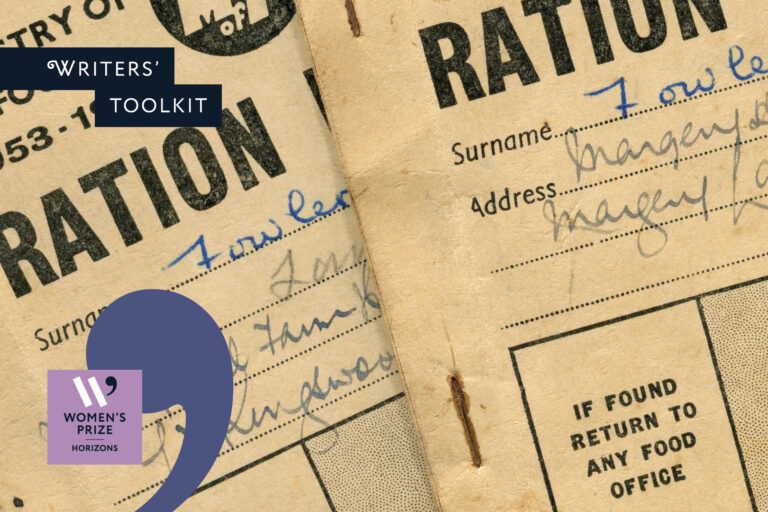
Findmypast is, for me, a new but instantly adopted research tool. By plotting out my own family, via the plethora of information that is available – birth certificates, censuses, newspaper articles – I have been given several ideas for upcoming novels. It is a fabulous resource.
What would be your one piece of advice for writers just getting started?
I’m afraid it comes down to one thing: Do it. Yes, the imaginative process is crucial but it is only one element of the process. Assess your day and circumstances and isolate the moment when it is practicable to concentrate and give yourself a target to achieve. This might be difficult if you have young children and a job. If that is the case, keep the ambition modest. It may only be practicable to aim for a hundred words. But a hundred words turn into two hundred and then three. It is crucial to get whatever you are thinking and planning down on the screen or paper. Only then can you begin the real task of creating and shaping your work – that business of structuring, writing and rewriting – from which your book will emerge. Good luck everyone.