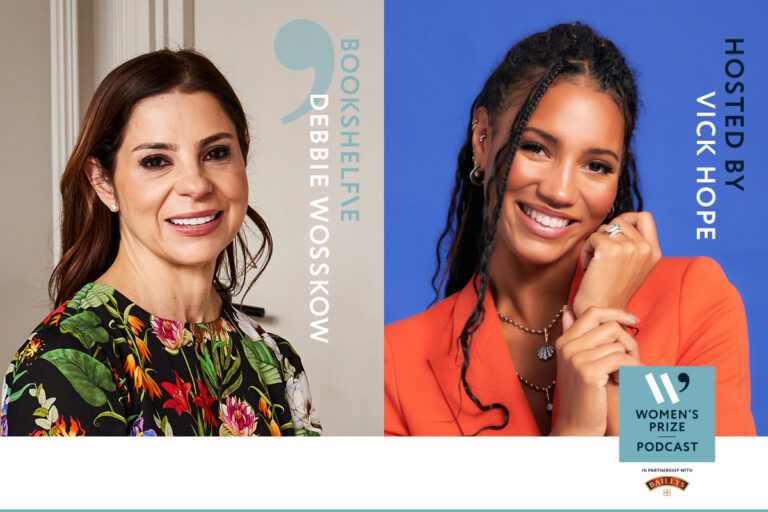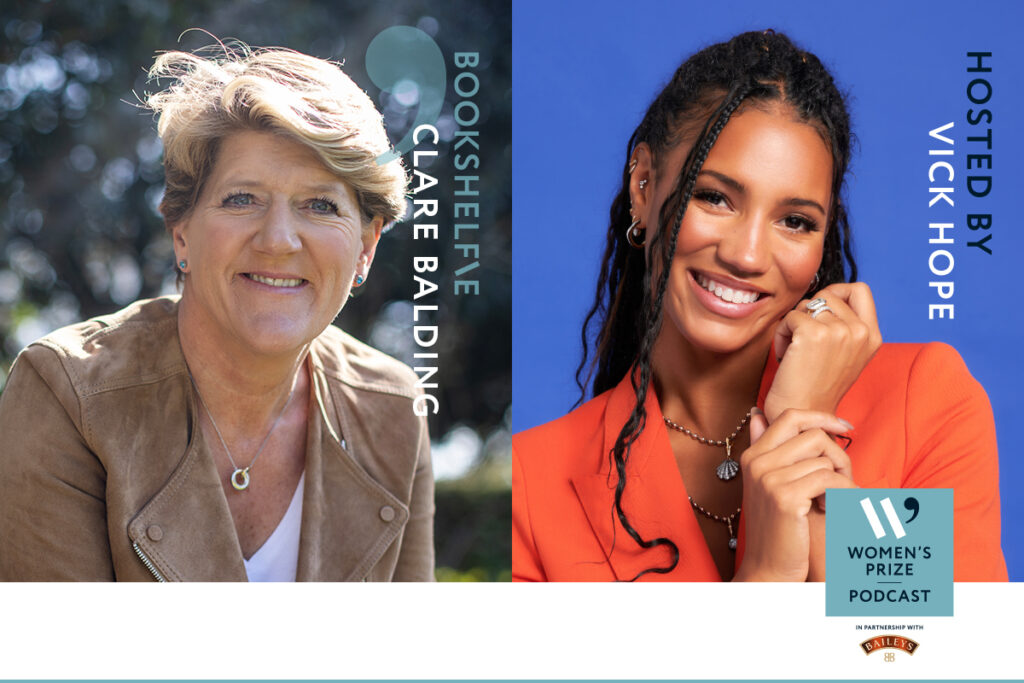
Our host Vick Hope is joined by sports broadcaster Clare Balding.
Clare grew up in the countryside surrounded by horses and dogs, reading everything from Jilly Cooper to Henry James. A keen rider, she competed as an amateur flat jockey during her teenage years, winning Champion Lady Rider in 1990. She is now one of Britain’s leading broadcasters, receiving the BAFTA Special Award and RTS Presenter of the Year Award for her expert coverage of the London 2012 Olympic and Paralympic Games, and is an ardent campaigner for better coverage of women’s sport. Clare hosts her much-loved Ramblings series on Radio 4, taking her across the British Isles exploring its landscape and its storytelling. She is also a bestselling and award-winning author of numerous books and children’s novels, including her autobiography, My Animals and Other Family, which won the National Book Award for Autobiography of the Year. Her debut novel for adults, Pastures New, is a love letter to the countryside and the kindness of small communities, told with Clare’s characteristic warmth and wit.
Listen to the full episode here and read on to discover Clare’s five most influential books by women.
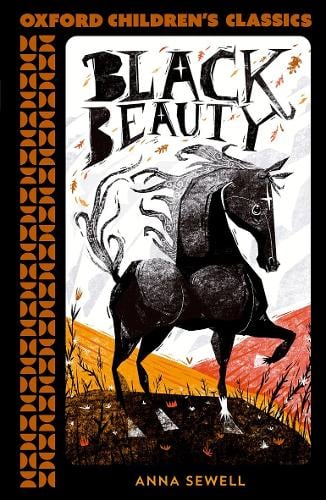
It’s the only book [Anna Sewell] wrote. It was published in the late 19th Century, and she wrote it to raise money for the RSPCA which had only just been established. She lived in North London and had noticed cruelty to dogs and stray cats, and she felt very strongly about kindness to animals being a key part of what makes us humans. […] I think the connection that it offers, the voice of the horse is such a beautiful thing to try and imagine, and I think people want that thing. I’m a sucker for animals that can speak and I think that’s a lasting thing, and the way it reflects good and evil in human beings speaks to all of us. Horses in particular reflect our behaviour, if you’re kind and generous and consistent, a horse will do things with you and for you. And if you’re not, if you’re cruel, impatient, inconsistent, they’ll put the brakes on and say ‘no thank you’.
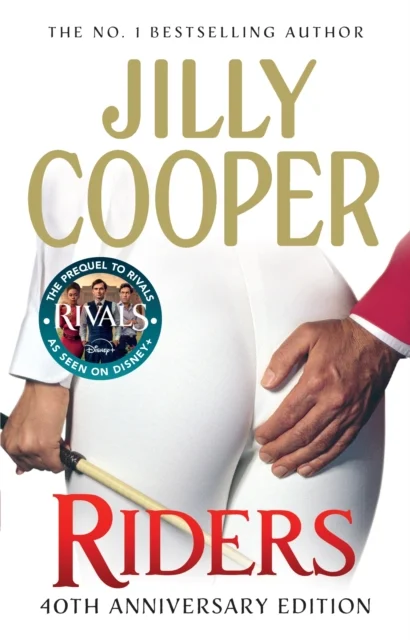
I was interviewing [Jilly Cooper] at the Cheltenham Literary Festival and we were in the green room and she said, ‘You can write, and I know you’re writing novels for children, but you need to be writing a novel for adults’. I said, ‘Oh I’m a bit worried because I don’t know if I can write about sex’, and she said, ‘Just get on with it!’. […] She was funny, clever, gregarious, encouraging, supportive – just a really great human being and I think a terrific writer. I appreciate how much in her books is not easy to achieve; she really knew how to write a page-turner.

Evelyn Hugo as a character is so many different things – she’s vulnerable, flawed, ambitious, pretty competitive, and in a world where women were only allowed to be one thing and they had to be what generally speaking the movie industry wanted them to be, so beautiful and glamorous and have many different husbands, but actually not allowed to be who you want to be. […] I really loved it, and I loved the twist and that sort of different generations of women with one writing the story and one telling it honestly and being in control of it. We talk a lot these days about controlling your own narrative; I thought it was so perfectly devised and written, I thought it was really compelling as a read. […] It made me braver about what I was going to write about, and who my central character was and if she was even honest with herself about who she was going to fall in love with.
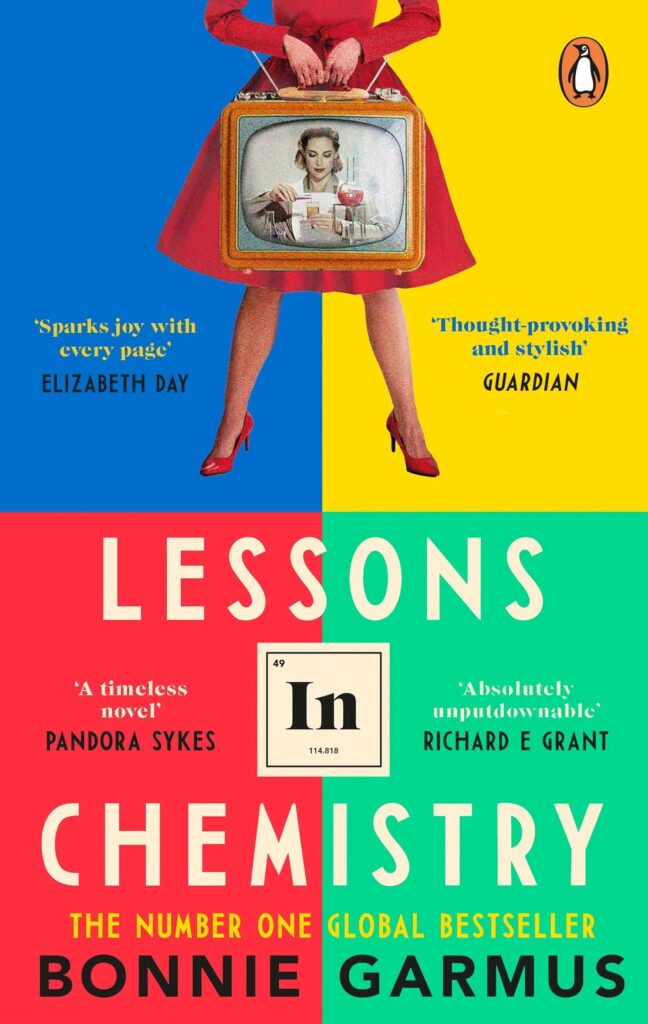
[Elizabeth Zott] is leading the revolution, I just love it! She’s a great character, a brilliant creation. […] The way you fight injustice in this world can come in many ways, and you can absolutely march with placards and it’s pretty important that people do, or you can try and have your influence in different ways, and Elizabeth Zott understands that through television, through a cooking programme mainly watched by women, mainly at home not working, she can influence them, and that dynamic is so interesting. I still believe in the power of television and radio and the written word, your influence can be felt in many different ways.
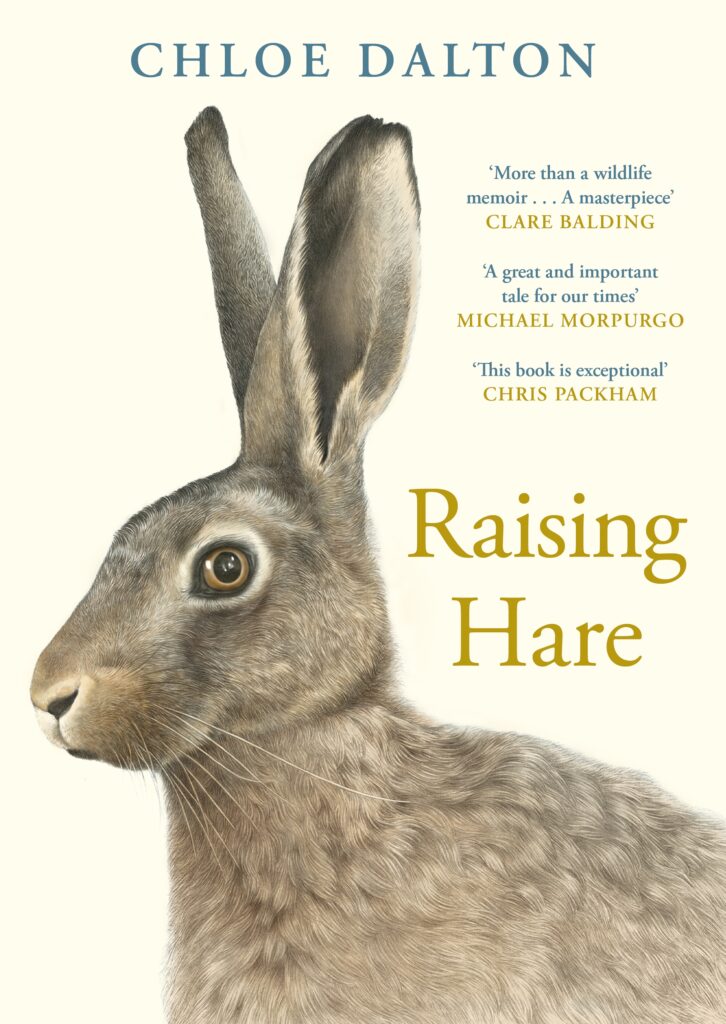
It is one of the most beautiful pieces of writing, and very self-revealing. […] I thought it was really touching, very beautiful, more poetry than prose – every word is so carefully chosen, I really loved it. Obviously off the back of it she’s got heavily involved in campaigning for more awareness of hares particularly amongst farmers, and I’ve written about the farming community, about leaving strips on the edges of fields, and understanding when hares need a bit more care. […] That idea of talking to animals and finding your therapy through that communication, I think that’s revealed really beautifully here in a very different way. I think it’s a stunning book.