Why is Jane Austen still popular?
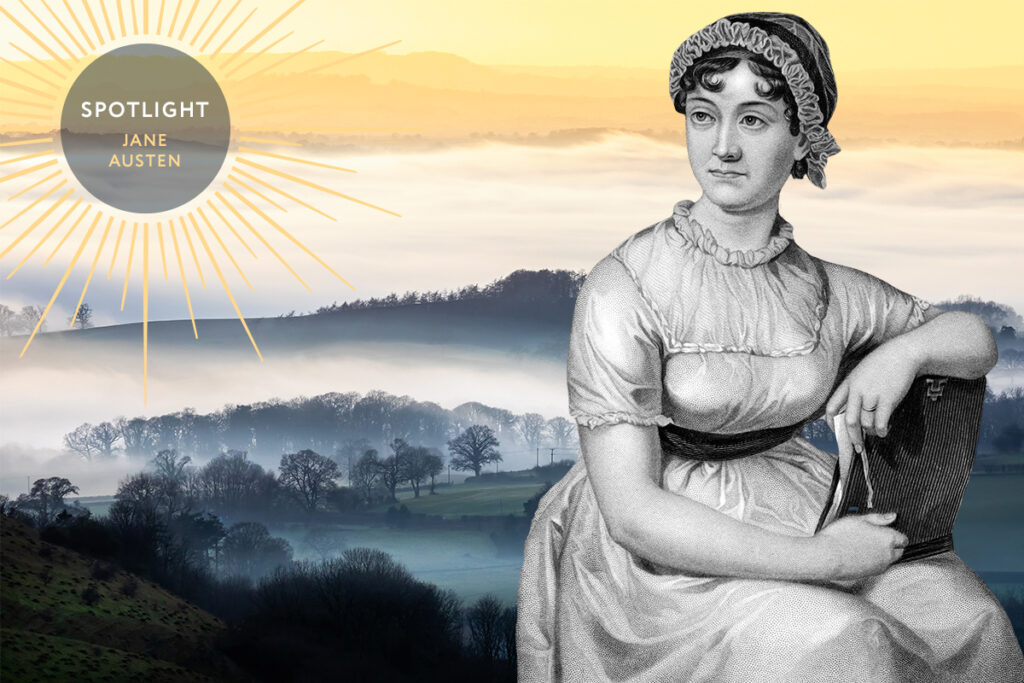
We are about to celebrate Jane Austen’s 250th birthday, and the literary world and broadcast media is awash with all things Austen – some might say saturated. But somehow, a thirst for Austen continues, and seems to be growing. The younger generations are engaging with her works more than ever, and in a variety of different ways, from BookTok and cosplay to audiobooks and viral memes. So why do these novels, and the woman behind them, inspire so much interest and fierce loyalty in a modern era?
Austen’s six completed novels offer up much more than swooning women, country dances and marriage proposals. (In fact, women who swoon are given short shrift by her – she had no time for an overly delicate woman.) Essentially, Austen wrote about young women making difficult choices. Her heroines vary: from witty, sparky Elizabeth Bennet to quiet, dutiful Anne Eliot; from poor, naive Fanny Price to wealthy, interfering Emma Woodhouse. Her protagonists, along with her secondary characters, show a wide spectrum of womanhood, from the heart-breaking to the absurd. In the regency period, and in the class that she occupied, finding a marriage match was important to most young women – it was usually the most secure path for them. And Austen was concerned with security for women. Following the death of her father, she, her sister and their mother were left with very little to live on. The fact that neither she, nor her sister, had married left them in precarious circumstances, even after their wealthy brother eventually offered them a house on his estate (it took him long enough). It was Jane’s writing that provided security for the household. So while her novels do concern themselves with love and marriage, they are ultimately about women trying to find the best path for their future.
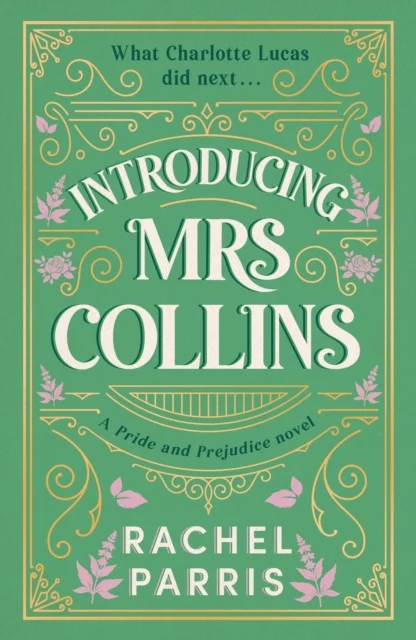
I have written a novel called Introducing Mrs Collins, following the story of Charlotte Lucas, from Pride and Prejudice, who chooses to accept the proposal of Mr Collins, a silly, pious clergyman, in order to have a home of her own and to assure her future. I was drawn to Charlotte Lucas’ story because she is one of so many characters Austen gave us whose path is not simple. She is twenty-seven and unmarried – a problematic situation in those times. Indeed, her speech to Elizabeth (adapted for the 2005 film) has become iconic and has been widely shared among Generation Z, as it strikes such a chord with them: ‘I’m 27 years old, I’ve no money and no prospects. I’m already a burden to my parents and I’m frightened.’
The questions that arise for Austen’s women still resonate today. Will I meet someone I love? Can I trust this person? Will I ever live in my own home? When will I be free of my parents? Why is my sister so irritating?
But it is not just young, single women whose stories are explored by Austen. She displayed every facet of what life might be for a woman, and she wanted the reader to consider it too. In Emma, she gives us Miss Bates – a spinster who has never married and who has cared for her mother her whole life. She is mocked by Emma, who is rich, young and pretty, and should know better. In Pride and Prejudice, Austen certainly ridicules Mrs Bennet but she also gives us the facts of why Mrs Bennet might be so neurotic and set upon her daughter’s marrying – when Mr Bennet dies, their family home will be taken over by a stranger, and her and her daughters will be homeless. In Persuasion, Austen shows us Mrs Clay – sickly and impoverished by widowhood, reliant on the kindness of friends like Anne Eliot for comfort. Austen gives us fifteen-year-olds being seduced by predatory men (Lydia and Wickham) and naïve young men falling for seductive women (Edmund and Mary Crawford). She gives us happiness in marriage after many decades (the Gardiners) and weariness in relatively young marriage (John Knightley and Isabella). Not all the women in Austen’s novels behave in ways that meet her approval. She is damning of Lydia Bennet’s elopement, Isabella Thorpe’s mercenary behaviour and Caroline Bingley’s snobbishness. But she offers up this wealth of stories for us – stories of women of all ages, of different means and different persuasions, for our consideration.
In Pride and Prejudice, Austen makes it very clear that Charlotte Lucas was not passive in receiving her marriage proposal – she engineered it. Austen shows us time and time again that women had to be smart about their own prospects. Sometimes that choice is a love match, sometimes that choice is a secure match and sometimes it is not to marry at all – the choice she ultimately made for herself. When Elizabeth Bennet says to Lady Catherine, ‘I am only resolved to act in that manner, which will, in my own opinion, constitute my happiness, without reference to you, or to any person so wholly unconnected with me’, I believe she reflects Austen’s own view of things. Life was not easy for a woman in the regency. It was not easy for Jane and her family, and Austen included all that complexity in her writing. Yes, her novels often conclude with a love match, but she is at pains to show us how precious and rare that was, which only makes those romances all the more special. Austen’s stories are still loved now because women still have many of the same difficult decisions to make, both in their young life and their later life, and Austen understood those choices, as few writers ever have.
– Rachel Parris
Rachel Parris is a musical comedian, actor and improviser, who’s appeared on Live At The Apollo, Have I Got News For You, and Mock the Week. She was BAFTA-nominated for her satirical sketches on BBC’s The Mash Report, which have garnered over 100 million views online. She’s a regular on BBC Radio 4 where she can be heard on Just A Minute, I’m Sorry I Haven’t A Clue and, formerly, The Now Show. Rachel hosts the comedy podcast How Was It For You?, with her husband, Marcus Brigstocke; and another series for the Children’s Book Project called, The Power of a Book, where guests share the children’s stories that mean the most to them. On the stage, she is a co-founder of Austentatious – a Jane Austen themed improv comedy show in the West End.