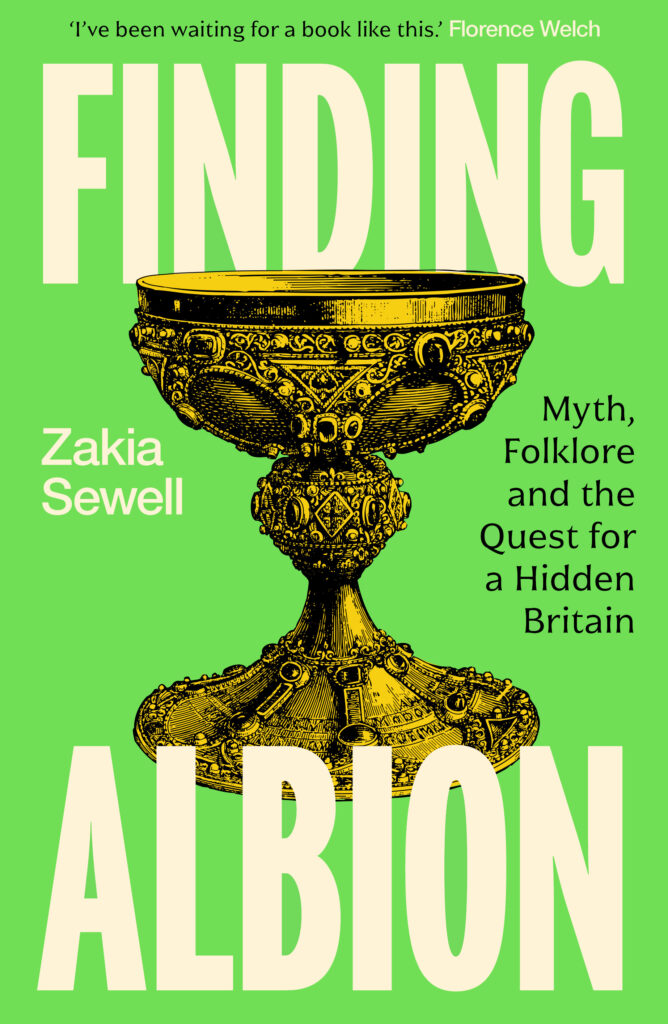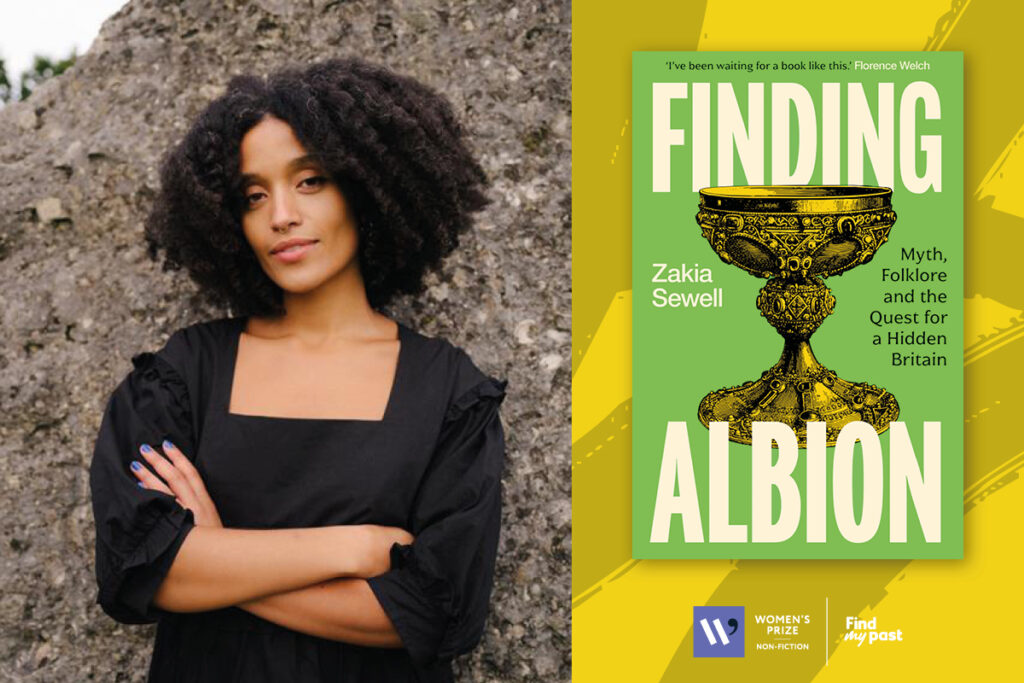
In Finding Albion, broadcaster and writer Zakia Sewell traverses the four corners of Britain to uncover a story beyond divisive myths and symbols, and with it an alternative spirit of Britain that brings a deeper sense of identity, understanding and hope.
Longlisted for the 2026 Women’s Prize for Non-Fiction, judge Nina Stibbe says: “Finding Albion is an intriguing exploration of British folklore and mythology. Journeying the length and the breadth of the country, Zakia Sewell seeks to find an alternative Britain that is vividly alive today; a hopeful future that lies beyond divisive national myths.”
To learn more, we spoke to Zakia about her research, writing process, inspirations and more.
Congratulations on being longlisted for the 2026 Women’s Prize for Non-Fiction; how does it feel to be longlisted and what does it mean to you?
I’m absolutely over the moon! Finding Albion is my first book, so to be longlisted for the prestigious Women’s Prize is truly an honour and I’m incredibly humbled and grateful.
How would you describe your book to a new reader?
Finding Albion is about my quest for alternative visions of British national identity, via the country’s older folk customs, tales and songs. In it, I travel around the country in search of more progressive and inclusive stories about who we are and who we’ve been in Britain, meeting neopagans reclaiming ancestral practices, learning about acts of working class resistance remembered in folk song and tracing the echoes of British folk traditions that travelled along slave trade routes across the Empire. Ultimately, it’s a personal quest for a more hopeful and honest national story, one which can bear the burden of our imperial history without eclipsing all hope for our future.
What inspired you to write your book?
I’ve always been really fascinated by British folk culture – strange ancient customs, tales of the Druids, the lore surrounding standing stones and such like – but, being mixed-race and from inner-city London, for a long time I wondered why. In 2020 I made a BBC Radio 4 documentary on the subject, and began to realise that my love of these alternative forms of culture was in fact connected to my yearning for ways of connecting to Britain, and to a sense of pride and love of country, which, as someone with family ties to the dark legacies of British colonialism, had always seemed inaccessible and out of reach.
After the series was broadcast, I received hundreds of messages from people who were also craving a sense of national identity beyond the reverence of monarchy, military and Empire, and who also felt the redemptive potential of the nation’s older stories and customs. I realised then that I was not alone, and that I wanted to share more of these alternative visions of Britain with a wider audience, in the hope that together we might collectively forge new visions of Britishness that can belong to us all.
What did the writing process, from gathering ideas to finishing your book, look like?
The first task for me was to think about how to reimagine and develop the ideas I’d explored in the series in book form. My book follows the seasonal calendar and is a journey around Britain, so I identified different parts of the country I wanted to visit and the specific stories/songs/customs that I felt would best serve the themes I wanted to explore. Once the structure was in place, I did many, many hours of research, interviewed contributors and experts, and travelled around the country attending folk customs and exploring the landscapes I planned to feature in the book. And I wrote it as I went along, with help from my brilliant editor, Anna.
How did you go about researching your book? What resources did you find the most helpful?
I spent a lot of time researching online and reading books in the British Library, but the field research I conducted and conversations I had with experts and practitioners were invaluable.
Which female non-fiction author would you say has impacted your work the most?
bell hooks.
What is the one thing you’d like a reader to take away from reading your book? Is there one fact from the book that you think will stick with readers?
In a moment where divisive rhetoric about race, migration and identity is becoming the norm, I hope that readers feel empowered to challenge the exclusionary visions of Britishness conjured by the far-right, that they find inspiration in the tales of resistance and collectivity in the book, and that they are reminded of the fundamentals that we share, across communities, cultures and continents.
Why do you feel it is important to celebrate non-fiction writing?
I used to be an avid reader of fiction but for the last five years or so I’ve found myself increasingly drawn to non-fiction – I find that there’s a special kind of intimacy in non-fiction writing, a kind of communion that one enters into with a writer that is totally unique to the form. During an era in which people are turning to AI for their information, advice and even emotional guidance, it feels more important than ever to celebrate and cherish the human-to-human connection one experiences when reading a brilliant piece of non-fiction writing.