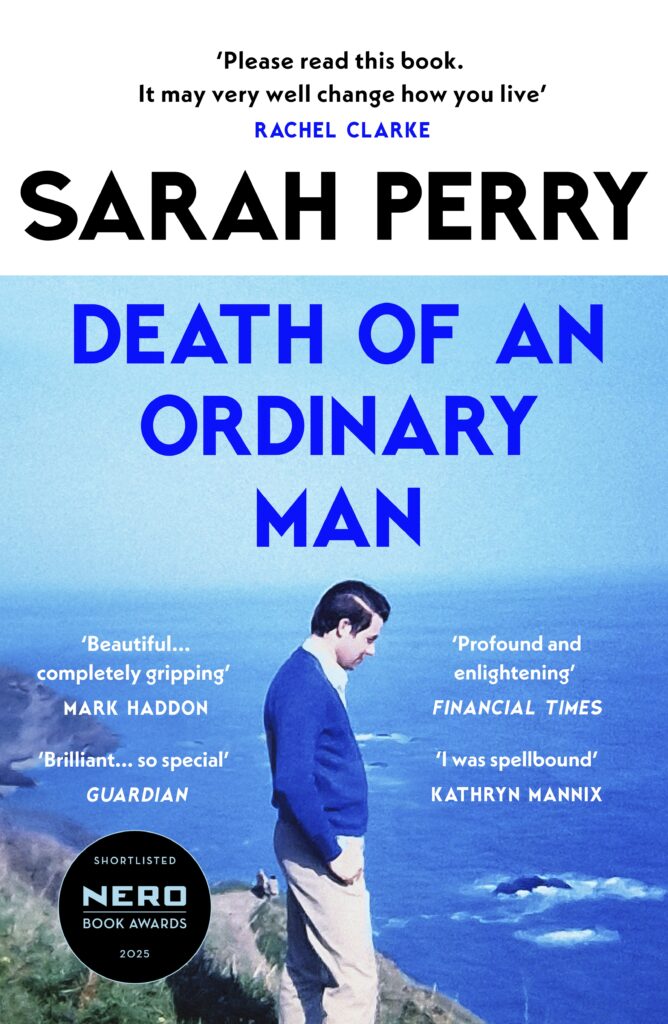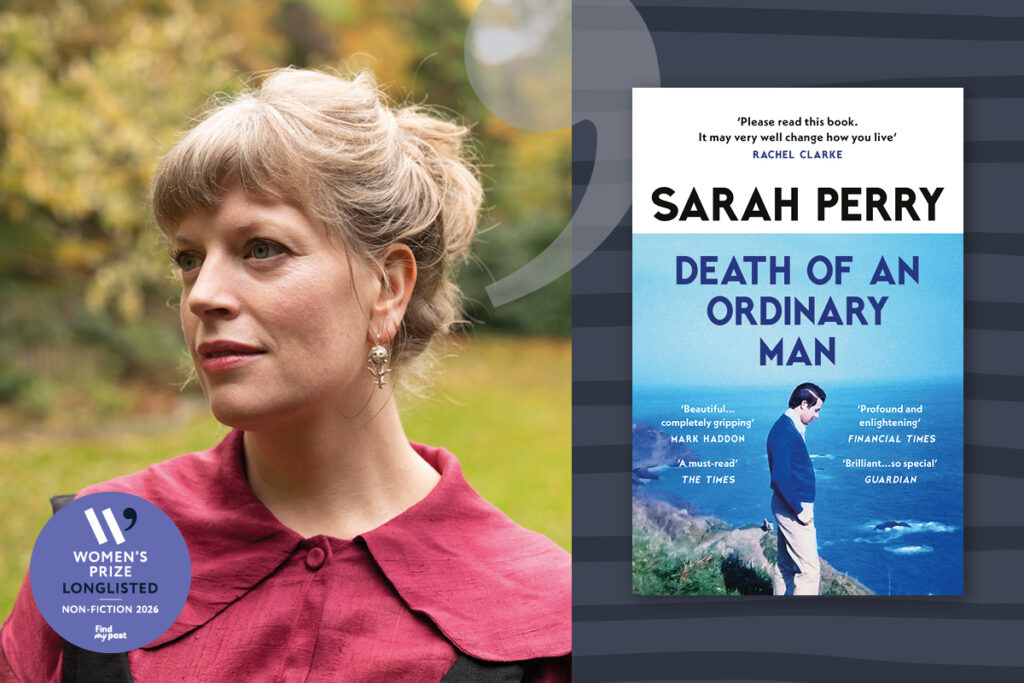
Death of an Ordinary Man is acclaimed novelist Sarah Perry’s deeply moving account of the final days of her father-in-law, David, reflecting upon death and life, family and faith, and finding the extraordinary within the ordinary.
Longlisted for the 2026 Women’s Prize for Non-Fiction, judge Nina Stibbe says: “Death of an Ordinary Man is a profound and lyrical meditation on the process of dying. Perry’s compelling account of one unexceptional man shows us in beautiful detail that no life is ordinary.”
To learn more about the book we spoke to Sarah about her writing process, inspirations and more.
Congratulations on being longlisted for the 2026 Women’s Prize for Non-Fiction; how does it feel to be longlisted and what does it mean to you?
I’m absolutely delighted to be longlisted – partly for the pleasure of having a book praised and recommended by colleagues and peers, but I think mostly because I believe passionately that we need more frank, humane and helpful conversations about the process of dying, and so I would like this book in particular to find as many readers as possible. The nomination will help enormously with that.
How would you describe your book to a new reader?
It is the story of the last nine days of my father-in-law’s life, and of how he encountered death together with my husband and me as his carers, and the professionals who helped us. It isn’t a story about grief, or mourning, or overcoming sickness or sadness – it is simply a story about dying, and about how it is both the most extraordinary and the most ordinary thing in the world.
What inspired you to write your book?
During the course of my father-in-law’s death, I felt very keenly that there would have been a time when a woman of my age would have been familiar with death – with how to nurse a dying person, with what all the stages of dying look like. I felt a kind of strange sorrow and anger that death has been largely removed from the domestic sphere and is very rarely spoken about, and so I resolved to write the kind of book I wish I could have read, so that I could be a help and companion to others suddenly finding themselves caring for the dying.
What did the writing process, from gathering ideas to finishing your book, look like?
It was extremely fast – I wrote the book in eight weeks. I think this is something to do with purity of purpose: I knew without question what I wanted the book to be, and I had the facts to hand. Nothing needed altering or amplifying – the events of those days were as terrible and beautiful and strange and ordinary as any novel. So it was one of those vanishingly rare occasions where I sat down at my desk, and then rose from my chair some time later having done what I set out to do.
How did you go about researching your book? What resources did you find the most helpful?
I had boxes of papers relating to that time – David’s calendar and diaries, letters from the hospital, the piece of paper where I made notes of who to call when we needed medication and so on – and so I was able to match my recollections with that information. My husband’s memory was also essential, and we had long talks into the night, trying to be scrupulous with the time-line and with our memories. Friends were also very helpful with checking WhatsApp messages and emails – we had a living record of that time.
Which female non-fiction author would you say has impacted your work the most?
I think great novelists are often great writers of non-fiction – I love the essays of Hilary Mantel, and Woolf’s essays, letters and diaries.
What is the one thing you’d like a reader to take away from reading your book? Is there one fact from the book that you think will stick with readers?
What I would like, above anything, is for a reader to feel they had found a companion – whether because I had been able to articulate or reflect an experience of caring and death which they have already had, or because they felt that the book would be waiting for them when they needed it, and they wouldn’t endure those events alone.
Why do you feel it is important to celebrate non-fiction writing?
I think all kinds of writing should be celebrated, but I think the a prize specifically recognising non-fiction written by women is especially important – it is all too easy to associate novels with women, and works of analysis or reportage or philosophy with men!