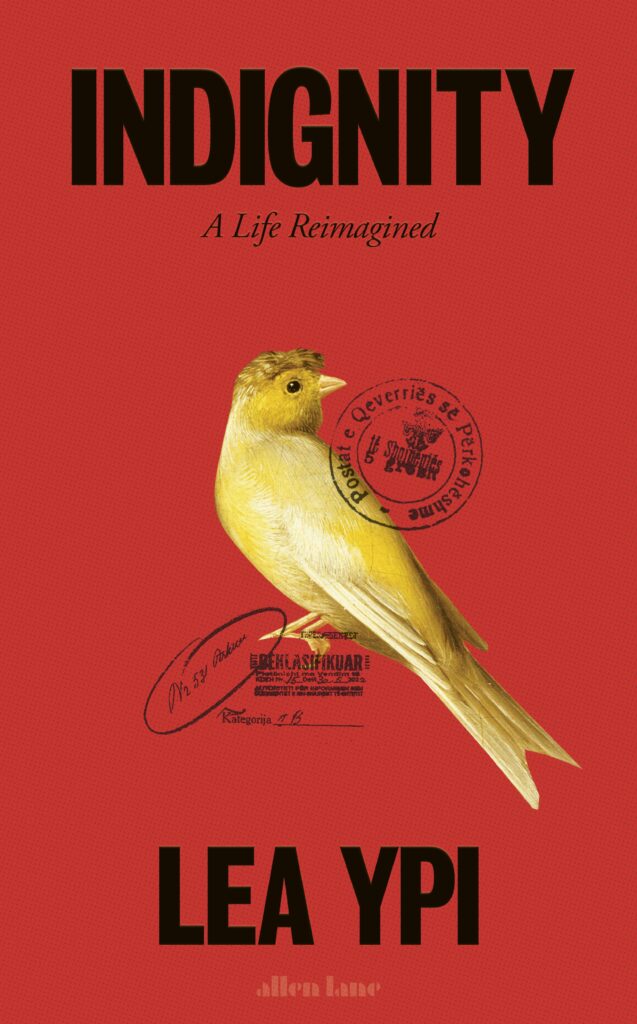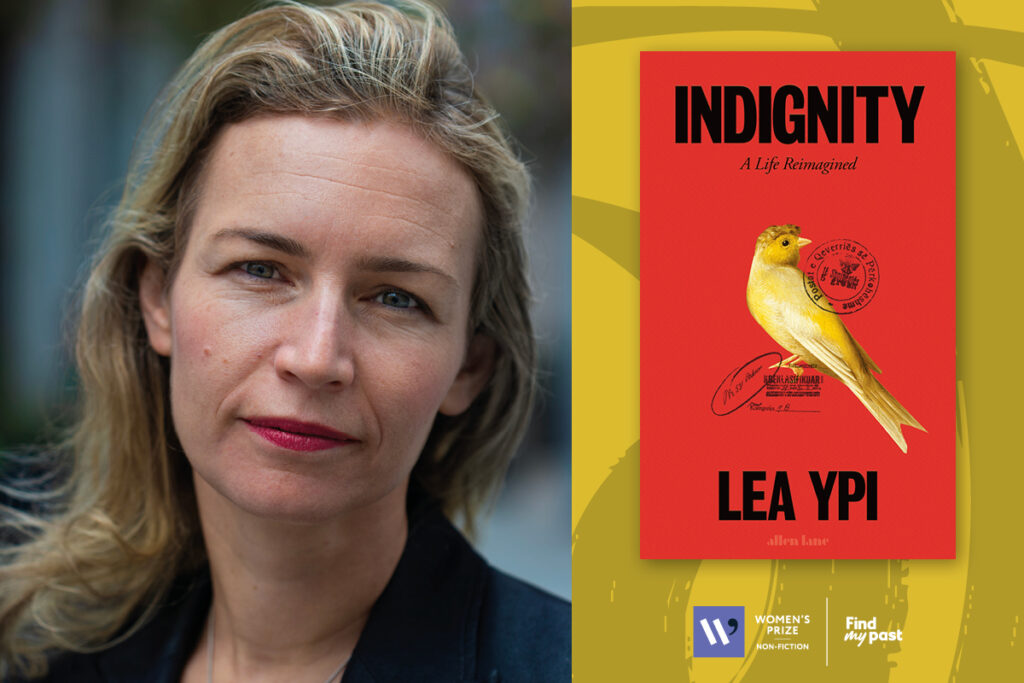
In Indignity, author and academic Lea Ypi investigates the truth about her family as she transports the reader to the vanished world of Ottoman aristocracy, the making of modern Greece and Albania, a global financial crisis, the horrors of war and the dawn of communism in the Balkans – asking what we really know about those closest to us.
Longlisted for the 2026 Women’s Prize for Non-Fiction, judge Nina Stibbe says: “Indignity is a genre-defying examination of family history and political inquiry. Brought to life by Ypi’s immersive style, it raises questions about the fragility of truth, and reflects on personal identity and collective memory.“
To learn more, we spoke to Lea about her research, writing process, inspirations and more.
Congratulations on being longlisted for the 2026 Women’s Prize for Non-Fiction; how does it feel to be longlisted and what does it mean to you?
My book is about dignity and the risk of losing hope in an age of extremes, when history repeats itself. It was a difficult book to research and write, for many reasons, and sometimes it felt pointless to write about freedom and dignity with everything going on in the world. The recognition that comes with longlisting gives me courage to continue.
How would you describe your book to a new reader?
Indignity is in part a family saga, in part a political history of Europe from the collapse of empires to the rise of communism in the Balkans, and in part a philosophical text around the moral and political meanings of dignity. It reflects on what it means to make choices in an age of extremes, but also what it means to ask that question when your own age is an age of extremes, and you can no longer trust the moral superiority of the present to the past. The book reconstructs the life of the my grandmother, Leman, from her privileged childhood in cosmopolitan Ottoman Salonica to her struggles for dignity and autonomy in communist Albania, shaped by fascism, war, and political repression. It weaves together a first-person search through secret police archives with a third-person narrative that fills the gaps left by incomplete historical records.
What inspired you to write your book?
I discovered a photo of my grandmother, Leman, honeymooning in the Alps in 1941, posted by a stranger on social media, followed by a stream of derogatory comments. Growing up, I had been told that all records of my grandmother’s youth were destroyed in the early days of communism in Albania. But there she was with her husband, Asllan Ypi: glamorous newlyweds while World War II raged. The mystery of the photo raised many questions. Who was the real Leman Ypi? What made her move to Tirana as a young woman and marry a socialist who sympathised with the Popular Front while his father led a collaborationist government? And why was she smiling in the winter of 1941? I discovered that the photo online came from my grandmother’s surveillance file held in the archives of the former communist secret service and decided to apply to see the documents.
What did the writing process, from gathering ideas to finishing your book, look like?
The research took me to five countries, visiting around a dozen archives and involved reading material in Albanian, Italian, French, English, German, and Greek – my grandmother was born in Salonica (modern Thessaloniki) just before the collapse of the Ottoman Empire. Intellectually, the hardest part was having to learn Greek, and reconstructing the life of Salonica in the Twenties and Thirties. Emotionally, it was requesting access to secret service surveillance files from communist Albania and reading the reports compiled on her by surveillance agents.
How did you go about researching your book? What resources did you find the most helpful?
The book combines memory, oral testimony, family archives and secret service files with a broader historical and imaginative reconstruction, drawing on diverse sources such as letters, memoirs of other women, period magazines and newspapers, government and diplomatic records, archival clippings, diaries and other sources of the kind to illuminate a life only partially preserved in the official record.
Which female non-fiction author would you say has impacted your work the most?
Rosa Luxemburg.
What is the one thing you’d like a reader to take away from reading your book? Is there one fact from the book that you think will stick with readers?
What it means to preserve dignity in an age of extremes and where do we find hope when history repeats itself.
Why do you feel it is important to celebrate non-fiction writing?
Because our lives are always shaped by larger historical forces, and to know who we are, and how we can be different, it is important to see how ideas affect personal experience, how history conditions us, and to be able to understand the context in which the individual and society meet.