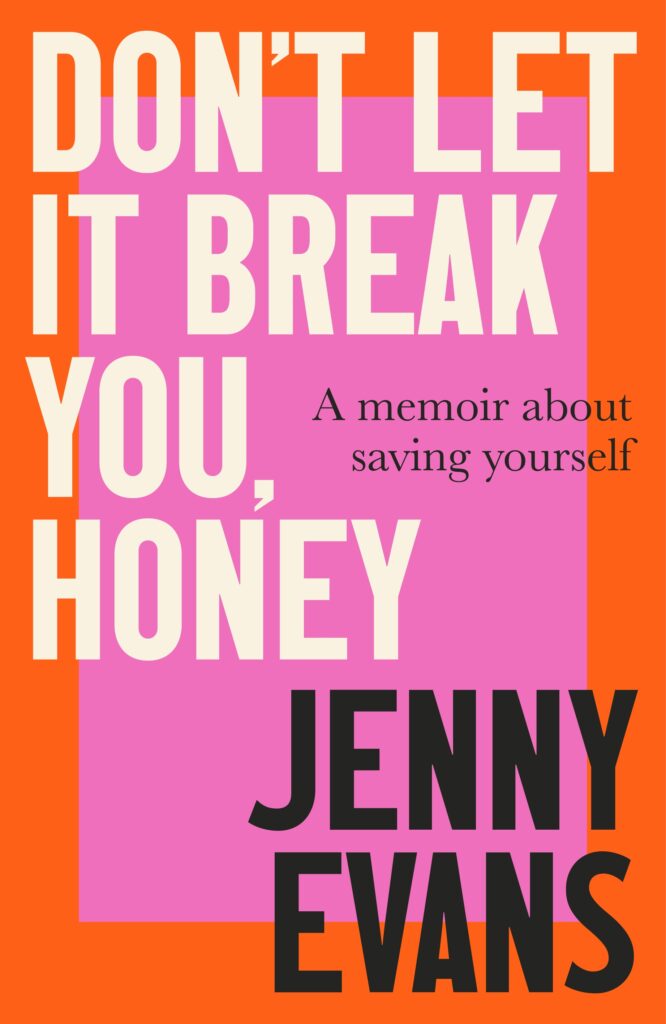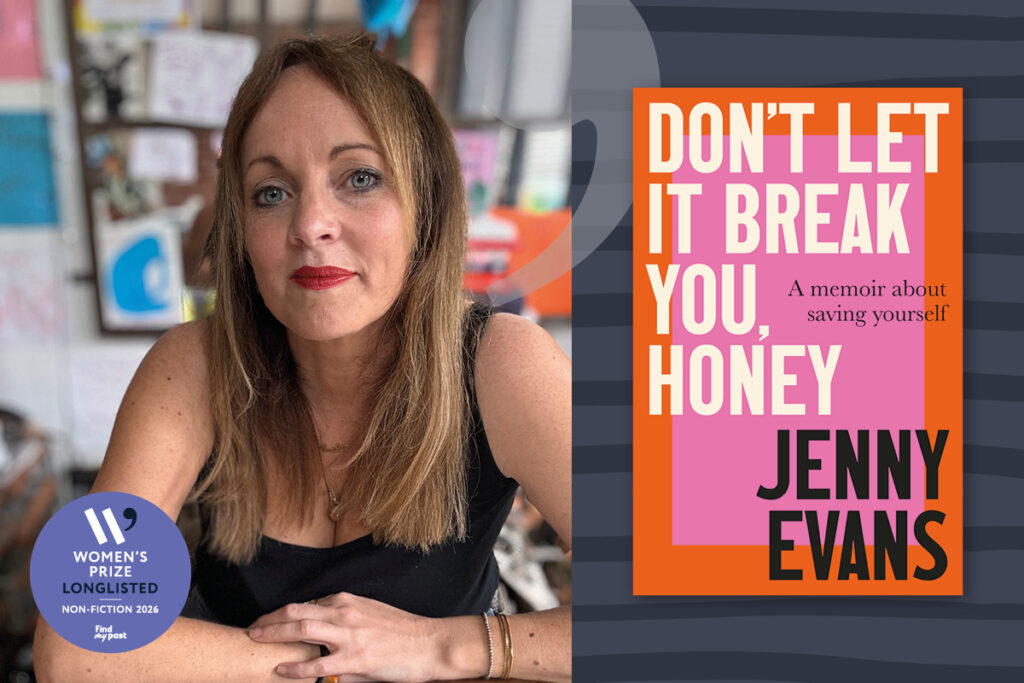
Don’t Let it Break You, Honey is Jenny Evans’ empowering fight of survival and hope – a reckoning against fame, justice and the institutions that hold power.
Longlisted for the 2026 Women’s Prize for Non-Fiction, judge Nicola Elliott says: “Don’t Let It Break You, Honey is not just a memoir – it’s an indictment of failure at the highest level of policing. It’s deeply personal, compelling and raw. A real page-turner.”
To learn more about the book we spoke to Jenny about her writing process, inspirations and more.
Congratulations on being longlisted for the 2026 Women’s Prize for Non-Fiction; how does it feel to be longlisted and what does it mean to you?
It feels deeply affirming — and a little surreal. Don’t Let It Break You, Honey is a book I wrote with a great deal of care, but also with caution – it meant making myself far more vulnerable than I have hitherto been comfortable with. To see it recognised by the Women’s Prize for Non-Fiction feels like an acknowledgement not just of the subject matter, but of the intention behind it: to tell the truth carefully, and to trust readers with complexity. It means a great deal to know the book is being read in that spirit.
How would you describe your book to a new reader?
Don’t Let It Break You, Honey is a work of narrative non-fiction that weaves memoir with investigation. It traces how a single act of violence ripples through a life — and through the institutions meant to offer protection — exploring power, shame and survival with honesty and restraint. At its heart, it is a book about who gets believed, and what it takes to reclaim your own story.
What inspired you to write your book?
The book grew out of a need to understand what had happened to me, and why. After a sexual assault, private details I shared with the police appeared in a newspaper, and I wanted to know how that was possible. That search for answers led me into journalism and, eventually, to writing this book. What began as an investigation became something broader: an attempt to understand how trauma, shame and power operate — not just in individual lives, but in the institutions meant to protect us.
What did the writing process, from gathering ideas to finishing your book, look like?
The writing process was iterative and slow. The book grew out of years of reporting, thinking and lived experience, rather than a single burst of inspiration. I gathered material through journalism — documents, interviews, research — but I also had to work carefully with memory, emotion and silence. Much of the writing involved stepping back from events to find the right distance: close enough to be truthful, but far enough to be fair. Finishing the book meant repeated drafts, long periods of reflection, and learning when to stop explaining and trust the reader.
How did you go about researching your book? What resources or support did you find the most helpful?
The research combined investigative journalism with careful use of personal records. I drew on court documents, police files, contemporaneous notes, and interviews conducted over many years, as well as public inquiries and reporting around press abuse and institutional failure. Equally important were the less formal resources: diaries, emails, and memory itself, handled cautiously and checked against documentary evidence wherever possible. The most helpful resource was time — allowing space to test assumptions, corroborate facts and return to material with fresh perspective.
Which female non-fiction author would you say has impacted your work the most?
Joan Didion has had the greatest impact on my work. Her ability to combine moral clarity with emotional restraint — to sit with uncertainty rather than resolve it — has been hugely influential. She showed that non-fiction can be intellectually rigorous while remaining intimate, and that bearing witness, carefully and honestly, is itself a form of authority.
What is the one thing you’d like a reader to take away from reading your book? If applicable, is there one fact from the book that you think will stick with readers?
I would like readers to come away with a sense that shame is not a personal failing, but something produced — and often exploited — by power. That what happens to us does not define our worth, and that asking questions and telling the truth carefully can be an act of reclamation. If one fact stays with readers, I hope it is how routinely institutions designed to protect — the police, the press, the justice system — can instead compound harm, often without accountability, and how devastatingly ordinary that failure can be. It is also where we could lobby for change.
Why do you feel it is important to celebrate non-fiction writing?
Non-fiction helps us make sense of the world as it actually is — not as we might wish it to be. At its best, it combines intellectual rigour with narrative skill, offering readers both understanding and empathy. Celebrating non-fiction recognises the courage and craft involved in telling difficult truths, and affirms the role of writing in holding power to account.