Our host Vick Hope is joined by Meera Syal.
Meera is one Britain’s best-loved comedy legends. She grew up in the small mining village of Essington in Staffordshire, where her Indian Punjabi parents settled after moving from New Delhi. Her early life there, as the only Asian family, later served as inspiration for her semi-autobiographical novel, Anita and Me. Meera studied English and Drama at Manchester University where she began acting and writing stage plays. She gained widespread recognition for her work in the late 1990s as a writer and performer in the multi-award-winning, iconic BBC comedy sketch show Goodness Gracious Me and for portraying the character Ummi in the International Emmy-award-winning TV series The Kumars at No. 42. In 2023, she was awarded the prestigious BAFTA Fellowship and last month saw the publication of her memoir, Vigilauntie.
Listen to the full episode here and read on to discover Meera’s five most influential books by women.
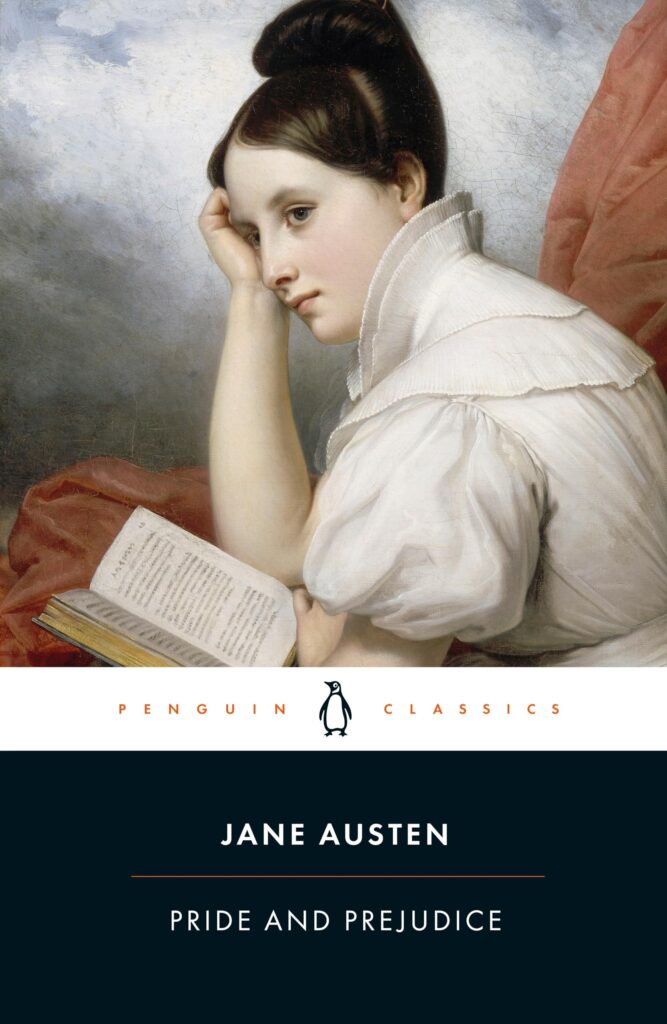
‘When I read Pride and Prejudice, I saw a South Asian family because I had seen all of that in action around me. We used to call them the jackpot families, and I talk about them in my memoir, and they would be a row of girls, one, two, three, four, five, six girls and then right at the end a boy because those people kept going until they hit the jackpot and got a son, because sons meant everything, and daughters were a burden to marry off. That was Austen’s world, that a woman was defined by how marriageable she was, how quickly she could marry, how well she could marry. I was surrounded by that. That was real. So when I found a heroine like Lizzie Bennet, who was considered as Darcy says “tolerable but not handsome enough to tempt me”, who was gobby, intelligent, saw the marriage market for what it was and refused to bend to it, that was a little mirror, and who’d have thought Jane Austen was speaking to me across centuries?’
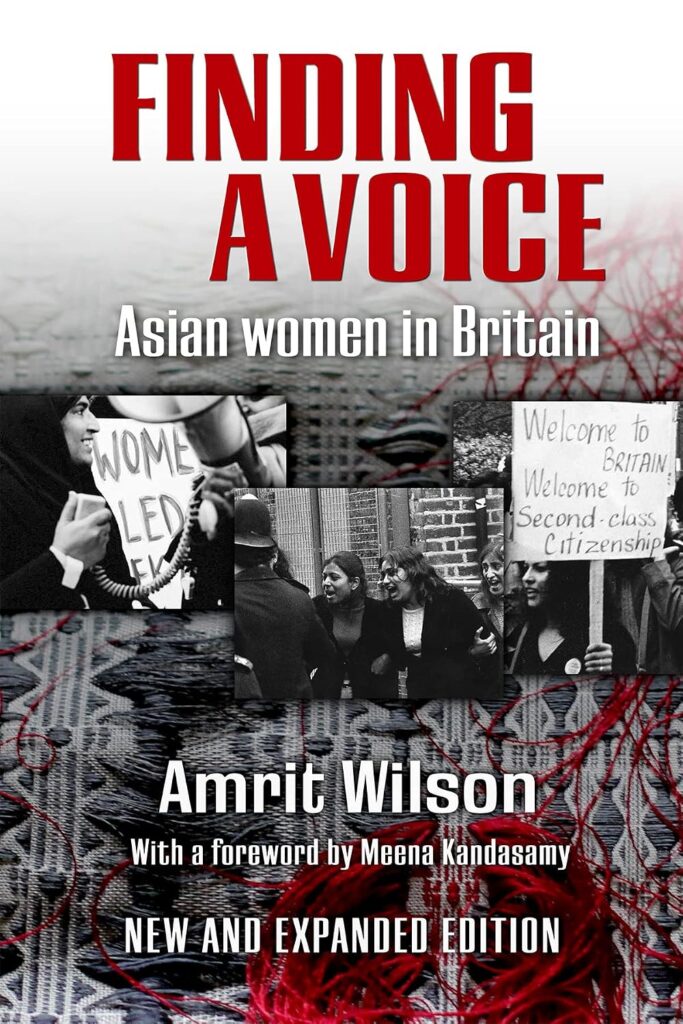
‘This book meant so much to me because it came at a time in my life where I was almost ready to give up. I’d not been in London very long, then this thing happened with someone that I vaguely knew and trusted. I was homeless. My initial lucky streak had dried up so I was out of work and it would have been really easy to just go, I can’t actually carry on with this if this is what it’s going to be like. I ended up in an Asian woman’s writers group, which had been funded by the GLC, which was the Greater London Council. God bless them. They funded a lot of amazing initiatives. And it was free. I mean, it was like three quid or something or even less than that, two quid to just turn up and share your work with other South Asian women. And it felt like the safe space I needed and it was through this group that I discovered the grassroots organisations, but also Amrit Wilson’s incredible book.’

‘It’s exquisite. I mean, how do you follow that up? The first paragraph, when it describes Kerala in May, I think I reread that paragraph. It’s moved me to tears, actually. I think I reread it about ten times. The language was so beautiful and the whole book is suffused with such a deep knowledge of intergenerational trauma and what colonialism does to a nation and how that drip feeds into persecution and suspicion and self-hatred. It’s woven into this book in the most exquisite way. You realise it almost as you finished it. And that is the mark of a great writer. What assaults you first is the poetry and the language and the characterisation, and then you realise it’s a deeply political book on every single level, and that’s how you write. That’s how you write that genre. It’s beautifully written, and yet it is depicting chaos and brutalism.’
‘It’s pure mastery on the page. It really is. She’s one of those writers you read and you just think, how did you do that. Yeah. How did you make me angry and cry and also teach me something in two sentences? How? Because I suppose each sentence is poetry. It’s layered like poetry and yet it’s infinitely accessible. She’s not a black writer. She’s a writer. And she’s one of the greatest writers we’ve ever had.’
‘I’ve just been a Nora Ephron fan for decades, since When Harry Met Sally, which is my favourite rom-com ever. They don’t make them like that anymore, and let’s not forget a female screenwriter at that time was a rarity. The couples, the old couples that pepper the whole film with their recollections of how they met, I mean, every detail is just exquisite. I quote it all the time and then I got on to reading her prose, Heartburn, of course and Nora said one of my, one of the sentences I think I live by, which is everything is copy, and that may sound exploitative in some way, but I never took it that way. I took it as being that nothing, if you’re a writer, no experience is wasted. Even the most heartbreaking bits of your life, if you’re a writer or an actor, there is always a bit of you standing outside going, this is going to make a great scene in something one day.’