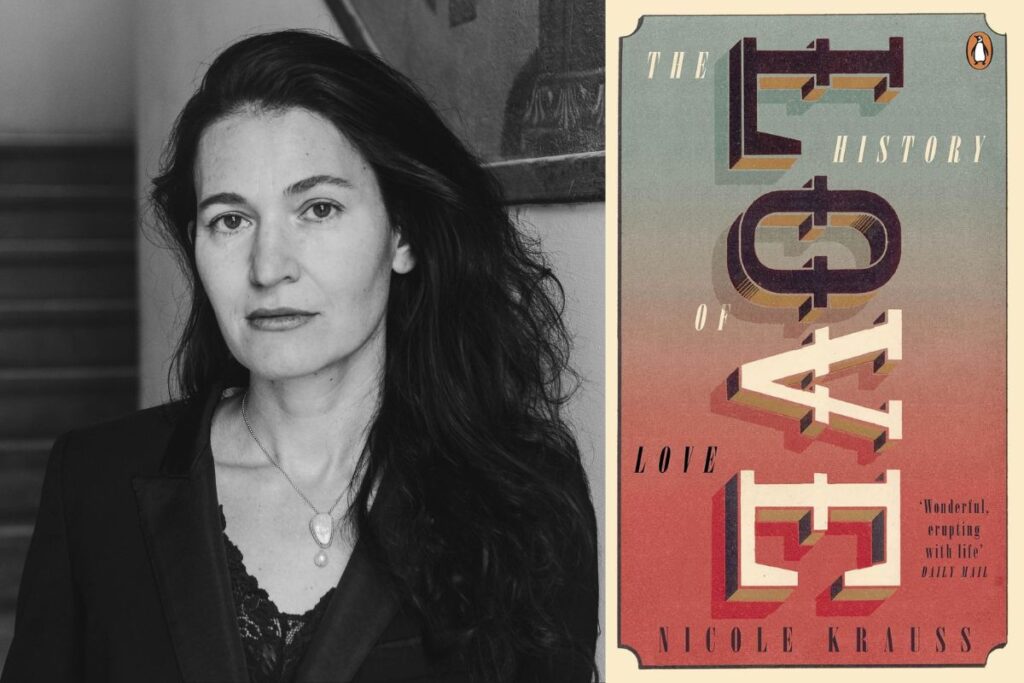
In 2006, Nicole Krauss was shortlisted for the Women’s Prize for Fiction for her novel, The History of Love, a heartfelt meditation on love and loneliness. To mark the 20 years since her shortlisting, we caught up with Nicole to hear how her writing has evolved, how she reflects on that time today, and what she’s been working on – including her eagerly-anticipated new novel, Vita, coming September 2027.
It’s been 20 years since The History of Love was shortlisted for the Women’s Prize for Fiction, and 15 since Great House‘s shortlisting. What do you remember from that time – how did it feel to be shortlisted?
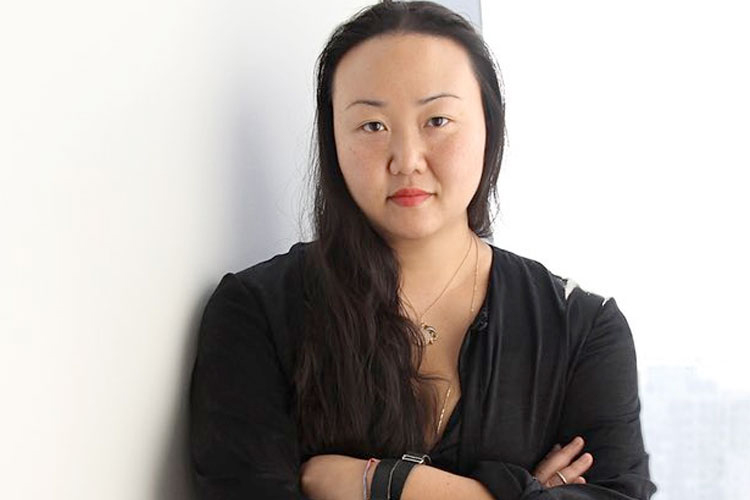
Somehow it only grows more meaningful, as I look back now at how against the odds it was, not just to get published at a young age, but for the books to be embraced. When my first novel came out in 2002, literature by women was still referred to, even in serious publications, as “chick lit,” and novels by women rarely received the same attention as those by men. Back then I spent a lot of time and energy thinking about what I needed to write/say/even to wear in photos to be taken seriously. The first photo shoot I ever did for the publication of that first novel was at a bar, and I had to argue with the male stylist who wanted me to wear a very glam and totally skimpy dress. I explained my strong desire to be taken seriously as a writer, and why this see-through dress was therefore a problem. I found a subdued brown button-down shirt on the clothes rack and put it on instead. When I finally stepped out and took my place in front of the camera, the stylist, photographer, and makeup artist looked at me pitifully. At the last instant, just before the photographer snapped the shutter, the stylist leaped forward and swiftly unbuttoned the lower buttons of the shirt. So it was that my first publicity photo as a professional novelist showed me baring my stomach. I lost sleep over that, which may seem absurd now, but is testimony to what I felt was at stake back then.
I could regale you with such stories from that time. That things have changed so much has to do with many factors, but the Women’s Prize, started only a few years earlier, in 1996, was an important part of that. To be recognized by it helped me, and so many other writers, immeasurably.
Looking back at your career, how has your understanding of what a novel can do changed from your debut Man Walks Into a Room through The History of Love to your latest novel, which is forthcoming in 2027?
At twenty-five, I decided to give myself a year to try to write a novel, any novel, which seemed as unlikely back then as building a spaceship. I had been serious about writing poetry for the previous decade, but had hit a wall, and I wanted to know whether fiction, and the novel in particular, would give me the freedom I was searching for. Only after I’d finished it, and understood how much I loved the form, did I get down to the business of thinking about the kind of novels I wanted to write. I became fascinated by the possibilities of the novel, by its structural possibilities, and the enormous freedom they offer. That is no less the case now, after half a lifetime of writing them.
Can you name the female author who has influenced your own work the most?
Many! Clarice Lispector, Marlen Haushoffer, and Fleur Jaeggy to name a few.
Your work often moves between memory, identity, loss, and the mysterious or unknowable. What tends to spark a new story for you — an image, a question, a character, a place…?
Everything happens for me in the language. I write without a plan or a sense of direction, but at some point I stumble into a set of ideas or a musicality in the prose that opens like a trapdoor into a new way of being and seeing. That moment of possibility is where a new novel begins.
There’s a striking sense of connection between lives in your fiction, even when your characters are separated by time or geography. What draws you to those unexpected connections?
My interest and pleasure in structure and composition comes from the way a constellation of unlike parts can create meaning. The metaphor is, to me, the basic unit of literature. In juxtaposing two separate, unique things, it finds a bridge of connection, which creates a third thing—the surprising relationship between them. If we love metaphors, it’s because they give a sense of an underlying unity in the world, a oneness we long for and sense, but can’t always name or describe. In juxtaposing different voices and storylines within a novel, the effect is the same. Echoes, allusions, and patterns emerge in a subtle and elegant way. And this way of creating meaning, which allows for complexity and ambiguity, has always felt more authentic to me than any other.
It has been several years since Forest Dark. What has this period of writing been like for you, and what can you tell us about the new novel without giving too much away?
It has been several years! I spent some of that time finishing a collection of short stories, To Be A Man, which are, I hope, filled with the pleasure and energy I find in the short story form, in the precision and force that it can sustain. And in the last years I’ve been writing the novel Vita, which is now finished, and will be published in September of 2027. It’s about two friends, one American and the other European, who meet at an English boarding school at age fifteen and forge a powerful bond around their dedication to live a rich creative life. Sabine becomes a famous actress, and Renata a writer. But for both, life as it is offered is not enough; they are women who restlessly, obsessively try to make something else of it in an empty space apart from life, where art begins. The novel moves from New York to London to Rome, and as the drama of Sabine and Renata’s voices and stories join with others in Tehran and Beirut, they begin to interweave and echo, and reality and fiction, and art and life, begin to torque and double over each other, and the novel becomes a theater for the precarious performance of motherhood, womanhood, selfhood, and being in the world.