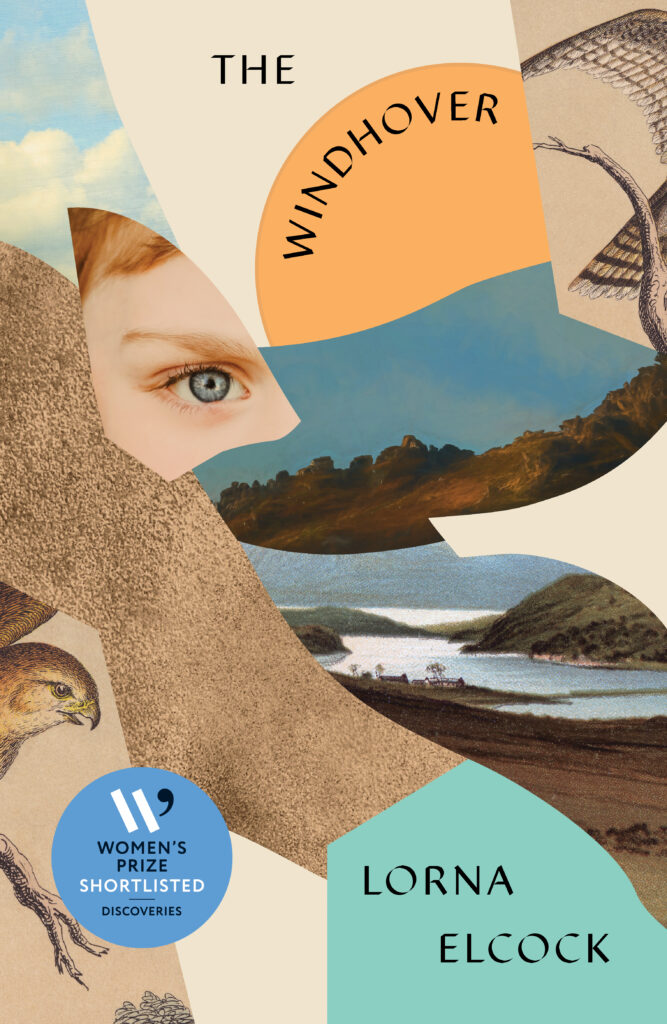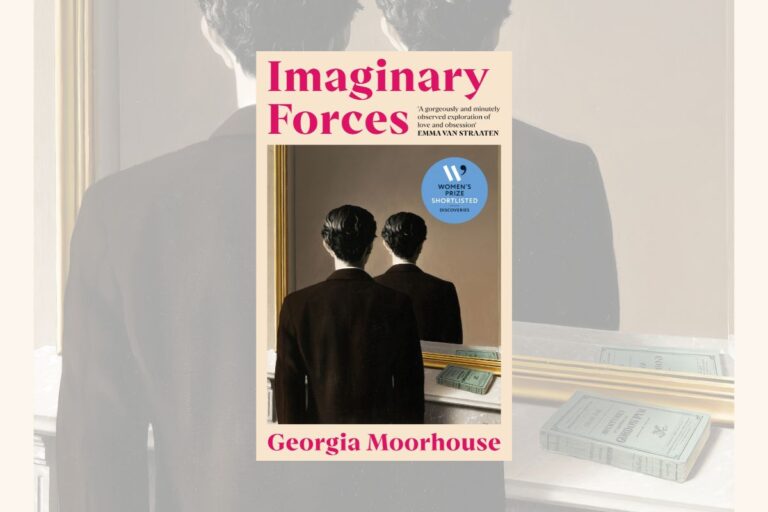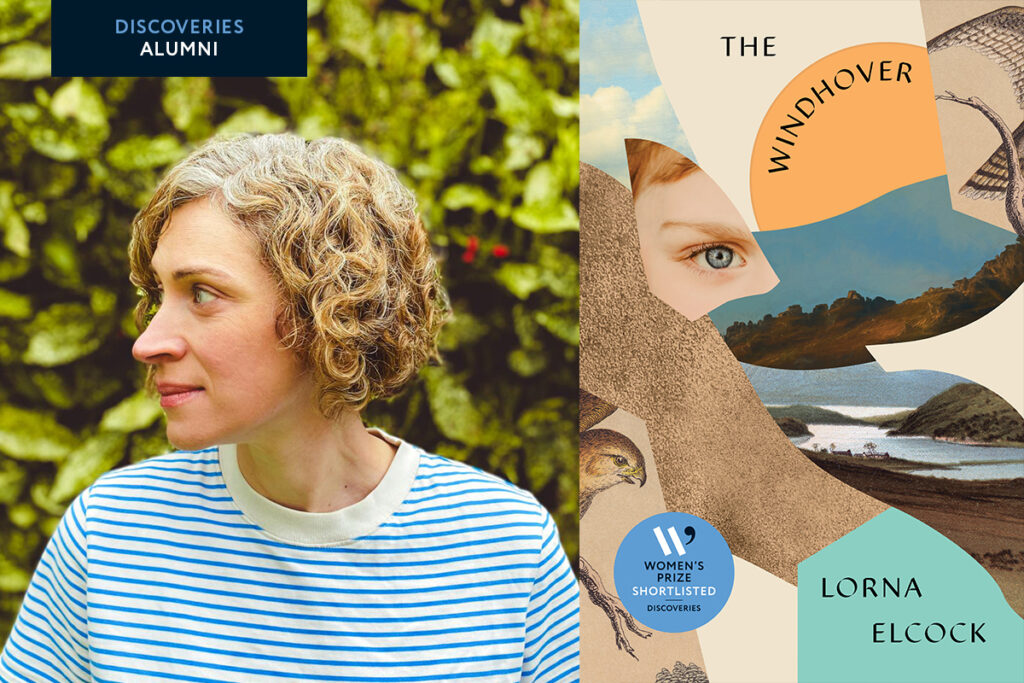
2021 Discoveries shortlisted Lorna Elcock’s debut novel, The Windhover, published this month by Dead Ink Books, is an emotionally devastating story of lost children and misguided adults, exploring whether redemption is truly possible. To mark publication, Lorna has shared with us more about her journey to publication, including her experience of being part of a panel of debuts at Women’s Prize LIVE 2026 and the interwoven art of writing and parenting.
In July 2017, I started writing what I thought was a longish short story about three children living in the cold basement of a big, decrepit house. In the intervening nine years, two things have come into being:
1. my novel The Windhover, published this month; and
2. my eight-year-old child.
It shames me terrifically to admit here, in public, that these have been my only two occupations across this period. You see, I didn’t go back to work after my baby was born in 2018; at that time, I didn’t have a job to return to. But even if suitable employment had presented itself, I have long known that I wouldn’t have been fit for it. Regrettably, I have always been of a thoroughly weak construction – if we were being kind, we would say that I am sensitive – and the upheaval, the great rearrangement of matrescence went, for me, too deep. Of course, this can only be viewed as a colossal failure. It is a privilege I didn’t earn and wouldn’t have chosen. What manner of person can’t manage to work outside the house and also have a child? I’ve never yet had to do what real mothers do: I’ve never had to split myself and still be wonderful. Luckily, though, when my child was born I wasn’t yet worried about any of that. At that time, you see, I knew with utter conviction that in a year or two I would have finished writing what by then I knew was a novel, and that once I had finished it, I’d be an author. That would be my job.
Ha, ha. Isn’t life complicated?
But on we go. I have a story to tell. The short version of it is: reader, I finally did it. I have a job again at last; and yes, I am an author. My outrageously long maternity leave concluded a month ago, when I travelled from Scotland to Bloomsbury to speak on a panel of debut novelists – all of us Discoveries writers – at Women’s Prize LIVE, hosted by the Founder Director of the Women’s Prizes, Kate Mosse. There, I stood onstage in the Brontë Tent and read from The Windhover, gripping the lectern so that nobody saw my shaking hands. Then I took my seat beside Kate and answered her generous, thoughtful questions which were so clearly designed to help me talk, to give me courage and to let my novel shine. Nothing bad happened. People in the audience laughed, and not at me. My fellow panellists – Rukky Brume, Rebecca Taylor-McKay, Genevieve Marenghi and Ruth Rosengarten (minus our friend India-Rose Bower, whose company we missed onstage but who was able to join us moments after) – read beautifully from their novels and lit up the tent with their humour and intelligence. Afterwards, I sat, dazed, in the signing tent, and for the first time encountered readers holding copies of my novel; they’d paid out real money for their books and were asking me to sign. It was – all of it – wonderful. I’ll never stop being grateful to the Women’s Prize for giving me this incredible opportunity – yet another of the many they have given since my shortlisting for Discoveries in 2021.
Also, of course, it was overwhelming. Exposing. Requiring me to call on long-forgotten skills, to resurrect from precisely nowhere various long-forgotten versions of another, stronger self. On top of that, for more or less the first time, I had to outsource my childcare to others; ask them for favours, admit I needed help. This humbling, empowering emergence is familiar, surely, to proper mothers, who have always had real jobs, who have learned the hard way and much sooner how to mother well and also live a life outside. Just not, until now, to me.
But then, I have been – well, not quite in hiding – but certainly invisible, for all these years: in the house, looking after a family, writing a book. Writing, mothering, the two are bound around inside me because of the way things have turned out. All that work. The dreadful, joyous graft of child-rearing going along always with what has been for me an urgent, complicated compulsion – not always welcome, but impossible to ignore – to come back and back again towards the writing of this book. I have crept my way towards publication as I have crept my way towards learning how to mother my child. I’ve often worried that I’ve not been fit for either job; I’ve often known that this conclusion is entirely right.
And now at this end time with publication looming, it seems important to tell writers who may be hidden at home, learning how to parent while they are learning how to write, that I think it was this going along together which has ultimately produced the book. I doubt I’d have worked out how to write The Windhover if I hadn’t simultaneously been just as lost, just as frightened, just as buffeted by my regular defeats and rare successes as a parent. It seems likely to me that the conditions which give rise to good art and those which prevail while mothering are the same. Seismic pressure, struggle, and great joy.
So yes, I am ashamed to say that I never went back to work after my child was born. Even though I certainly wasn’t fit for it. I doubt I’m any fitter for it now. But – all along, I had important, different work to do. I was raising a child. I was writing a novel.
And here it now is.