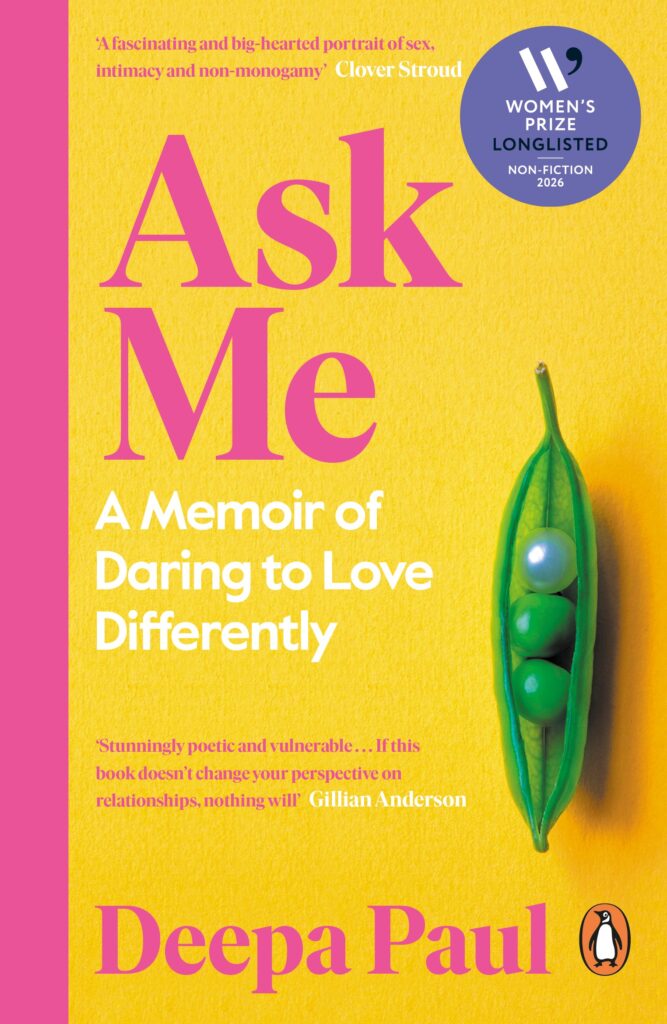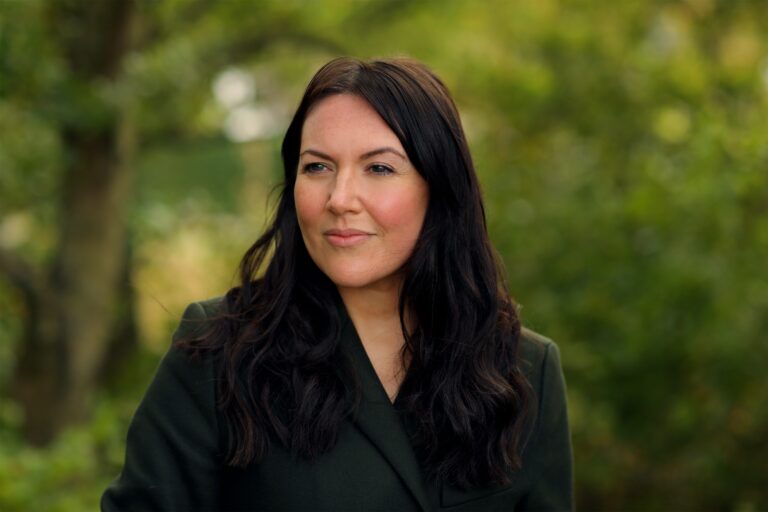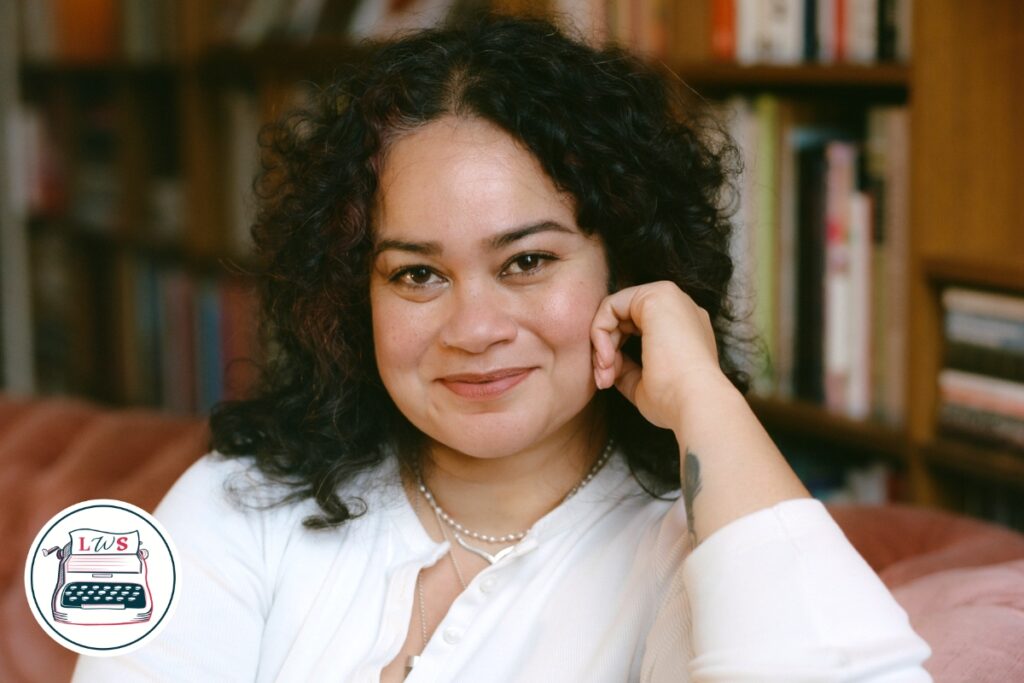
Deepa Paul shares the power of writing in one protected hour a day, lessons from 1,200 hours of writing practice, and how the support of a writing community helped turn an unpublished essay into an acclaimed memoir – longlisted for the Women’s Prize for Non-Fiction in 2026.
*As told to Parul Bavishi, co-founder of the London Writers’ Salon and Writers’ Hour
Ask Me: A Memoir of Daring to Love Differently started out as an essay that I wrote in 2017, but no one would publish it.
Non-monogamy was seen as this really niche thing, and I got feedback from editors. They said, “no one wants to hear about that stuff”.
Years later, during Covid lockdown in 2020, I tried again. I was writing one hour per day. Schools in the Netherlands had been closed for a while, and I was trying to carve out that one hour for myself every day. I was writing to an album by my favourite DJ, DVS1, and it was 56 minutes long. I thought, if I write for the duration of the album, that’s my hour.
Then I found Writers’ Hour – a silent writing session by the London Writers’ Salon. I began with the morning 8am London/9am Netherlands session, which was always my morning pages time. My husband had gone to work, my child was occupied, and it was quiet. As I gained confidence as a writer, one hour stopped feeling like enough.
I could homeschool my child, do freelance work, be a mum, a wife, and a girlfriend and then come back to the next Writer’s Hour at 2pm and think, yes, I’m a writer again.
At my peak, when I was finishing my first draft, I was doing three Writers’ Hours a day. That was the period when I started thinking of myself as an athlete of writing because I could do it all day, in these silent writing sessions, while taking breaks in between.
In 2020, I would be really happy if I got 300 – 500 words down a day. But during my ‘athlete’s phase’, I could do up to 1000 words per hour. By then it was just pure momentum. I showed up every day 3 times a day; it was just so clear to me what I had to write. There were days I would write 3000-4000 words.
I had been submitting each chapter to my writing mentor, Nina Siegal, and she would leave her comments on it, but she said, ‘Don’t go back, save all of it for when you do the second draft.” So when I was ready to revise, I had all those comments waiting for me. I powered through the second draft in six months.
I felt like a real writer when I got an agent. That’s when I thought, “Wait, somebody wants to read this thing that I’ve been writing in my pajamas!”
When I was querying, I upgraded my membership to London Writer’s Salon Gold membership to give myself more accountability. That’s when I started taking myself seriously as a writer. And then I signed with my agent Jo Unwin.
In between acquisition and publication, I was diagnosed with breast cancer. I had a lot of feelings; this was not how I had wanted to spend the year before publication. I was going to become this constant content machine to promote my book, I was going to build my audience. None of that happened; life had other plans.
Today, having gone through cancer, publication and a breakup, I feel like a totally different human being. I’m getting to know my brain all over again, and I’m finding that the process is very different from how it was when I started writing my first book, which is scary, but also kind of fun. And I realised: every book will be different because I will be a different person.
The Women’s Prize nomination felt like a recognition that women’s interior lives are worth writing about. It felt like validation, not just for me as a writer, but as a woman.
I write about love, intimacy, marriage, sex, and the stories I inherited growing up in the Philippines, which is a very conservative culture. We still exist in a culture of shame where we say, oh, we shouldn’t talk about these things in public. Our interior lives deserve attention, and to be written about with as much care and thought and craft as any other topic.
What advice do I have for aspiring writers? Show up with a consistency that you can manage.
I wasn’t always capable of showing up every day. But I chose a chunk of time that I could commit to. For some people, that’s an hour or 2 hours or some, you know, for some people it’s 15 minutes. Show up consistently, even when it feels like that time is too short, even if it feels like that time yields you nothing; all of those little chunks of time add up. I have had to track my work hours for tax purposes in the Netherlands and I’ve tracked my hours over the years and I’ve put in 1,200 hours into my book.
This was writing time, but also attending events and webinars like Agent Hour at the London Writer’s Salon plus querying and researching agents online.
You might, like me, find a structure that involves other people or people who enrich your writing practice and make it less lonely. For me, that was Writers’ Hour and working with a mentor. Find what works for you.
I’m now working on another memoir. I’ve grown so much in the last 6 years that I have capacity for multiple ideas at different stages.
My last few months at Writers’ Hour was working on a memoir proposal – a memoir in the context of greater societal issues and movements. I’m excited about it.
For further information on Writers’ Hour, head to writershour.com.