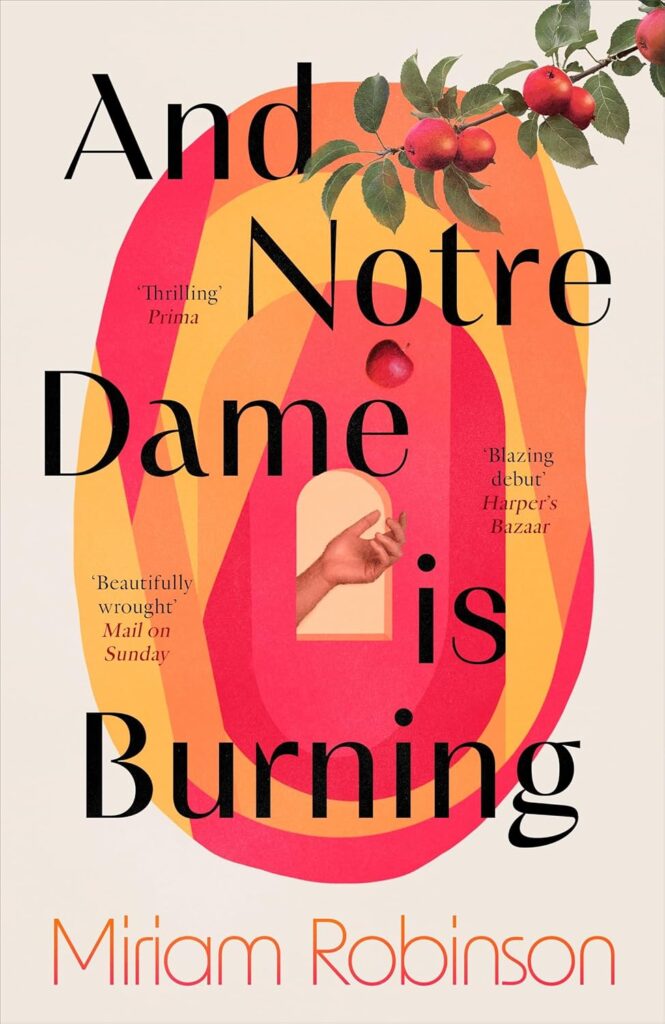
To celebrate the release of And Notre Dame is Burning, we caught up with Miriam Robinson to learn more about her writing process and workspace.
Where do you write?
I have a little walnut desk which a girlfriend gave me during a clear out and which fits perfectly into an alcove in my bedroom. I used to write on a grander one – a big, art deco boat of a thing – but after my divorce I moved homes and that desk was one of many things that no longer made sense.
It has felt like a symbol of something, that this little desk has found its way to me, and that it tucks so snugly into this new space.
What do you have on your desk?
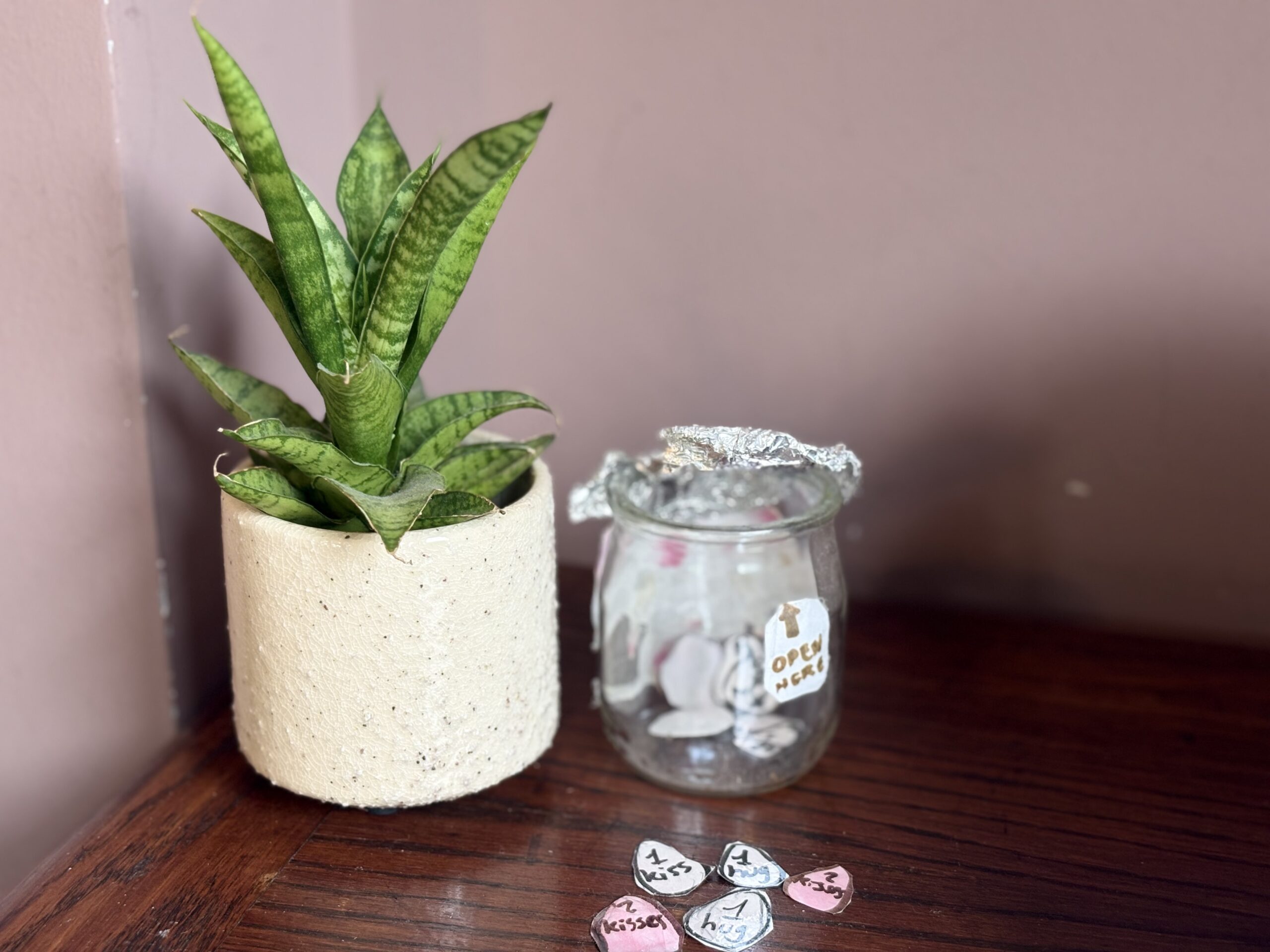
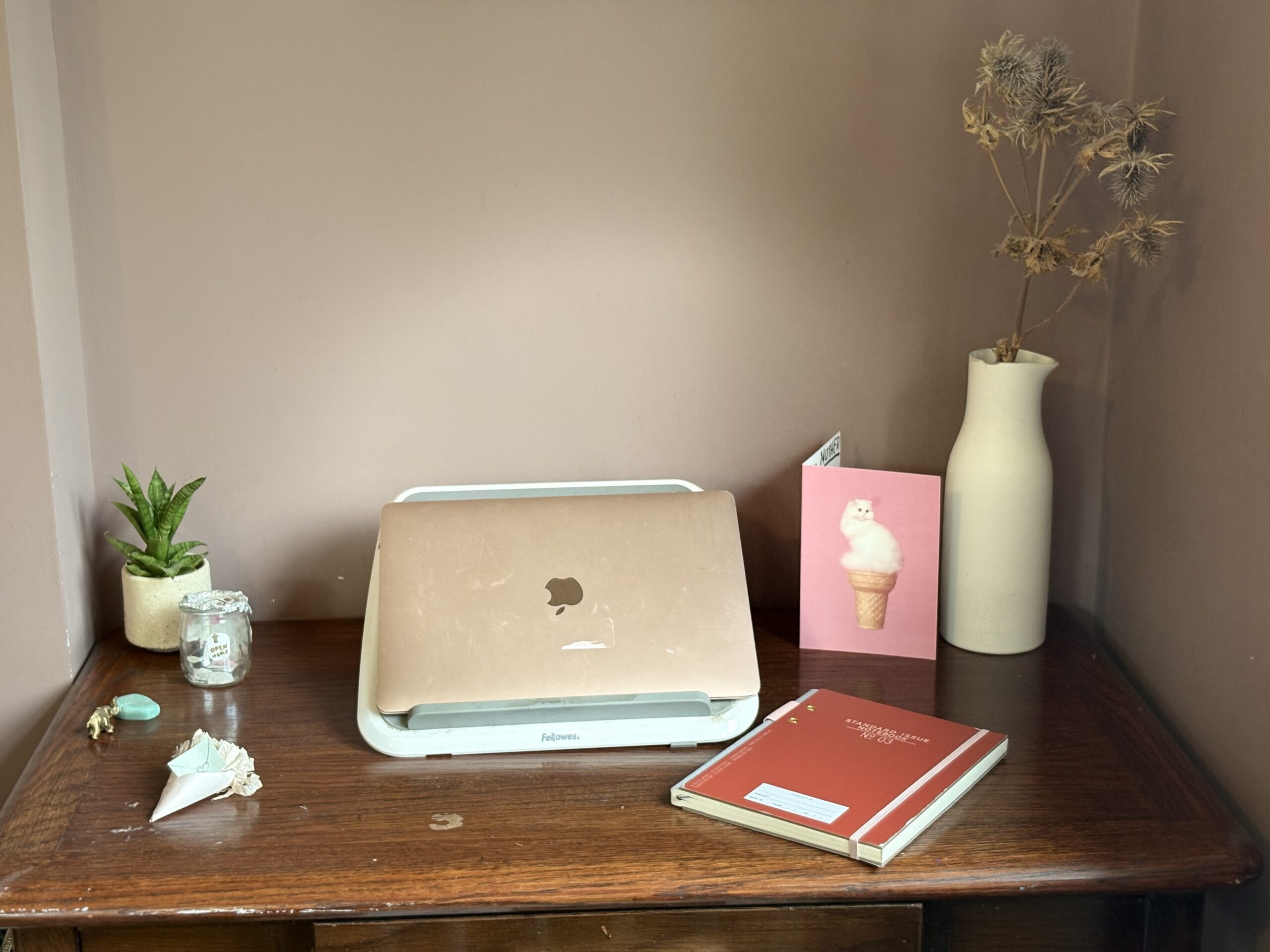
A laptop stand, a slender white porcelain vase with purple thistles in it, a card my daughter made me, and a little jar of tiny coupons for hugs that she gave me one year for Mother’s Day. I’ve used most of my coupons by now but I keep a couple in the jar, for emergencies.
Which is the most inspiring object in your workplace?
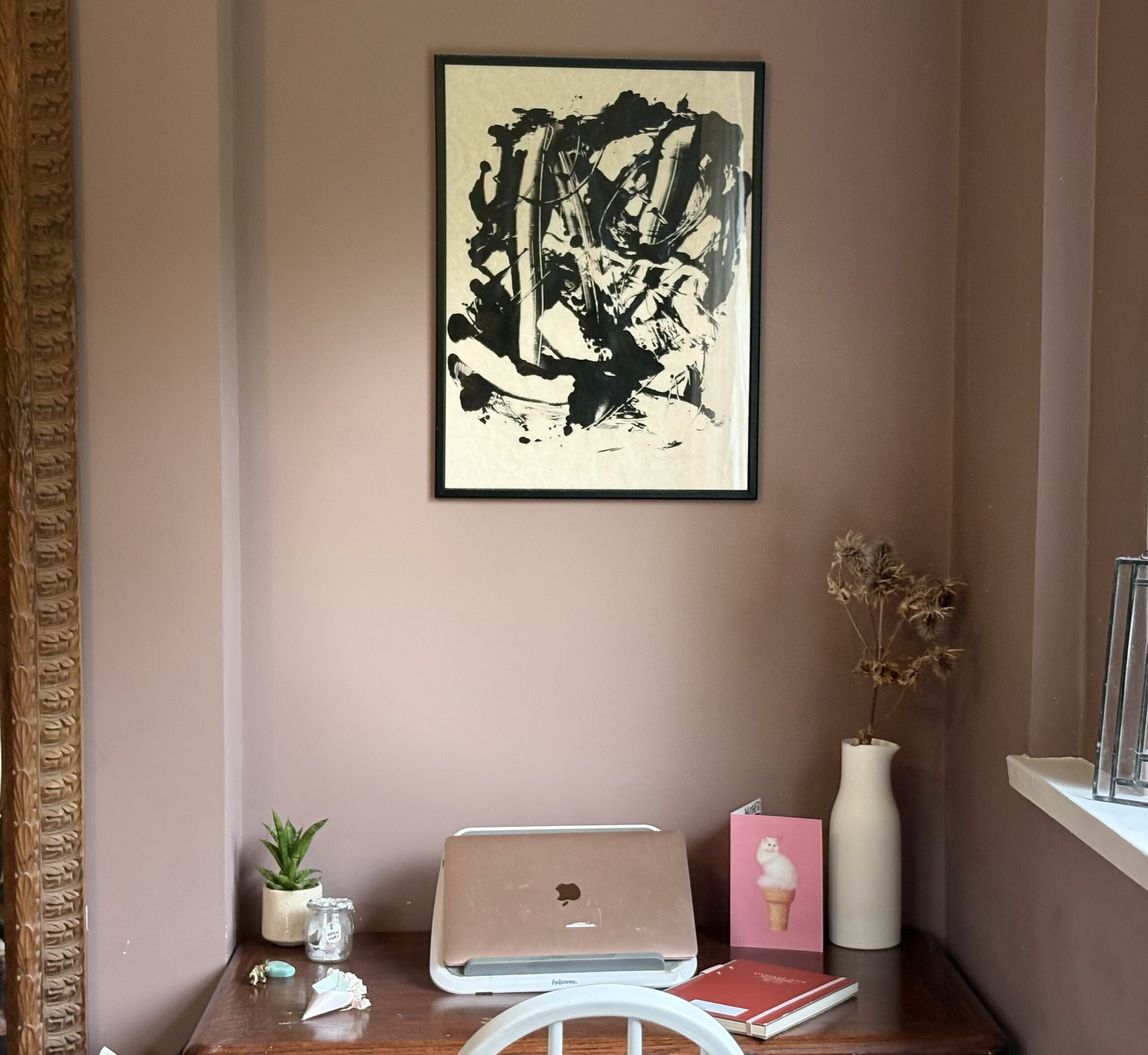
Above my desk is a painting of my grandmother’s – she was an abstract expressionist and I am lucky to have a lot of her art in my home. I have never been great at describing art but I like the contained chaos of this piece – it’s like a big beautiful storm cloud. This painting lived in my mother’s basement in Colorado for years before I brought it over to London, and it feels like a nice reminder of generational creativity and ridiculously clever women.
What does your writing process look like?
I imagine my process for future books will look quite different than it did for And Notre Dame is Burning, but for this one I began with recording voice notes while I took walks in the Hackney marshes. I don’t think I was doing anything fancier than trying to untangle the feelings I was having at the time. I’d come home and type up those notes, fixing the errors where my phone hadn’t understood my American accent, and then found myself with a series of fragments that needed ordering. I printed everything out, moved pieces of paper around – I’m quite a tactile writer, I like post-its on walls, I like to print things out and get the feel of the weight of the story – until I had a rough sense of what order the fragments could go in.
In the end a lot of it was practical – some pieces had to go after the others for the story to make sense – but others I could play with more, and given infinite time I probably could have re-ordered them forever. There’s still a few pages I would swap around if I could. But at some point you just have to stop.
What can you see from your window?
I wrote And Notre Dame is Burning in my old house, and from the window I could see the apple tree in our backyard, and the neighbouring yards to the left and right. The people who lived to the left were lovely friends and the ones to the right were very mysterious – always coming and going, shuttling things in and out – and we used to wonder whether they were hiding dead bodies back there, like in that movie The ‘Burbs.
Now that I’ve moved there’s a huge tree just outside the window and a church in the distance, children playing below and a man who is not very nice to his dog, and a family who always leaves strange objects out on their window ledge – right now it’s a cantaloupe and what I think is a frying pan.
Have you ever had a particularly good piece of writing advice?
Aimee Bender once said in an interview (I’m paraphrasing here) that as a writer the only thing you can control is that you turn up to the page. For her, it was ritual – two hours every morning before the day began, and her job was to arrive ready to write. Whether the writing happened or whether it was any good, was out of her hands.
I fail spectacularly at that kind of rigour but it’s a reminder to relinquish some control whenever you do manage to sit down – that your appearance at the page is what you owe the craft, and that the rest will come if you continue to return and don’t force things too much, if you create space and care and attention.