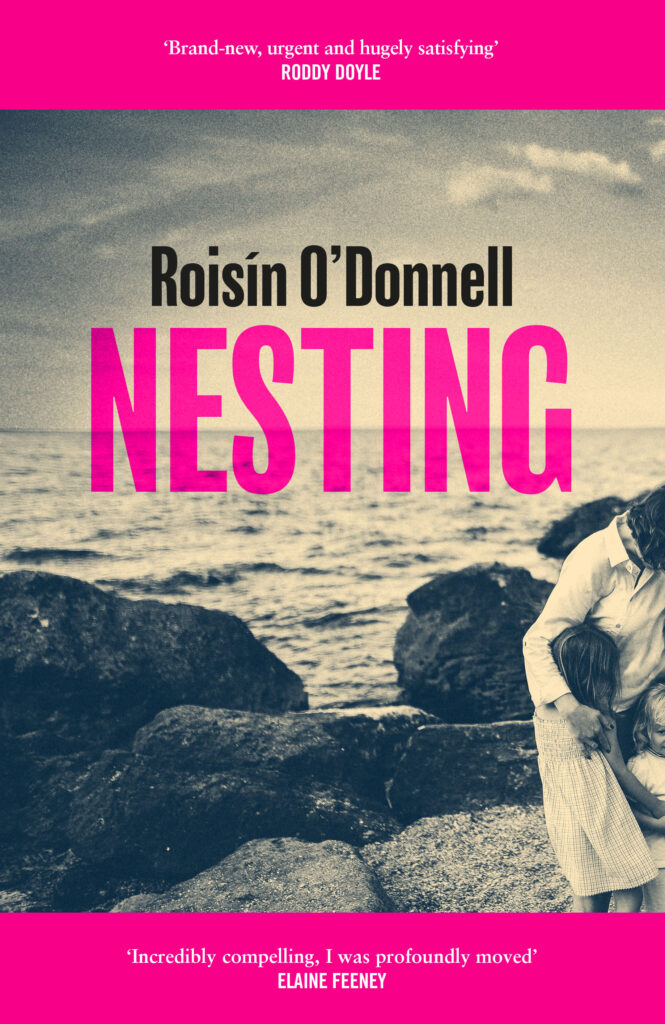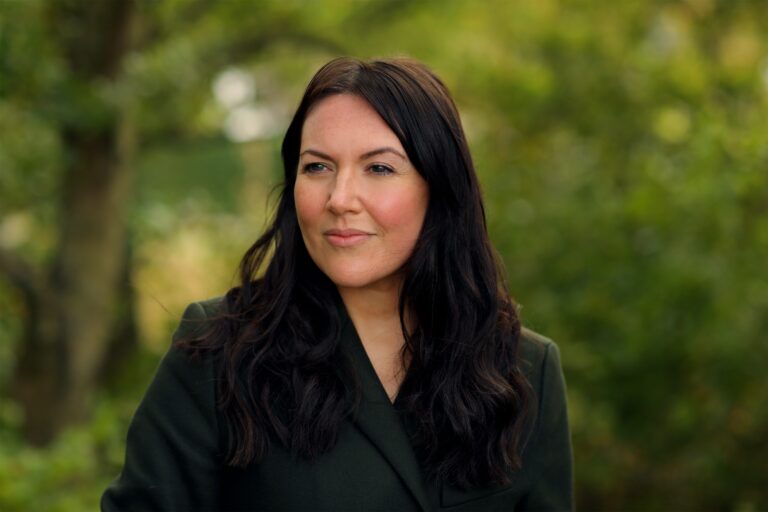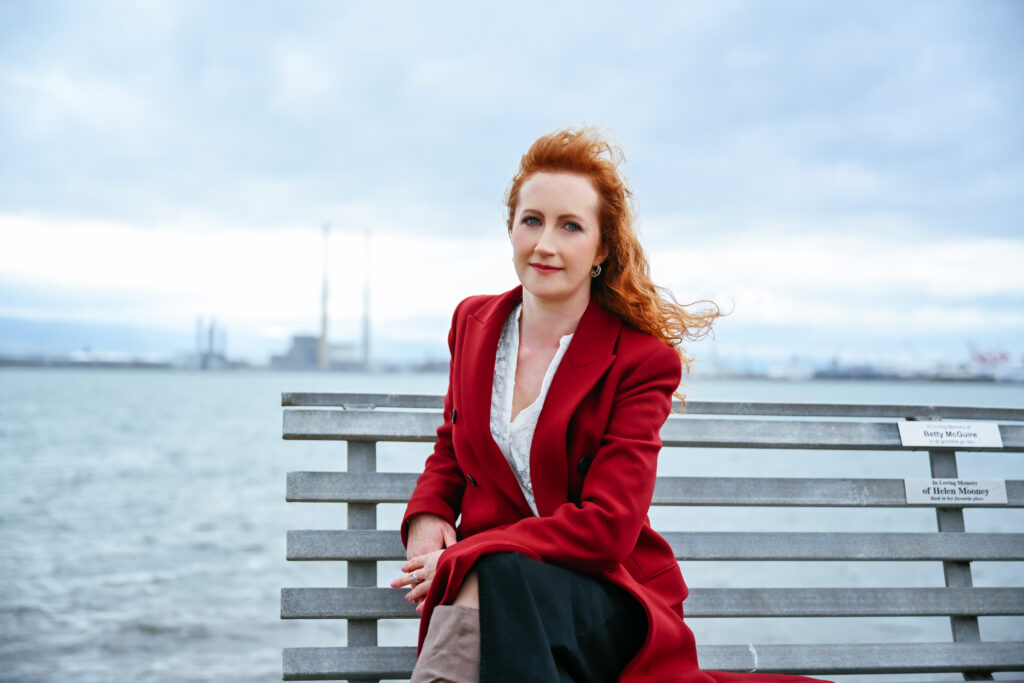
To celebrate the paperback release for Nesting – Longlisted for the 2025 Women’s Prize for Fiction – we caught up with Roisín O’Donnell to learn more about her writing process and workspace.
Where do you write?
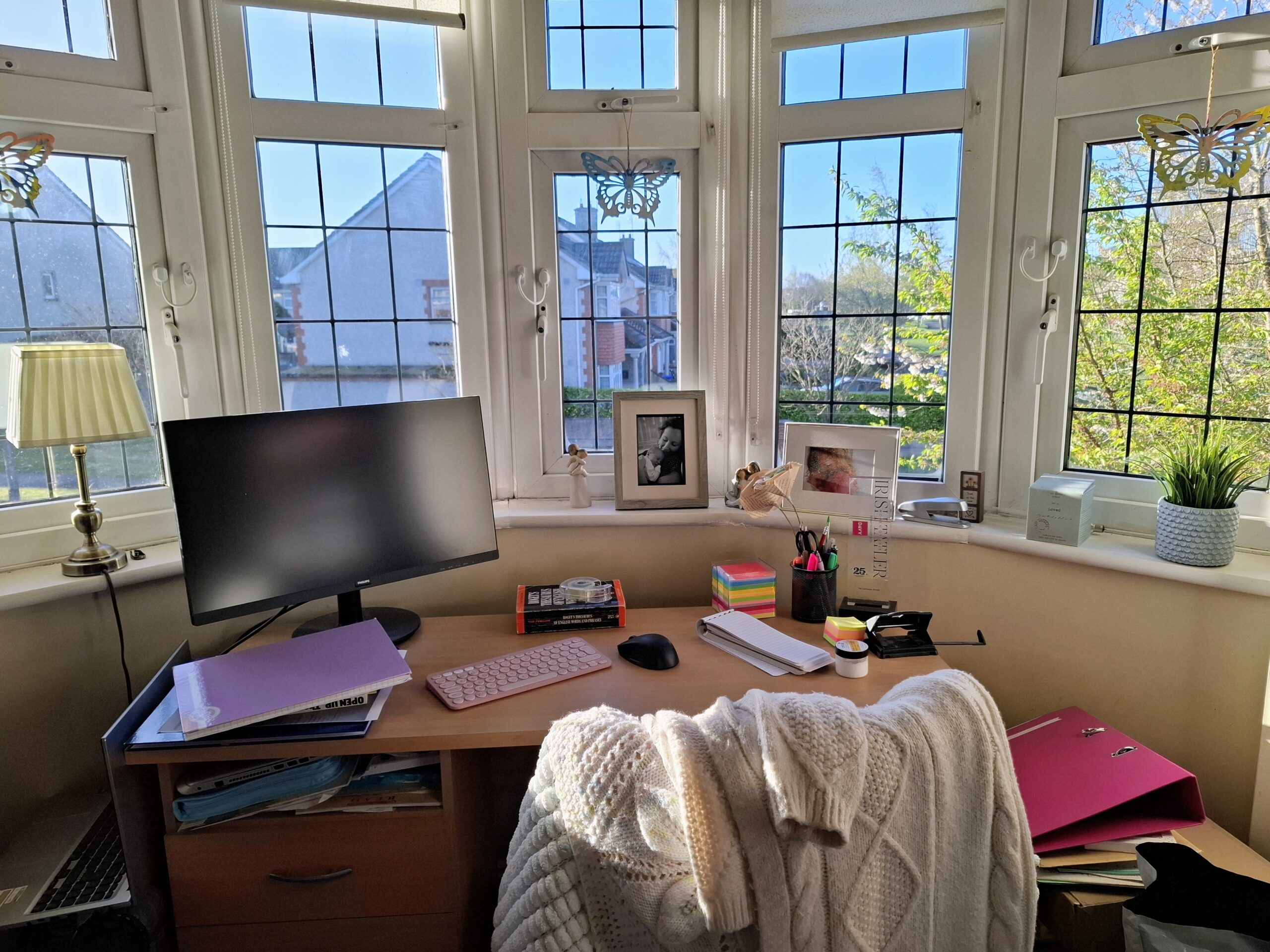
I have a small desk in the bay window of my bedroom, which catches the morning sun. It is a cosy space, filled with natural light, but I don’t always write there. When I was writing Nesting, I was single parenting and also teaching full-time, so I had to adapt to writing in small snatches of time, often on the go. Getting away from my desk at first draft stage helps to keep narrative energy flowing. I will write almost anywhere! I write at the kitchen table, in the garden, in my car, or even in bed. I write on my phone, which I find oddly helpful, as it forces me to focus on just a couple of sentences at a time.
What do you have on your desk?
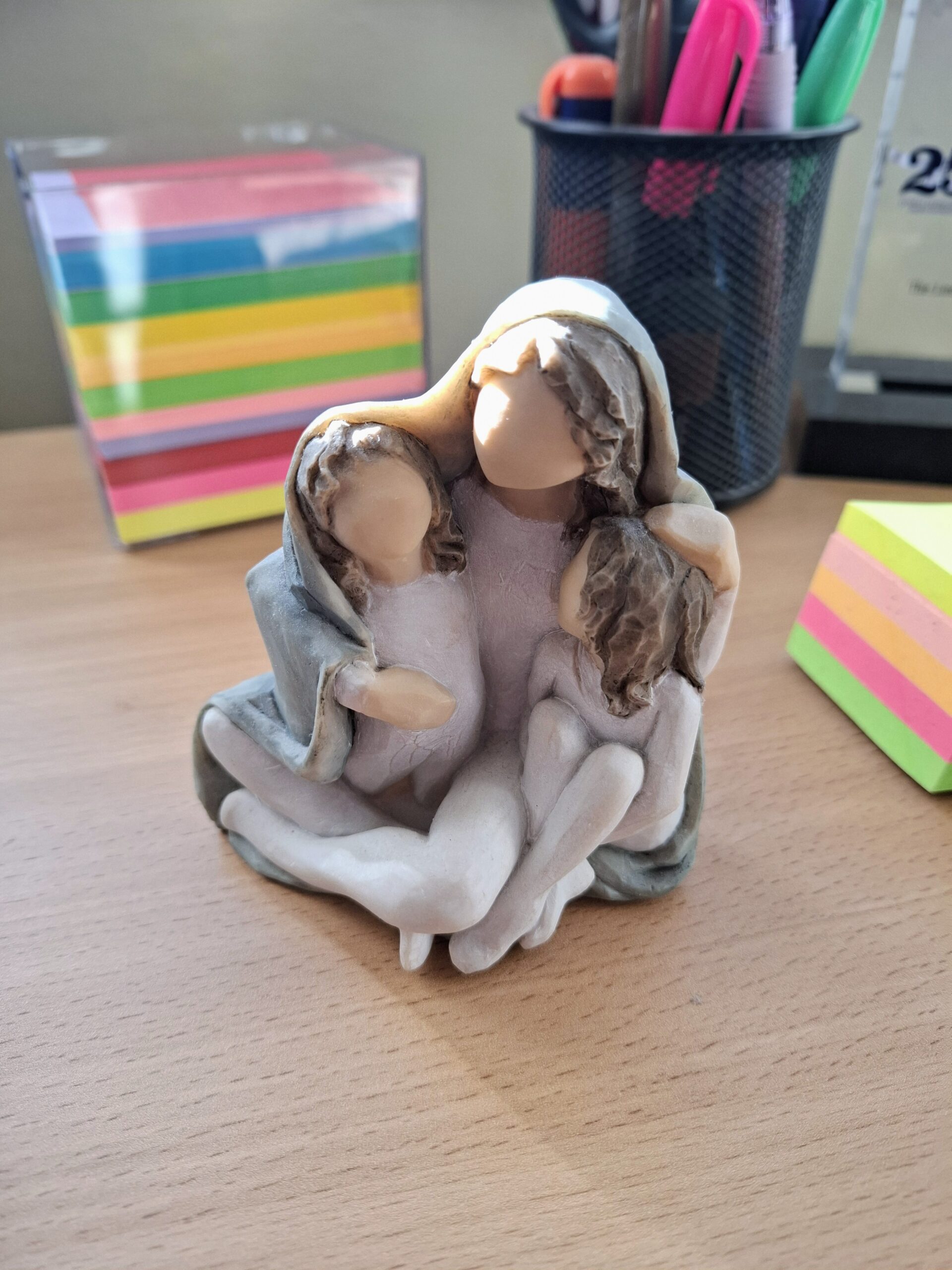
Keeping my desk fairly tidy helps to clear my head. Besides, the desk is tiny – bay window sized – so there is no room for clutter. I always have a notebook to hand, a print-out of my latest draft in a ring binder, alongside a pot of pens and stacks of sticky notes – useful for editing. On my windowsill, I have framed baby photographs of my daughters, and a Willow Tree figurine of a mother and two children wrapped in a blanket. It was a birthday gift from my mum, and there is something so comforting about it. When my eldest daughter saw it, she said, ‘Look mum, it’s us.’
Which is the most inspiring object in your workspace?
A paper rose made from the pages of an old book. It was a gift from the Hay Festival in 2025, where I was in conversation with Pulitzer-prize winner, Cristina Rivera Garza, in a tent, in the middle of a summer storm. Wind and rain were pelting the canvas, and I thought the whole thing might fly away! But the fury of the elements only added to what felt like such a vital, urgent conversation. Cristina understood aspects of Nesting I hadn’t articulated before, and the audience had brilliant questions. There is something indelible about that moment when a reader unfolds your work and hands it back to you in a new form. Skies clear. Lights flicker on. Pieces fall into place.
What does your writing process, from gathering ideas to finishing a manuscript, look like?
My process begins long before I put pen to paper. Images, scenes and characters arrive in my mind, and I carry them around for many months or even years before beginning to write long-hand in A4 notebooks, non-chronologically, following the flow of ideas. It is exhilarating and terrifying: a type of possession. I type up my handwritten prose as I am going along, and I also have a constantly evolving ‘working plan’. Once I have a full draft, I print out the manuscript and re-write it from beginning to end, experiencing the novel as a reader. I love editing. It’s a rare chance in life to hone in on your own intuition.
What can you see from your window?
My desk overlooks the street, so there are always people walking by, kids kicking footballs, babies in buggies, dog-walkers, cars and bin lorries. In late April, my window is filled by the pale pink blossoms of a cherry tree, and it’s like writing in the clouds. I often write at night, after my children have gone to sleep, so at those times the curtains are closed. My youngest was unwell recently and ended up sleeping in my bed. I didn’t want to wake her, so I sat at my desk, turned on the desk lamp, and closed the curtains behind me. She said my typing sounds like rain!
Have you ever had a particularly good piece of writing advice?
Very early in my writing career, I was sponsored by The Stinging Fly magazine to attend a series of three residential weekend courses with Claire Keegan in County Wexford. Claire is such an inspirational person to be around. She talked about authenticity and care which manifests at a sentence level in your attention to detail, and the importance of gaining your reader’s trust. She likened it to bonding with a wild horse! With my favourite writers, I know within a few sentences that I am in safe hands. Writing a novel, you can get caught up worrying about the bigger picture, but it is the small things that matter just as much.