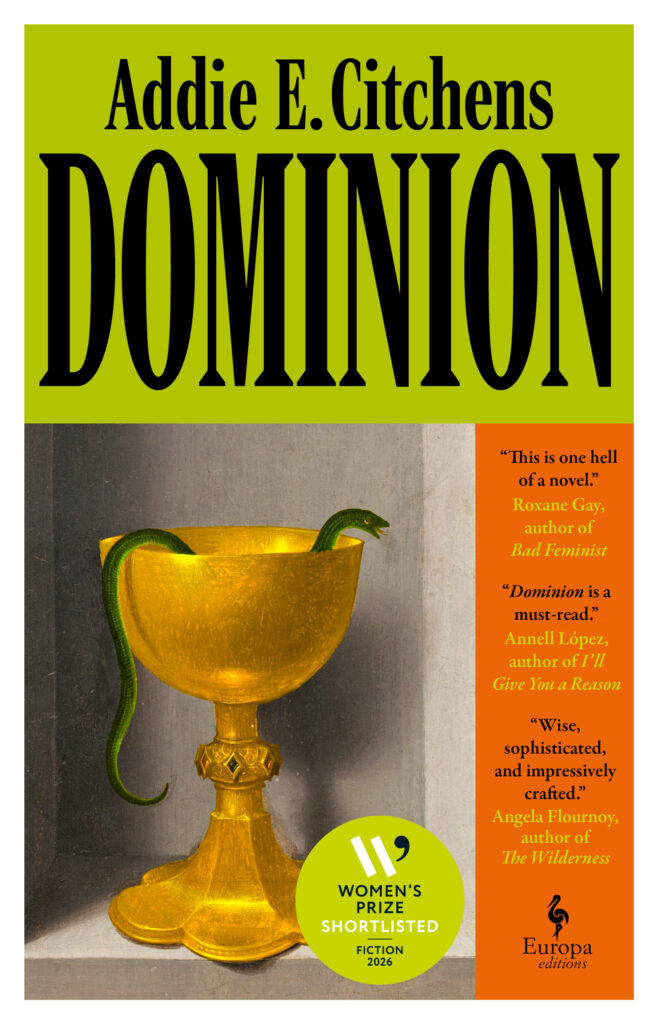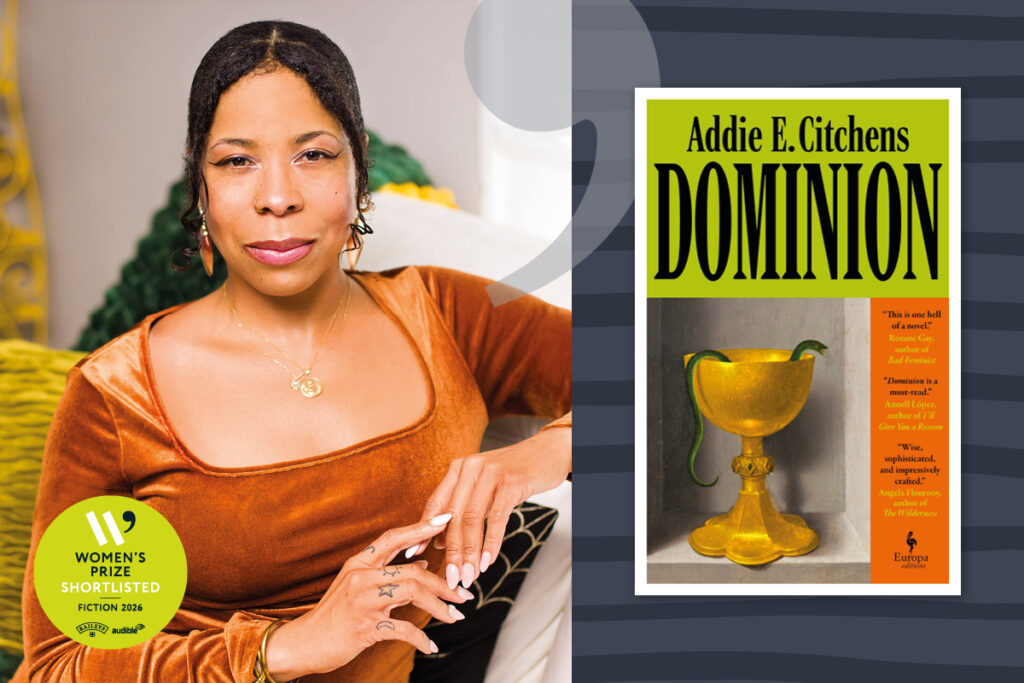
In Dominion, Addie E. Citchens writes an incandescent debut that exalts the beauty and strength of Black womanhood whilst illuminating the pervasive sins of the patriarchy, and the bargains women strike to survive them.
Shortlisted for the 2026 Women’s Prize for Fiction, Chair of Judges Julia Gillard, said: “Set in the American South, Dominion by Addie E. Citchens is a taut novel about power, race and privilege. Telling the story of the Winfrey family through the eyes of the mother and an orphaned teenage girl, it is a spellbinding and potent debut.”
To learn more, we spoke to Addie about her inspirations, creative process, favourite authors and more:
Congratulations on being longlisted for the 2026 Women’s Prize for Fiction; how does it feel to be longlisted and what does it mean to you?
It feels incredible to be longlisted for the Women’s Prize for Fiction. It feels validating, sparkling, and humbling to be counted among the illustrious female writers honoured in this way. The Prize is a big deal, and that is not lost on me.
How would you describe your book to a new reader?
I would describe my book as an expose of how the church creates, enables, and elevates the monsters of the cloth and how women can take the journey to freeing themselves.
What was the idea that sparked your novel?
My childhood observations lead to the first drafts of Dominion. Even as a kid, I was aware of the hypocrisy evident in the church. Men interpreted the gospel and commanded obedience, while never being held accountable for upholding the “Word”, while the true service aspects of church, including the cleaning, the feeding of the hungry and bereaved, the real work, fell to women who didn’t get to voice their concerns in a pulpit, let alone preach a sermon. This sentiment as well underscores why Prizes that centre and honour women’s writings not only matter but are necessary.
What did the writing process, from gathering ideas to finishing your book, look like?
The first and most important aspect of my writing process was avoiding responsibility like parenthood and full-time work. My writing needed me. That said, though I am not a big index card or flow chart planner as a writer (or rather Dominion didn’t ask for that particular type of research), I do believe in consistency and discipline when it comes to the work. I have a habit of writing first thing in the morning and mid-afternoon everyday. While working on the first chapter, I re-read what I’ve written previously everyday. I know my story inside and out and practice making its acquaintance every time I sit down to write.
Which female author would you say has impacted your work the most?
For this story, I would definitely say Zora Neale, because of the pastoral nature of the work, how it is truly the story of women on a journey to get free, and the humour, despite the mess.
What is the one thing you’d like a reader to take away from reading your book?
I want readers to question any and everything after reading Dominion, especially everything that purports itself as good, moral, or possessing in integrity.
Could you reveal a secret about your creative process? This could be where you like to write, a unique writing ritual you have to unlock creativity, or how you go about writing.
Each story has a theme song that I play on repeat before I get started in order to get my mind focused on the work at hand.
Why do you feel it is important to celebrate women’s writing?
I think is imperative to celebrate women’s writing because even until this day, everything we consume is filtered by the patriarchal lens. Whether it pertains to women’s stories, women’s bodies, or women’s intellect, that lens is skewed, outdated, and has a vested interest in making both women and the stories we present, as lacking in some ways. Our stories are our voices, and our voices are our selves. We are enough; the patriarchy doesn’t get to dictate our worth or our voices anymore. Now is the time to celebrate women’s writing. Always is the time.