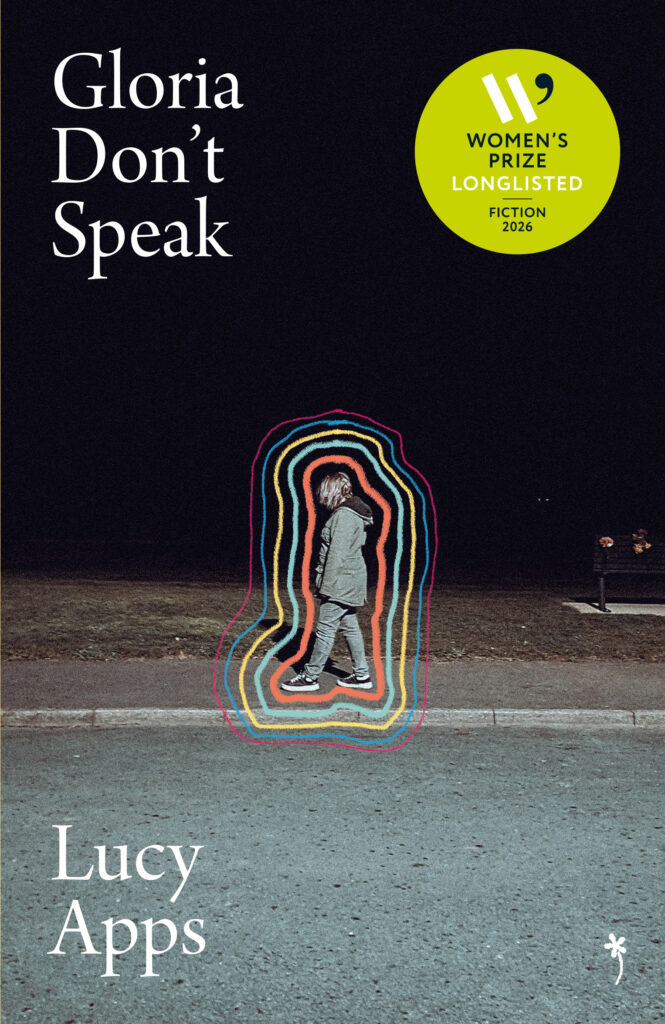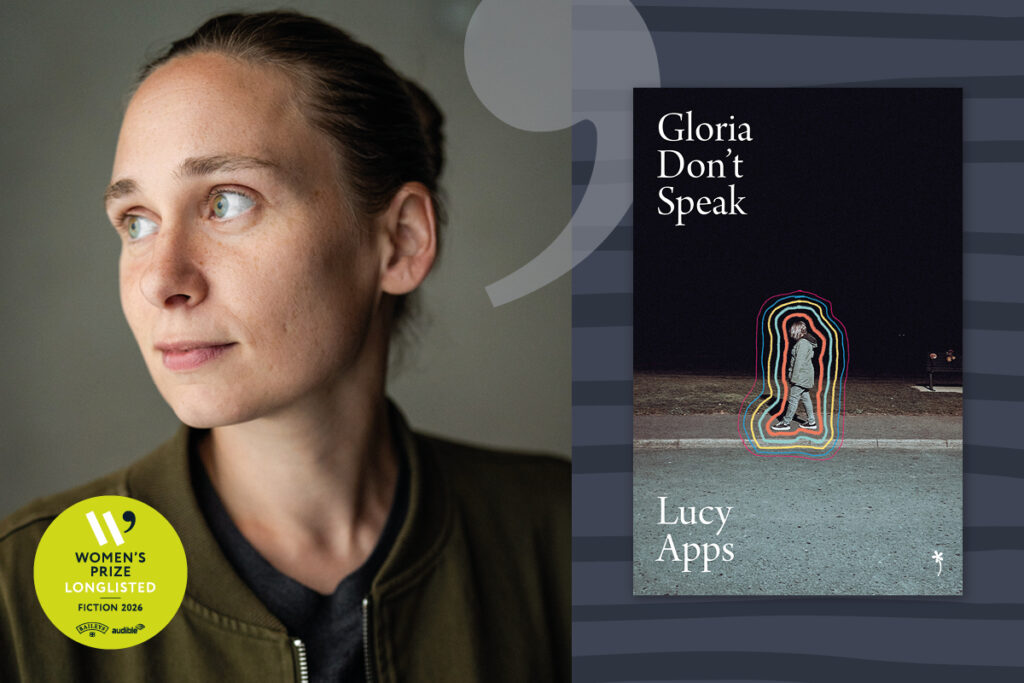
In Gloria Don’t Speak debut Lucy Apps presents a deeply empathic portrait of a young woman with a learning disability, exploring themes of vulnerability, violence and the desire for connection.
Longlisted for the 2026 Women’s Prize for Fiction, judge Mona Arshi says: “Gloria Don’t Speak by Lucy Apps is a brilliant book. It explores themes of violence, exploitation, and agency through the really fresh and original voice of Gloria. A powerful book with empathy at its heart.”
To learn more, we spoke to Lucy about her inspirations, creative process, favourite authors and more:
Congratulations on being longlisted for the 2026 Women’s Prize for Fiction; how does it feel to be longlisted and what does it mean to you?
I wrote most of Gloria Don’t Speak in 2018, and at that time I couldn’t really get anyone interested in it, and ultimately put it away. I didn’t really expect that it would ever get published; I accepted that there wasn’t an appetite or space for a book like mine. At the same time, I couldn’t quite let go of it. I would periodically come back to it and tweak the manuscript – I felt that it had something worth saying. So being longlisted for the Women’s Prize is an incredible feeling and very validating.
How would you describe your book to a new reader?
It’s about a woman called Gloria who has a learning disability. The book is rooted in her perspective and world view. She makes friends with a dodgy guy named Jack and it all kicks off from there.
What was the idea that sparked your novel?
I really wanted to write something that centred an adult woman with LD. It’s a perspective that seems to be absent in storytelling – be that film, TV or novels – and I wanted to address that. I also think that part of relating to people with LD (especially someone like Gloria who is minimally verbal) involves really thinking a lot about their perspective and how things land for them, which is basically the same starting point as writing – trying to think yourself into someone else’s head. So that was an interesting parallel for me.
What did the writing process, from gathering ideas to finishing your book, look like?
I started off thinking about the characters. Gloria and Jack were there almost immediately, and I thought about how they would meet, what their dynamic would be. I initially tried to write in first person, from Gloria’s perspective, but that didn’t feel authentic because she can struggle with putting things into words. When I started writing in close third and found the voice, it took off. I didn’t do a lot of research or gathering of ideas during the actual writing process, but I drew on my experiences working with people with LD and, of course, living in Newham.
Which female author would you say has impacted your work the most?
Andrea Dworkin. I read a load of her books in my late teens/early twenties. I loved her writing for its quality on the page, and the impression she gave that she was writing a very uncompromising, exacting and beautifully described truth, and that writing itself was an act of bravery. I’m not saying she actually was writing The Truth, looking back, but she really underlined the idea of doing so and doing it in a very disciplined way, and that really captured my imagination.
What is the one thing you’d like a reader to take away from reading your book? Is there one fact from the book that you think will stick with readers?
I hope it will be a compelling read, and at the same time create a bit more empathy and understanding for people with LD. But in the end what people take from the book is up to them.
Could you reveal a secret about your creative process? This could be where you like to write, a unique writing ritual you have to unlock creativity, or how you go about writing.
I write at a desk in my bedroom. When I’m starting to figure out ideas for a first draft, I’ll usually create a playlist with songs relating to various aspects of characters, mood, events and tone. If I’m really stuck on a scene I will go out for a walk, or go on a random bus ride, and think it over.
Why do you feel it is important to celebrate women’s writing?
As I understand it, women authors outnumber men these days, and are selling more books (in the West anyway, I’m not sure how that plays out globally). This is in contrast to other creative industries, and I don’t have a good answer as to why it’s happening. However I still think it’s worth celebrating women’s writing specifically. I think women broadly write from a different perspective to men, with different observations and preoccupations – and that’s important. Especially considering how little space there has been for that in the past, and the fact that we are still operating in a broader social and historical context where women’s voices aren’t and haven’t been dominant. The trend for women writers now to go back and reimagine historical stories from a female point of view is perhaps a part of that, trying to look back and work out what the female perspective was at a time when it was largely missing from the record.