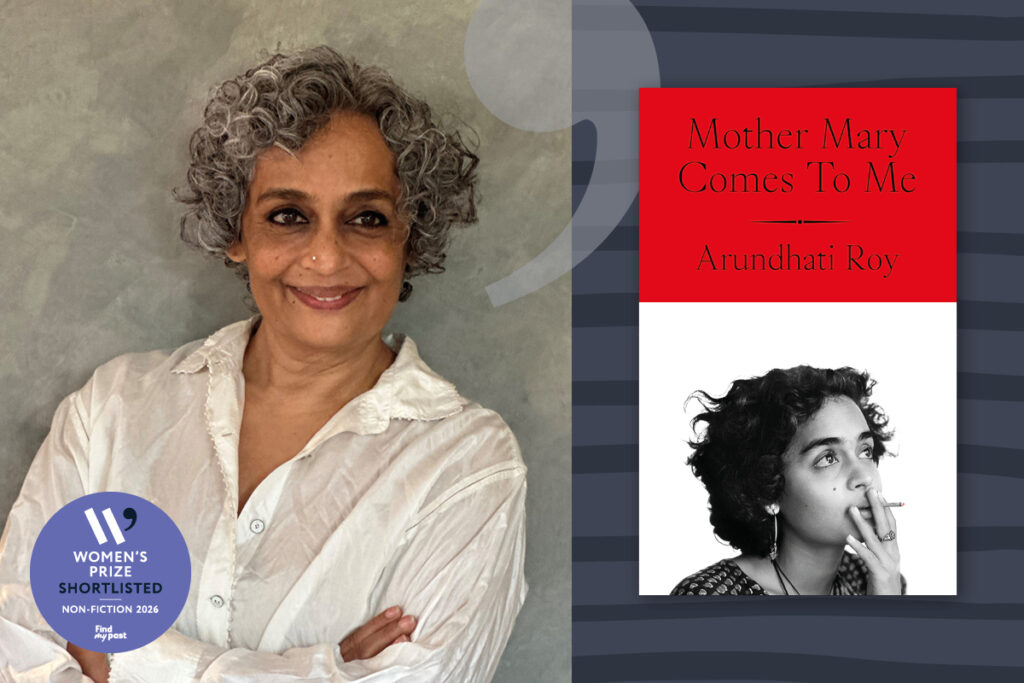
Celebrated novelist and political essayist Arundhati Roy’s first memoir, Mother Mary Comes to Me, is an intimate and inspiring exploration of identity, mother-daughter relationships, and how this has shaped Roy into the person and writer she is today.
Shortlisted for the 2026 Women’s Prize for Non-Fiction, Chair of Judges Thangam Debbonaire says: “If you’ve read The God of Small Things, you may already want to read Mother Mary Comes to Me. If you didn’t, you should still read this book. It’s an incredible story, dealing with how a woman becomes an artist, becomes a writer, but also about Roy’s campaigning life.”
To learn more, we spoke to Arundhati about her research, writing process, inspirations and more.
Congratulations on being longlisted for the 2026 Women’s Prize for Non-Fiction; how does it feel to be longlisted and what does it mean to you?
Of course being longlisted for the Women’s Prize is lovely. But I have written about my complicated feelings about accolades in Mother Mary Comes To Me. Please read page 40 of my book — the paragraph beginning with “I feigned sleep the night she came and woke my brother up…”. After the description of what happened to my brother that night, and to me the next morning, the paragraph ends like this: “Since then.. on occasions when I am being toasted or applauded, I always feel that someone else, someone quiet, is being beaten in the other room. If you pause to think about it, it’s true. Someone is.” This understanding is the foundation of almost everything that I write. While we place ourselves in what we write with as much honesty as possible, we can never believe that we are the only story. Never. The recognition I receive helps me and protects me when my writing touches nerves—of the violent mobs, of the vengeful government in my country. But for me, prizes and shortlists and longlists are complicated things. As they should be for all adults.
What is the one thing you’d like a reader to take away from reading your book?
To be honest, there is no One Thing. The whole point of Mother Mary Comes To Me is that for every One Thing there is Another Thing. And then Another. I don’t think I want a reader to take away One Thing. It would sadden me if that were the case.
Why do you feel it is important to celebrate non-fiction writing?
We are entering an era when increasingly there is no set of facts that we can all agree upon. What does this do to our definition of fiction and non-fiction? As a writer of both fiction and non-fiction I often have my fiction and non-fiction pitted against each other. As though they are opponents. As though one is truer than the other, or more literary than the other, or less political than the other. It makes no sense whatsoever. And what is Mother Mary Comes To Me? It’s a novelist’s memoir in which her imagination, her fictional characters, her memory and imagination are as real and as factual and as true companions to her as anything and anyone else. To me it’s important to celebrate beautiful writing of all kinds. Because when writing is beautiful, it is as true and as precise as mathematics. Or music.
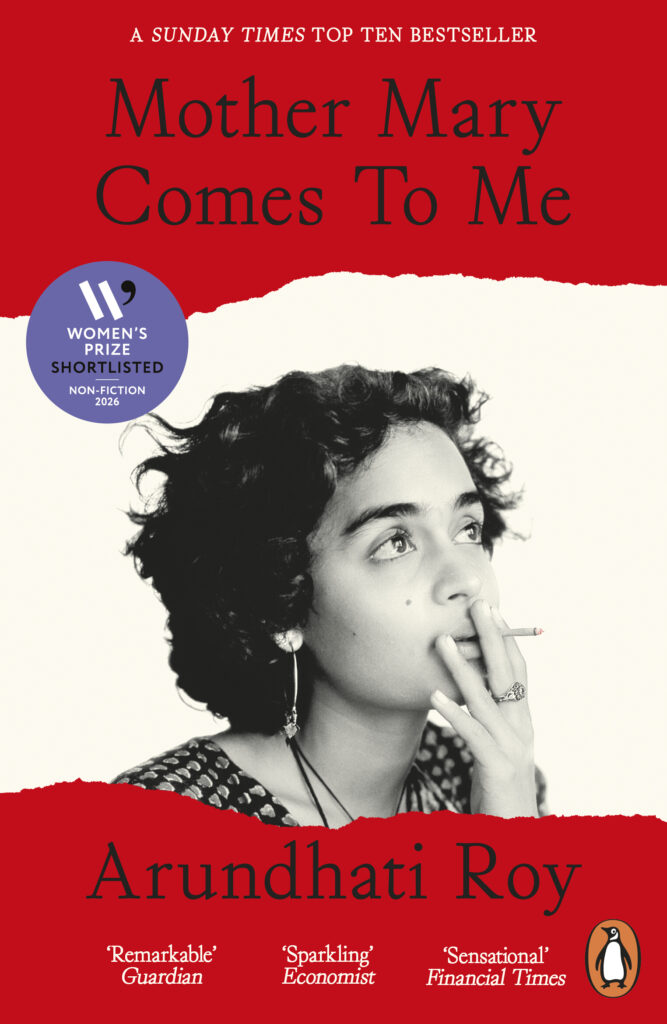
An extract from the opening of Mother Mary Comes to Me:
She chose September, that most excellent month, to make her move. The monsoon had receded, leaving Kerala gleaming like an emerald strip between the mountains and the sea. As the plane banked to land, and the earth rose to greet us, I couldn’t believe that topography could cause such palpable, physical pain. I had never known that beloved landscape, never imagined it, never evoked it, without her being part of it. I couldn’t think of those hills and trees, the green rivers, the shrinking, cemented-over rice fields with giant billboards rising out of them advertising awful wedding saris and even worse jewellery, without thinking of her. She was woven through it all, taller in my mind than any billboard, more perilous than any river in spate, more relentless than the rain, more present than the sea itself. How could this have happened? How? She checked out with no advance notice. Typically unpredictable.