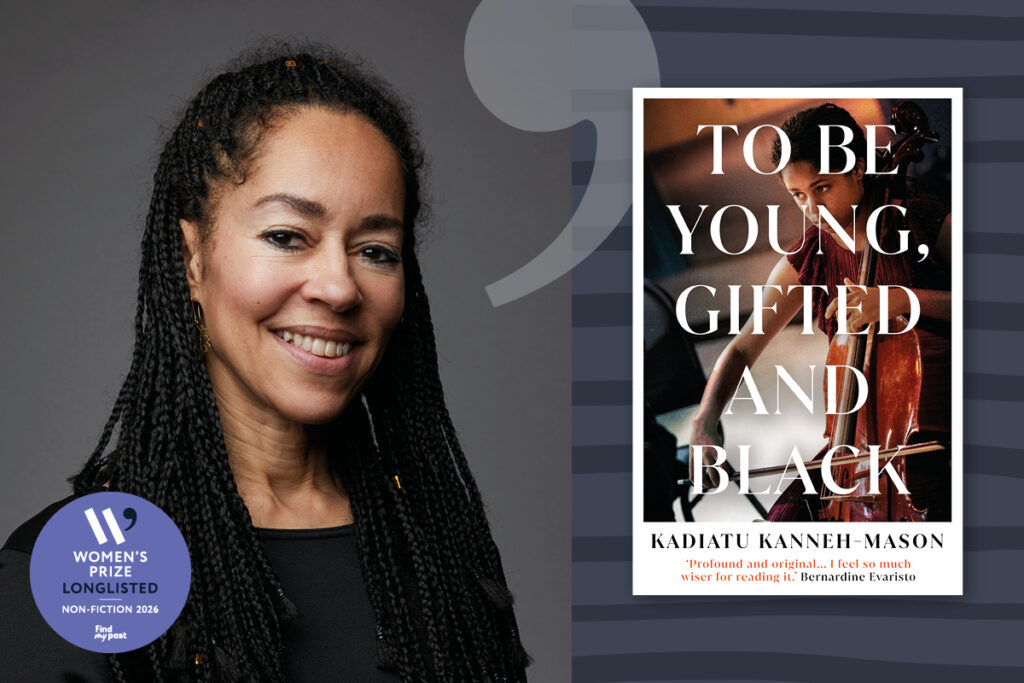
Through conversations with her extraordinarily talented family, in To Be Young, Gifted and Black Kadiatu Kenneh-Mason shares what it means and how it feels to grow up as a Black artist in today’s turbulent times, offering a message of hope, power and resilience.
Longlisted for the 2026 Women’s Prize for Non-Fiction, judge Nicola Williams says: “To Be Young, Gifted and Black is an original book about creativity and race in the 21st Century. Beautifully told by the author – the mother of seven exceptional classical musicians, who have already at a young age made their mark – it is an important and relevant read.”
To learn more about the book we spoke to Kadiatu about her writing process, inspirations and more.
Congratulations on being longlisted for the 2026 Women’s Prize for Non-Fiction; how does it feel to be longlisted and what does it mean to you?
It is a great affirmation of the incredibly painful and heartfelt revelations I make in this book. Honesty is a great risk and I talk openly about how racism affects us on a personal and individual level, and as a society. It is a moment of genuine celebration to be seen and heard, and I am really delighted.
How would you describe your book to a new reader?
This is a book which, through personal conversations and intimate revelations uncovers issues around racism, immigration and identity. How does it feel to be young and Black in the 21st Century? The importance of self-expression, creativity and freedom is the driving-force behind the stories we share as a family. By speaking to each other and out loud in this book, we hope to reach out to others, and challenge some prevailing narratives. In many ways, although there is so much defiance and determination, it’s a very quiet, private book about love and hope.
What inspired you to write your book?
I wanted to say the unsayable, and to be honest about what it’s like to be Black in the world today, and how complicated, multi-layered and increasingly vulnerable that identity is. Our focus as a family is the world of music and the arts, and we wanted to bear witness to our personal experiences, to engage with others, and to find a hopeful way through. I was inspired by other women, other writers, my sister, my mother and my grandmothers.
What did the writing process, from gathering ideas to finishing your book, look like?
It involved hours and days of intimate, painful conversations with my seven children (now mostly young adults) and my husband. We talked openly, shared memories, experiences, thoughts about the future, fears and dreams. We connected between generations and genders, and I was repeatedly shocked, saddened, or energised and inspired by what I heard. It was a challenging process of ultimately great hope, humour and joy.
How did you go about researching your book? What resources or support did you find the most helpful?
It was important for me to create a book that engaged with others – both my own family and the world in which we find ourselves. My focal point was the intimate and the personal, but situated firmly in the social, political and historical. I used my research into the particular colonial and diasporic legacies, as well as current politics, and contemporary thought to contextualise our individual and collective stories. I used journalism, media, history, policy and testimony.
Which female non-fiction author would you say has impacted your work the most?
Bernardine Evaristo (Manifesto) and Julia Boyd (A Village in the Third Reich)
What is the one thing you’d like a reader to take away from reading your book? If applicable, is there one fact from the book that you think will stick with readers?
That we all need to listen to each other and not assume that where we stand is the definitive, objective, reasonable point-of-view. We need to connect with each other. That, no matter how successful you are, or what your art or profession is, the forces that divide and define our world affect us individually and unequally. That racism is increasing globally.
Why do you feel it is important to celebrate non-fiction writing?
Women’s contribution to thought, to politics, and to society has long been marginalised. We need to recognise and cherish our worth as writers in what has largely been seen as the territory of men. Whether we write about the socio-political world, history, philosophy, or the personal, our writing is serious, valuable and worthy of celebration.
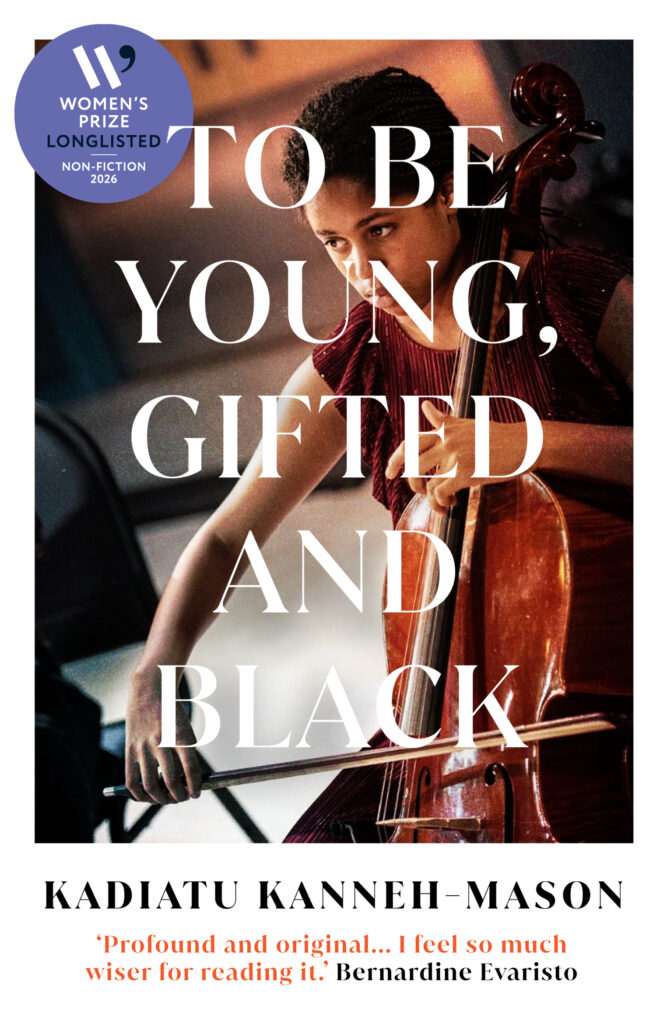
To Be Young, Gifted and Black: Creativity and Race in the 21st Century
by Kadiatu Kanneh-Mason
Find out more