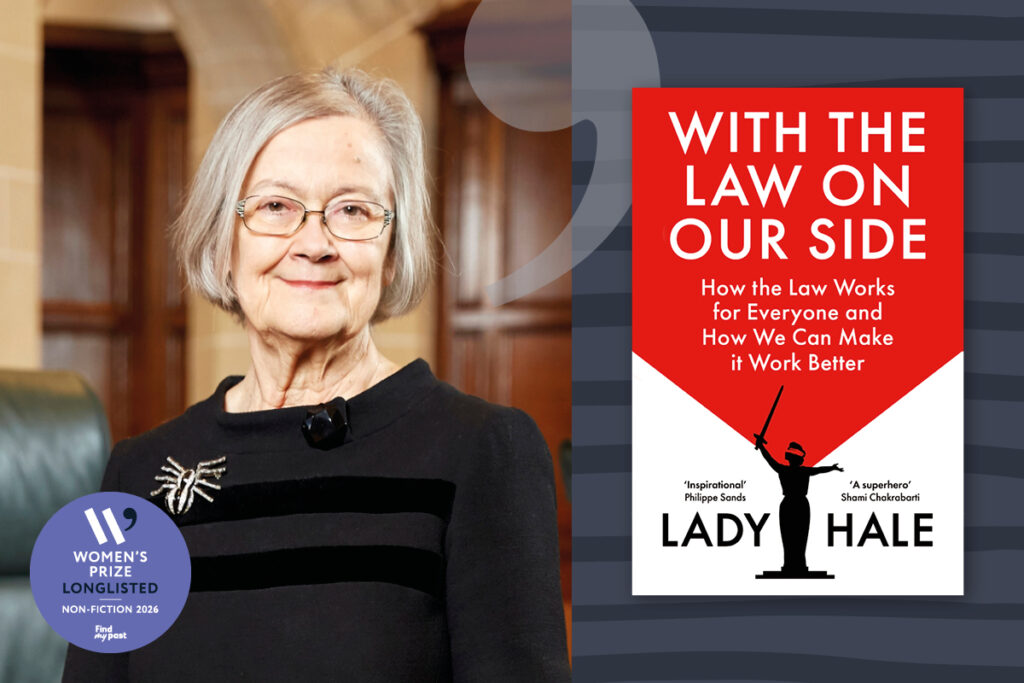
With the Law on Our Side by former President of the Supreme Court, Lady Hale, takes readers on an expert tour of the law in our land – how it works, and why we should all care.
Longlisted for the 2026 Women’s Prize for Non-Fiction, judge Nicola Williams said: “With the Law on Our Side is beautifully and clearly written – told only as Lady Hale can tell it – extremely accessible, and easy to read.”
To learn more about the book we spoke to Lady Hale about her writing process, inspirations and more.
Congratulations on being longlisted for the 2026 Women’s Prize for Non-Fiction; how does it feel to be longlisted and what does it mean to you?
It’s a huge honour to be longlisted for the Prize; it means a lot to me that a book about the law and the justice system – not always the most eye-catching of subjects – should be thought worthy of listing.
How would you describe your book to a new reader?
The aim is the persuade the reader – all kinds of reader – that the law and the justice system is there for them, that it is something we should all care about, because it can affect all of us, and we cannot do without it. So it tells a series of true stories – about what goes on in a typical day in grass roots courts and tribunals up and down the country, about the dilemmas faced by the law in deciding what rights all kinds of people – from school kids to patients in hospital – should have, and about how the law is made.
What inspired you to write your book?
The fear that people don’t realise how important the justice system is for us all; that it is not valued or resourced as it should be; that the rule of law on which we all defend is undermined if we don’t care enough about it.
What did the writing process, from gathering ideas to finishing your book, look like?
Working out how best to put the message across took time. Then I decided to visit a variety of courts and tribunals to see what went on there. This was fun. Then I had to write that up. The next part was deciding which legal cases to describe and write them up – first by telling the story of the case, then by asking readers what they thought the answer should be, and then explaining what the court thought the answer was, all to show that it is not always easy to out where justice lies. The last part describes making law in the highest court, in government and in parliament – where I took part in the debates on the Rwanda Bill in the House of Lords.
How did you go about researching your book?
The resources were my own observations, the legal cases in which I had been involved as a Senior Judge (or occasionally about which I had read), and The Passage of the Safety of Rwanda (Asylum and Immigration) Bill through Parliament, in which I took part as a member of the House of Lords.
Which female non-fiction author would you say has impacted your work the most?
Recently, her Honour Wendy Joseph KC. Also Baroness Shami Chakrabarti.
What is the one thing you’d like a reader to take away from reading your book? Is there one fact from the book that you think will stick with readers?
‘Ah, now I realise why the law and justice system matter to me!’
Why do you feel it is important to celebrate non-fiction writing?
It paints a picture of real life – it tells us stories, but not stories which the author has made up, true-life stories which the author has seen, heard or read about.
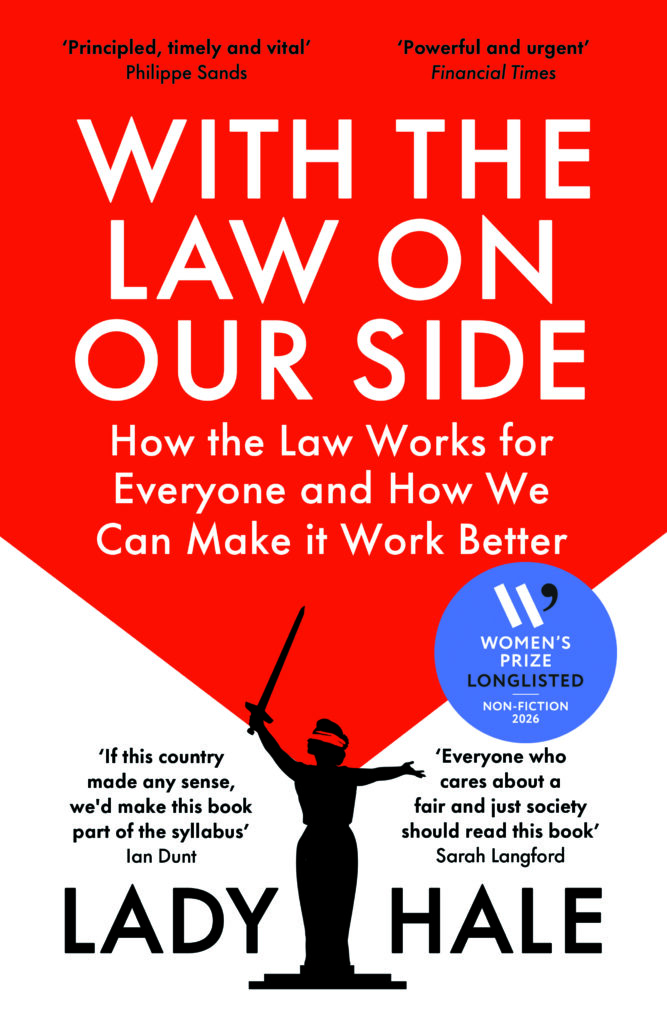
With the Law on Our Side: How the Law Works for Everyone and How We Can Make It Work Better
by Lady Hale
Find out more