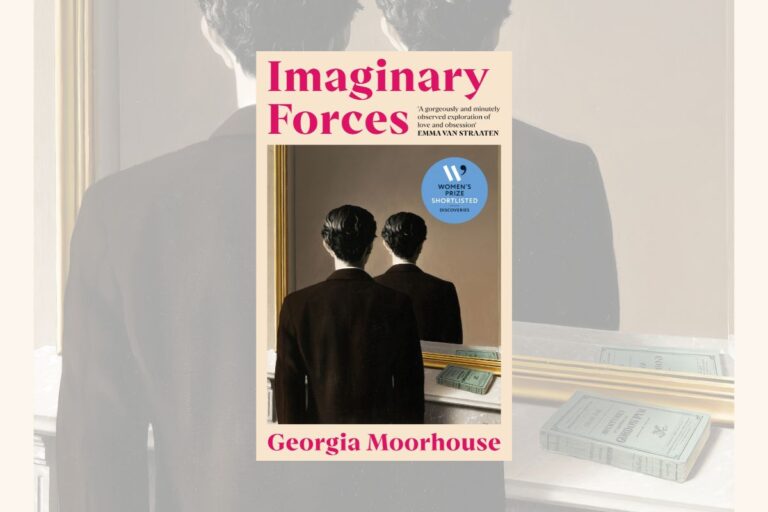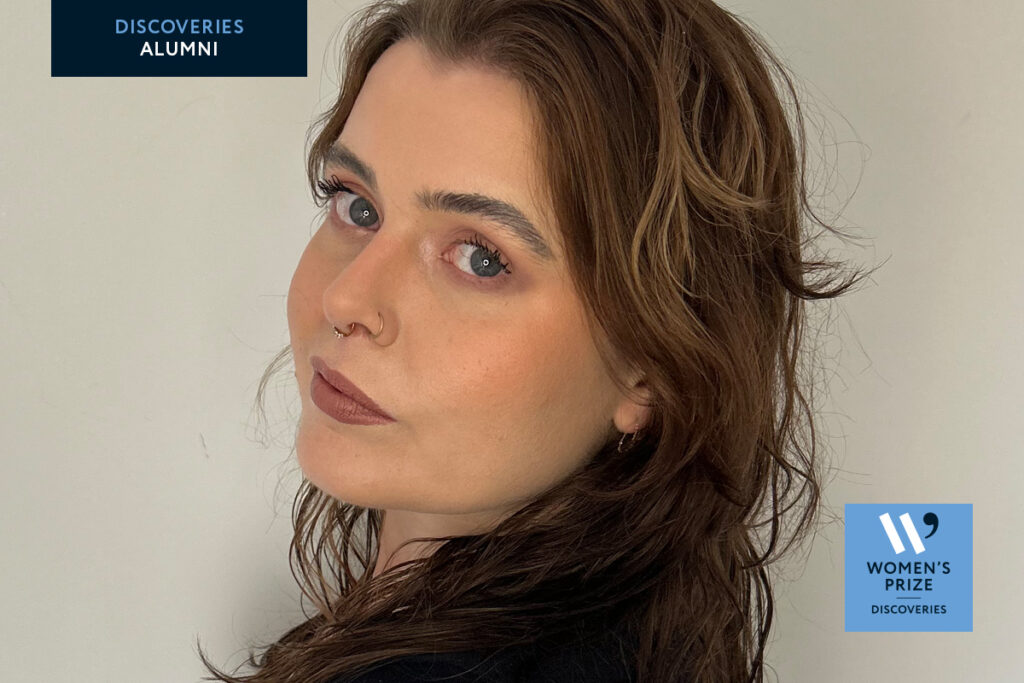
Rosie Rowell, winner of Discoveries 2025, shares her writing journey and her experience of being a part of the programme – now until for entries until January 12 2026.
Winning Discoveries helped me discover the book I want to write, and made me realise how much I needed to write it.
Most writers will say, ‘I’ve been writing ever since I can remember’. I am the same. As a kid, poems and stories (always with that plucky orphaned heroine) and later, full novels on my laptop after school. I was always hungry, always desperate to prove that I was going to be someone clever, and talented, and worthy. All those Big Teenage Feelings. I kept going into my early twenties, when my (ever rocky) mental health took a dramatic and ugly nosedive right into Whittington Hospital A&E. After that, I stopped writing.
Ten years later, my husband discovered writing during lockdown and I, after subjecting him to constant unsolicited ideas and advice, remembered I loved it too. I decided to do the three month Writing Your Novel course with Curtis Brown Creative (just for fun! No pressure!) and so I needed a story to work on.
I started with a bland idea for a thriller in which a young girl goes missing and her older sisters try to find her. I had a vision of three girls growing up in a dark forest, learning to swim in dangerous waters, knowing the trees by name. I wanted the story to be about guilt, regret, and the horrors of teenage girlhood. About being that hungry kind of girl, in every way – about never feeling good enough. But, for the purposes of my CBC course, it was very much an exercise, and I gave myself little emotional connection to it, beyond enjoying the process of learning how to write.
I added piles of plot, planned every scene, and wrote tens of characters. The first draft was horribly complex, muddled, and emotionally shallow. My enthusiasm was infected with anxiety – suddenly my work was going to be read by someone, and so I felt the urge to make it palatable, ‘sellable’. All my writing until that point had been weird, dark, chaotic, lacking structure or technique, and only read by me.
Through the first couple of drafts, I wasn’t really writing a book at all – I was just learning how. There were moments where I found something interesting, or discovered myself writing a sentence which turned out beautiful, as if by magic. Slowly, I found that good writing does not require the kitchen sink; it requires trust, and a slow process of stripping away, until you find what your book wants to be.
Then, earlier this year, I won Discoveries, which is unexplainably mad. I was gifted with excellent advice, and endless support and enthusiasm for my writing. The incredible judges saw something in my work which, I’m a bit ashamed to say, I hadn’t seen myself. I was offered community, mentoring, friendship, resources, a cash prize, and a brilliant new Curtis Brown agent in the form of Jess Molloy, who spoke so insightfully and passionately about my work that I worried briefly that there might have been some mistake – or maybe they’d given me the prize out of pity? (I’m very lucky my husband was there to shake some sense into me).
I realised I wanted more from the novel, and it wanted more from me. I let some of the darkness back in, and the book began to morph into something entirely strange and honest which I hadn’t planned at all.
Now, as the deadline for Discoveries 2026 barrels towards us (January 12!), my novel is still very much in flux, and I am excited by it every day. I am still anxious (after sending Jess the latest draft, complete with an entirely new idea for the ending, I had to lie down on the floor for a bit to recover) but I’m no longer writing what I think a publishable novel should look like. I’m just writing.
Without Discoveries, and everyone at the Women’s Prize Trust and Curtis Brown who have read and supported my work, I’m not sure I would have found my way to that revelation.
For all those who are still in the process of discovering your book, here are the two most excellent bits of advice I have received on the weird and wacky journey from Curtis Brown Creative student to Discoveries winner:
First: your first draft is just a process of shovelling sand into your sandpit. The second draft is when you start building castles.
Second (and most important): let it be as dark as it needs to be.