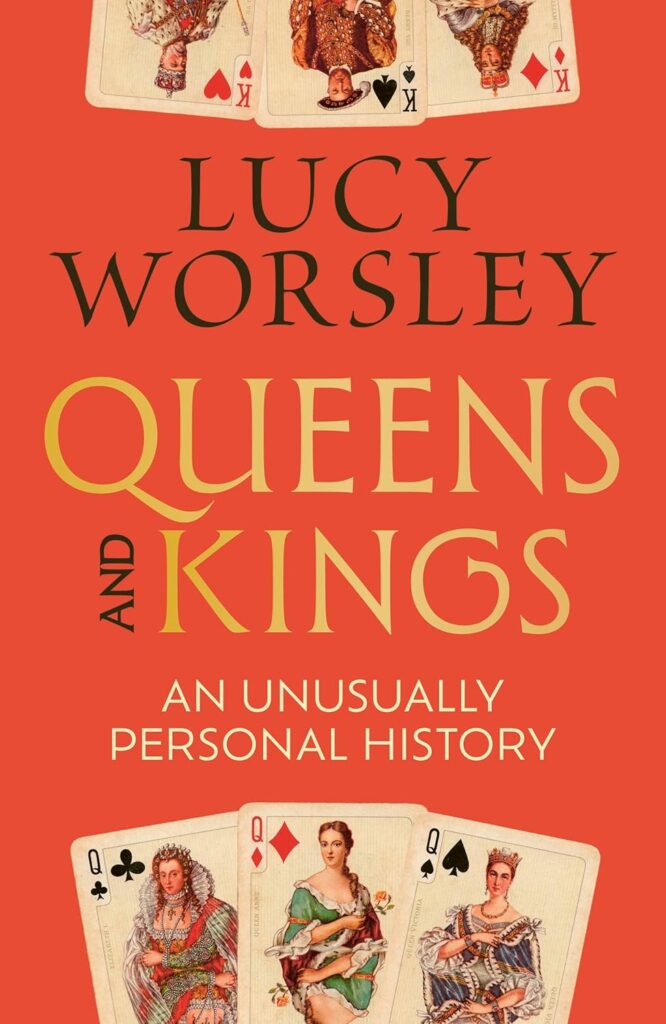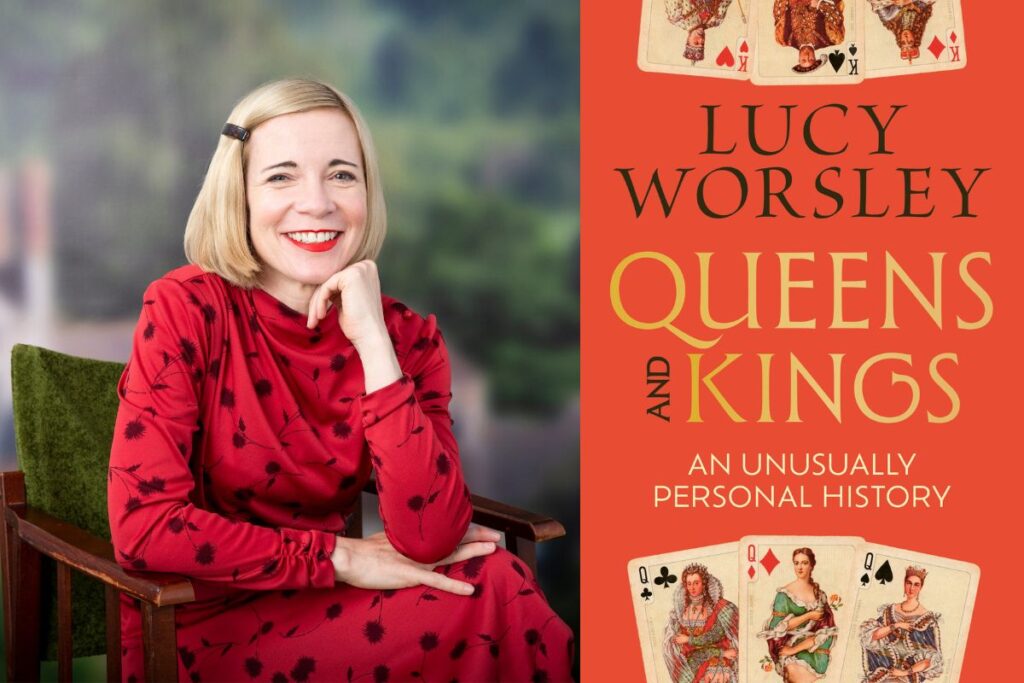
To mark the release of her new book, Queens and Kings: An Unusually Personal History, historian and broadcaster Lucy Worsley shares with us her research process from assembling giant source databases to researching in some of the world’s most beautiful libraries and the one simple productivity trick she swears by.
What does your writing process, from gathering ideas to finishing a manuscript, look like?
The first, and supremely difficult part, is making a start. I like to create a gigantic chronological source database. It can easily contain half-a-million words. From experience I’ve learned that at some point, some sort of a pattern will jump out at me. That moment – when I identify the particular story that I want to tell – is completely thrilling. Next, though, the even more difficult bit begins: the actual writing. Then the third, astronomically-difficult stage: the ruthless, boring polishing of the drafts. Is it all worth it for that one exciting moment? The fact that I’ve now put myself through all this thirteen times, as I’ve written thirteen books, would imply that for me the answer’s ‘yes!’
Where do you start with researching? Do you delve into records straight away?
I attack my topic in two ways, firstly through secondary literature. I don’t relate at all to people who talk about the historian as a lonely, almost heroic, figure, making a chance ‘discovery’ in a ‘dusty archive’. History to me feels like a team sport, where I stand on the shoulders of giants, and I always feel I’m in conversation with the researchers who’ve gone before me. That’s how I start to learn where my archival sources are going to be. At the same time, though, I have to work on the process of arranging access to the material, because if I can’t get it, it’s back to square one.
Where do you research – online, on location, in libraries? If online, which platforms do you use to research?
Wherever the sources are! When I started out, this meant going for weeks to the same archive, transcribing sources in pencil in my notebook, working against the clock until closing time. Now, it often means taking pictures all day. When I was a student working in the Bodleian, I’d often wonder who the adults were I’d see working away so furiously. I realise now, of course, they were researchers who’d spent valuable time and money to be there! I’m lucky that the kind of history I write also often involves visiting a beautiful city or building, to understand what’s significant about it.
What would be your one piece of advice for writers just getting started?
Have you heard of the Pomodoro technique? If not, you’ll find it a magical spell for productivity! Get yourself a timer (the person who gave the technique its name was an Italian whose timer was shaped like a tomato). Set your timer for 25 minutes and start writing. Anyone can concentrate for 25 minutes. No scrolling, no stretching: nothing but pure writing. After 25 minutes you can have a 5-minute break, then go again. I discovered the technique completely by accident. For twenty years I had a 35-minute train commute from London Waterloo to my office at Hampton Court, and I used the journey for writing. Without knowing it, I was following the way of the tomato.