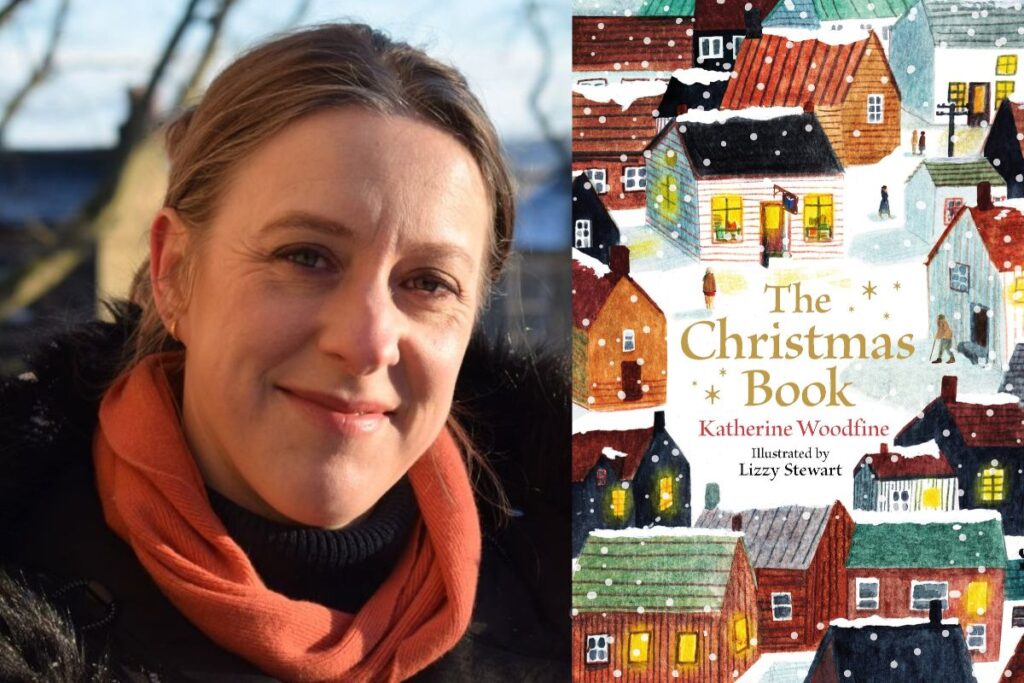
What makes a festive book truly magical? For author Katherine Woodfine, it’s the nostalgic memories, traditions and shared moments of reading together. Here, she reflects on a much-loved family Christmas tradition, the magic of passing books between generations, and the inspiration behind her own festive story, The Christmas Book.
When do you feel the Christmas season truly begins? Perhaps it’s the first time you hear a carol, eat a mince pie, or hang a wreath on your door. For me, it’s always the moment I take out my festive books, which are tucked away in a corner for most of the year, to emerge at the start of December.
Some of these books are relatively new, others worn from Christmases past. There are classics: Lucy and Tom’s Christmas; The Jolly Christmas Postman; Brian Wildsmith’s stunningly beautiful A Christmas Story; The Story of Holly and Ivy by Rumer Godden, which never fails to make me cry. Others are more recent, like Alex T Smith’s delightful How Winston Delivered Christmas or The Shortest Day, a glorious collaboration between illustrator Carson Ellis and author Susan Cooper, who also wrote seasonal classic The Dark is Rising. I often find myself adding something new: this year, Joseph Coelho’s A Christmas Full of Poetry.
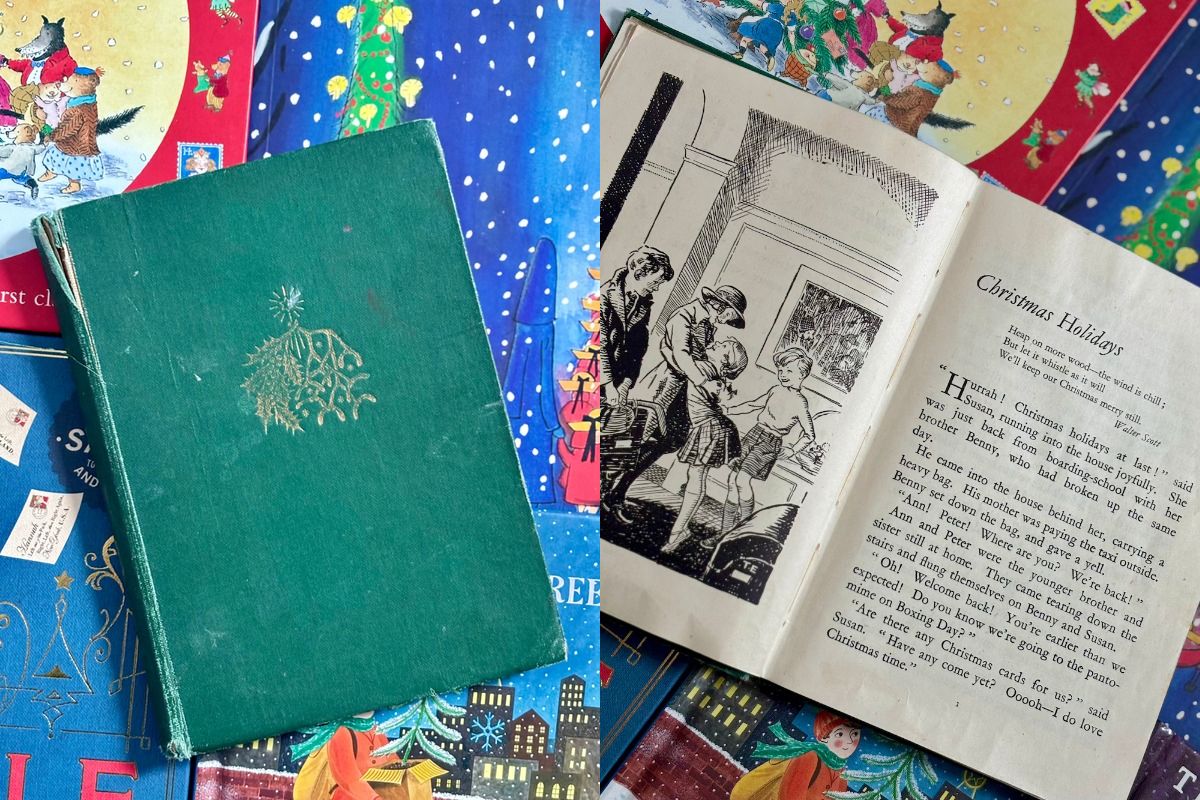
Among this collection is a shabby, battered old hardback, its pine-green cover adorned with a single sprig of mistletoe. It doesn’t look like much, but this is the most precious of all. It’s a 1946 edition of Enid Blyton’s The Christmas Book, which originally belonged to my mum, a relic of her 1950s childhood. Inside, you can see where she has (very neatly) added colour to one of Treyer Evans’s black-and-white illustrations with her paintbox.
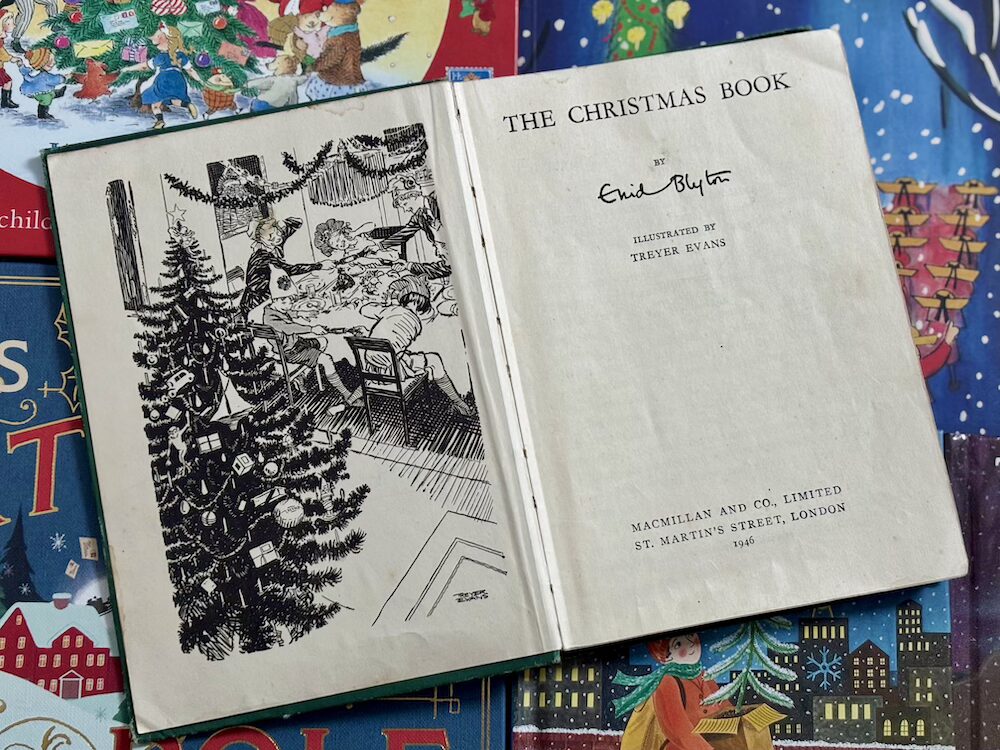
The story is of its time: in it, we follow a middle-class, archetypal Blyton family in the approach to Christmas beginning with the two older children, Peter and Susan, returning from boarding school for the holidays. Some of their preparations are familiar (decorating the tree), others pleasingly archaic (bringing in the Yule Log). Along the way, the children learn the stories behind the Christmas traditions, explained by their all-knowing, pipe-smoking Father (when they ask Mother she actually says: ‘You’d better ask Daddy all these questions… He is cleverer than I am’ — a remark that never failed to outrage me as a child). There are plenty of references to the Nativity story, which is told in full on Christmas Eve; but the real highlight is when youngest child Ann sneaks downstairs late at night, leading to a thrillingly magical encounter with Father Christmas.
This book was a fixture of all my childhood Christmases. My mum and I read a chapter together each night (sometimes skipping over the boring bits or rolling our eyes at the worst Blytonisms), always finishing on Christmas Eve. In turn, my mum has given the book to me, so that I can read it with my own daughter, which has become our own Christmas tradition.
It isn’t really about the story itself, of course. What makes this book magic is the act of sharing it. As my daughter and I settle down together this Christmas Eve to read about Susan, Peter, Benny and Ann meeting Santa, I love knowing we’re part of a tradition that dates back to my mum and her siblings reading it with their mother, my grandmother, on Christmas Eves gone by.
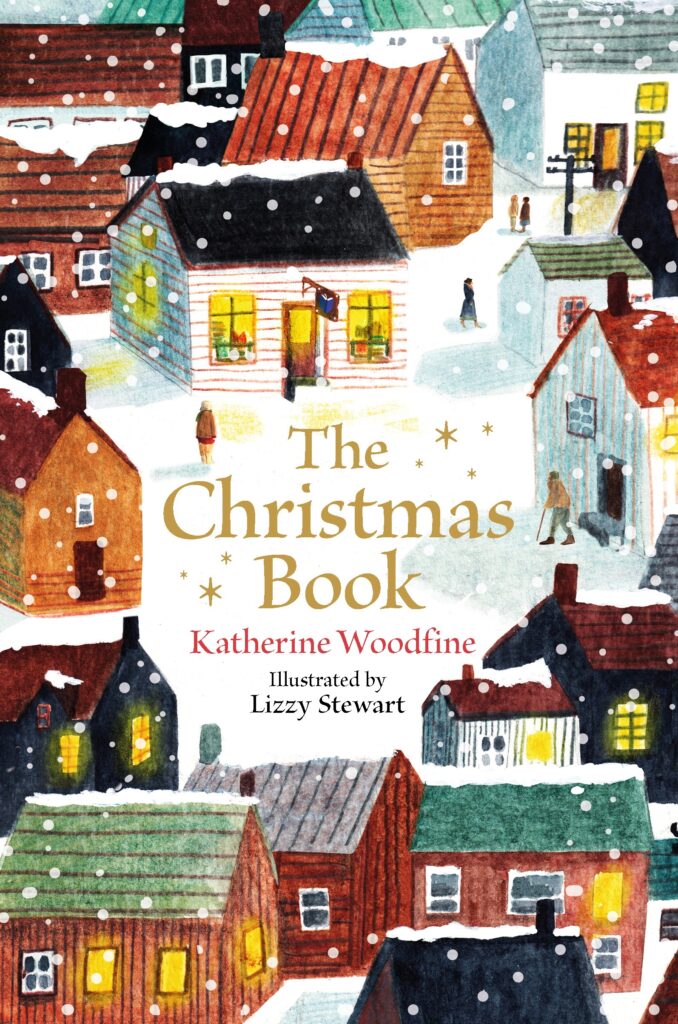
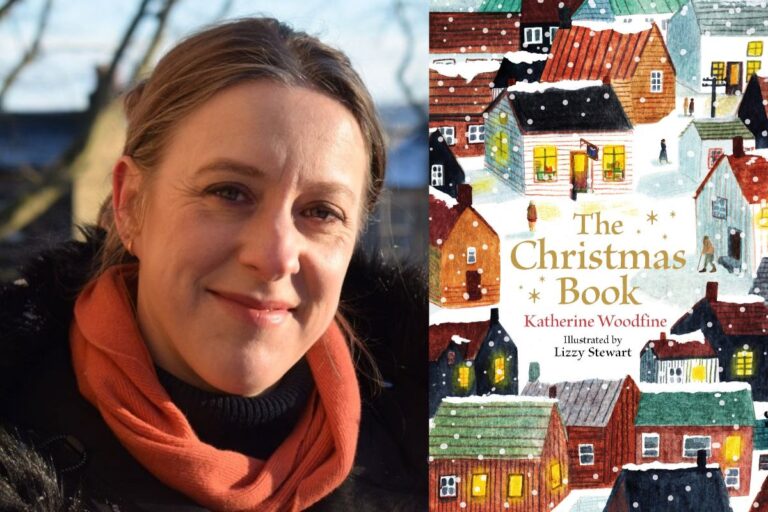
I wanted to conjure up this same particular quality of magic in my own festive book, which in a delightful turn of events, ended up also being titled The Christmas Book. Illustrated by Lizzy Stewart, it is set in Iceland during World War II, around the same time that Blyton’s book was first published. The story is inspired by the Icelandic tradition of Jólabókaflóðið in which books are given as gifts on Christmas Eve, and at heart, it is all about the power of sharing stories with our families, especially at Christmastime. My greatest hope for The Christmas Book is that it too may become part of some treasured festive book collections — and will be shared on many Christmas Eves to come.