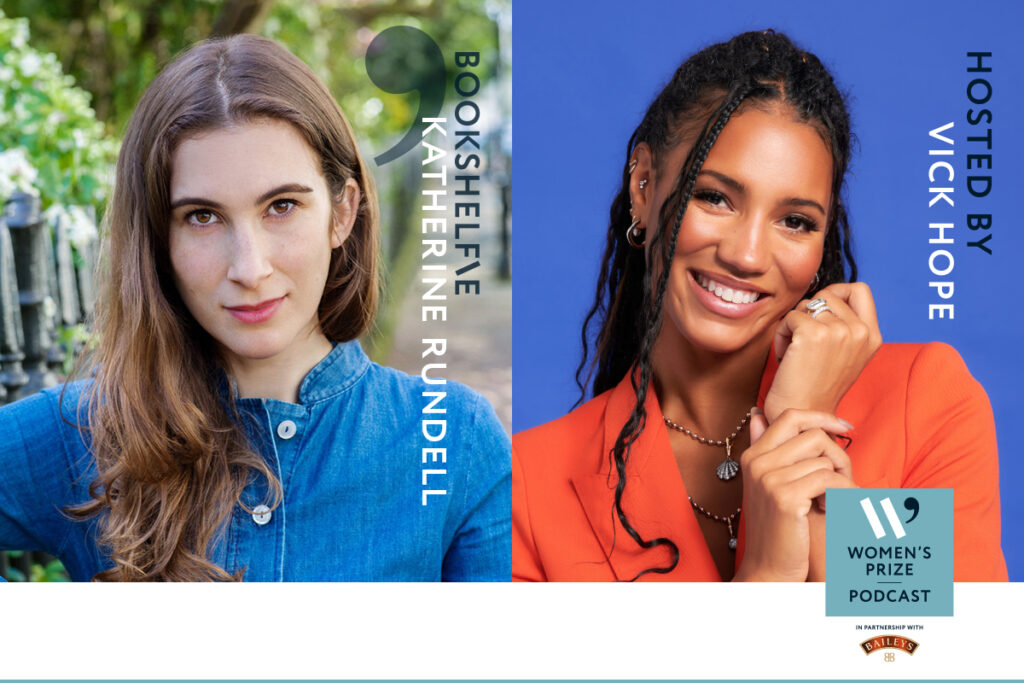
Our host Vick Hope is joined by Katherine Rundell.
Katherine is a multi-million-bestselling author whose novels for children have won the Waterstones Book of the Year, the Blue Peter Book Award and the Costa Children’s Book Award, among many others. In 2024, she was named the British Book Awards Author of the Year, and Impossible Creatures won the Children’s Fiction Book of the Year. She is a Fellow of St Catherine’s College, Oxford, and her books for adults include Super-Infinite, winner of the Baillie Gifford Prize. The third installment of her Impossible Creatures series The Neverfear is out now with Bloomsbury.
Listen to the full episode here and read on to discover Katherine’s five most influential books by women.
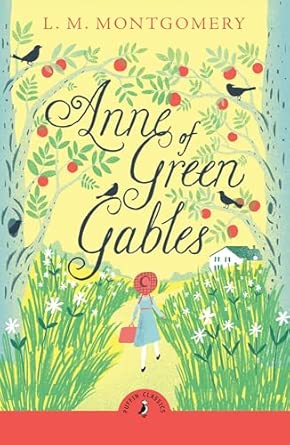
“I think I must have been about eight and I remember falling so in love with this character. I think the vast majority of girls will find something of Anne in themselves because she is so various. You know, she has an intensity and an extrovertedness for the extroverts, but she also has a romance for the romantics. And when I was, I think I must have been about 10, I played her in a like a local amateur dramatics. I had my hair in two little plaits. They didn’t dye it red. Alas, I longed for it, but I was in Zimbabwe at the time and I don’t think we had the hair dye. But it felt like knowing this character is like the process of falling in love. And I do think that when you’re young, if you’re lucky and you find the right book, it is very much akin to falling in love when you’re older. It is this feeling of uncovering something fresh that you didn’t know was there before. And I think that Anne of Green Gables, I think she is one of the most perfect depictions of what it is when you are young to yearn. It’s often said about Huckleberry Thin that he is in many ways a depiction of pure childhood of what it is to be a young boy. I think in many ways, Anne is a depiction of what it is to long for things as a girl.”
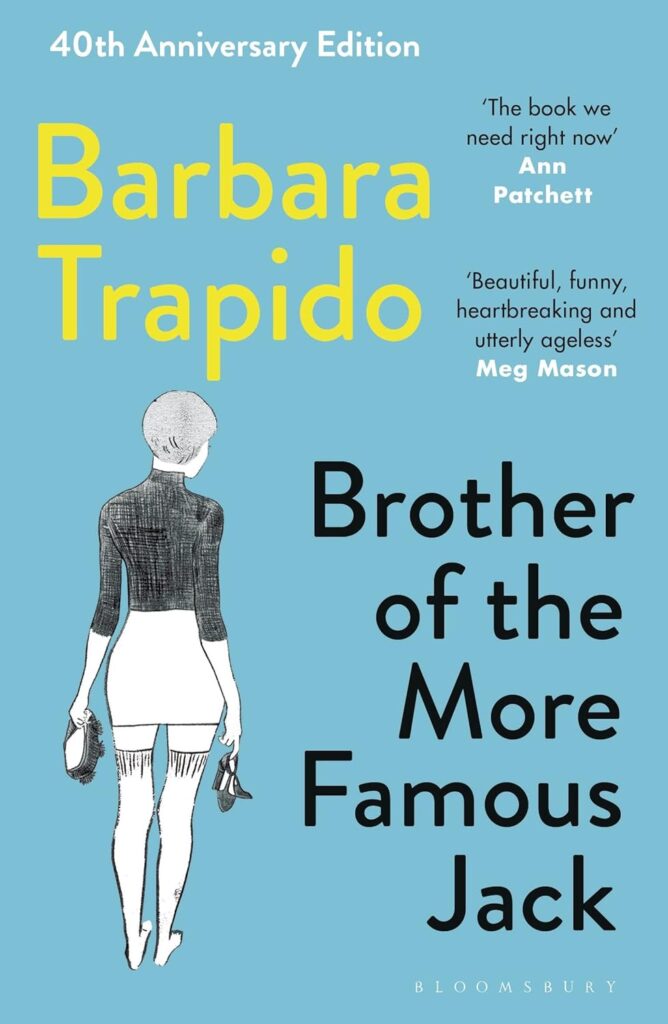
“Barbara Trapido is one of our great living comic writers. And Brother the More Famous Jack, I read it when I…my very early 20s. I think I was 20 years old. And I remember thinking, this is what a book can do in terms of making you feel like there is infinite space for wit in the world, that a joke has its own life, that it sort of resonates outward through your day. She’s also one of those writers who is able to create a sense of family and of intimacy. You long to know that family. You long to be part of that world. But also, I do think one of the great joys of that book is that you read it in a day. It’s not long and it’s easy in the sense of every sentence is delicious. It’s so compelling. You read it with the same easy delight as a thriller and then it lasts in your head. and it resonates in your head, the warmth of it, that it feels like somebody who cared enough about pleasure, about delight, to put it with all her power and all of her clarity of mind into the pages of a book and then you can fish it out when you need it.”
“So this is my favourite book of all time by my favourite writer. And it’s one that I think you could read 20 or 100 times and still discover something new in it every time. Jane Austen herself said, I’m writing a character that I think nobody but myself will much like. She has been proved wrong over the next hundreds of years in that. I love Emma Woodhouse. I love the idea that Austen insisted that this woman is flawed, that she is frustrating, that she is delusional in places, that she is deeply mistaken about the impact of her own actions on the world. And yet she is worth our attention, our time and our love. I love also the plot. It’s fantastic, you can read it almost like a murder mystery, you know, that it has a secret at the heart of it. You know, what is Frank Churchill’s relationship to the village? What is his relationship to Jane? Who is Emma, in fact, truly in love with? Who is Harriet in love with? These questions, they play out. The book is full of riddles. So they play at writing out riddles. They play at word games where you pick out letters to form words. It’s a book of riddles. And there is this idea that the human heart is a riddle and that Jane Austen is in some ways giving us some of the keys to that riddle. But also at the conclusion of the book. You still know that the riddle endures and continues. The riddle of the heart will always endure.”
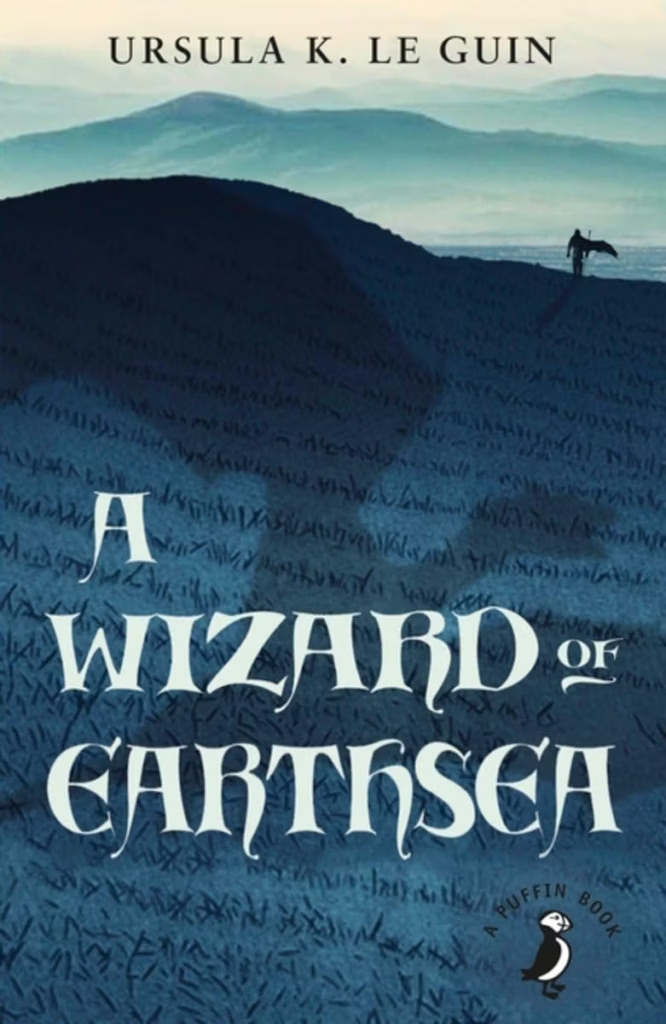
“I love this book. This is one that I would try to get to every child in the world. I love the way that it has established without doubt that you can write a book that is, if you were to describe its plot, absurd, full of dragons, people talking in ancient languages to dragons, summoning magical trees and strange spirits, and also be a book about power and about dread and about horror and about courage. And she wrote it for 14, 15-year-olds. She refused to condescend to the young. And one of the things that I, as a young person, found most frustrating is the way that we consistently talk down to children, that we consistently underestimate their intelligence. We fail to remember that their love is real love, their fear is real fear, their delight is real delight, that these are not sort of flimsy facsimiles of adult emotions, that a child has the same profundity, just not the same breadth of horizon. And she wrote a book that acknowledges that, that does honour to a child’s intelligence.”
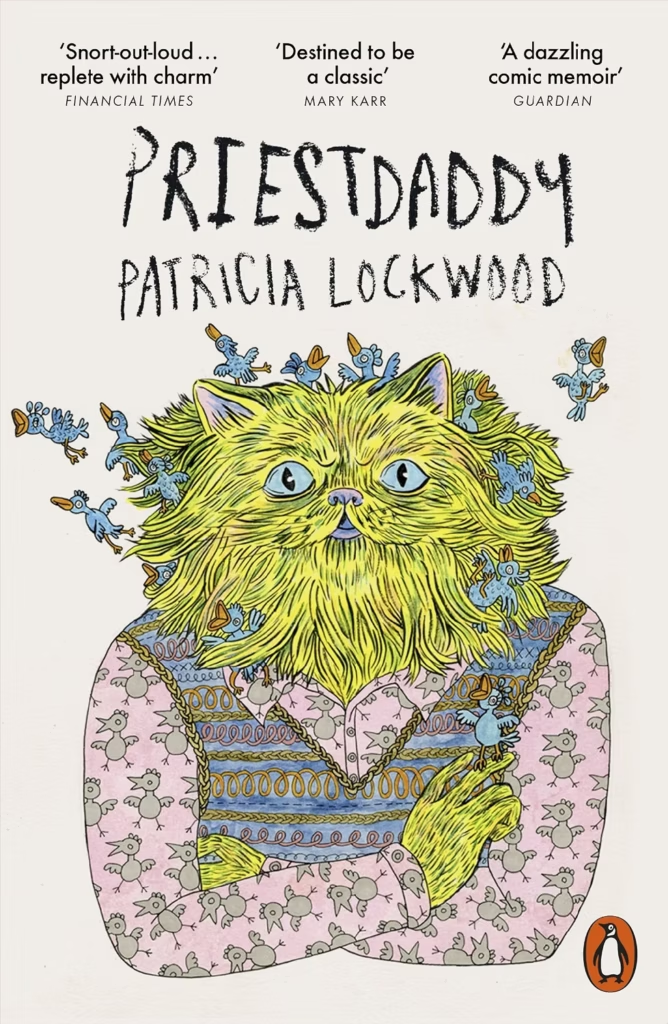
“I think she must be one of the finest living writers that we have. Her mind is not like any other mind on the planet. And one of the great gifts that writers like her have is being able to capture that and put it on paper. I, when I read it, it was like the top of my head came off. I had never read anything like it. It is the most idiosyncratic book I’d read of the last decade. And it is also… incredibly readable. It’s so funny. It’s so pacy. And so I read it. I immediately bought one for my partner and for my best friend. And then I just bulk bought them.”