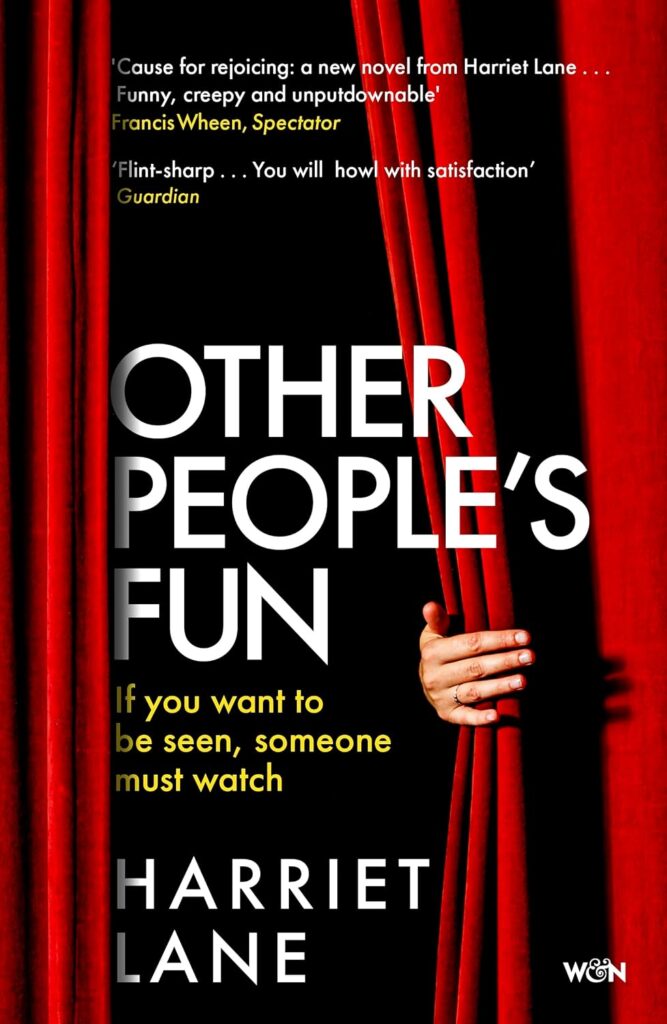
To celebrate the paperback release of Other People’s Fun, we caught up with author and editor Harriet Lane to learn more about her writing process and workspace.
Where do you write?
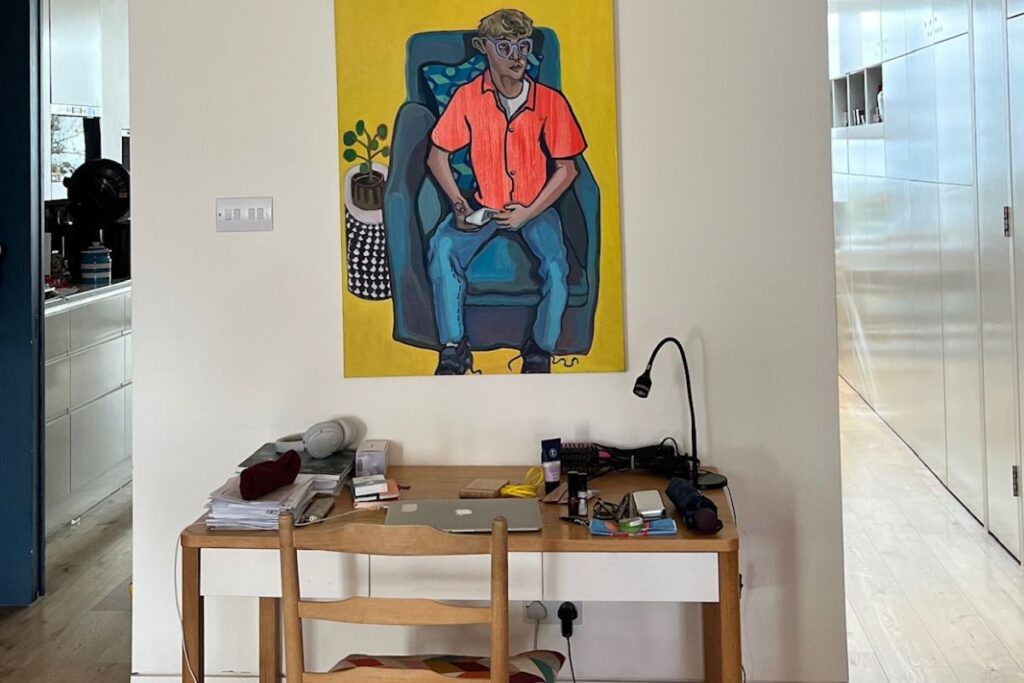
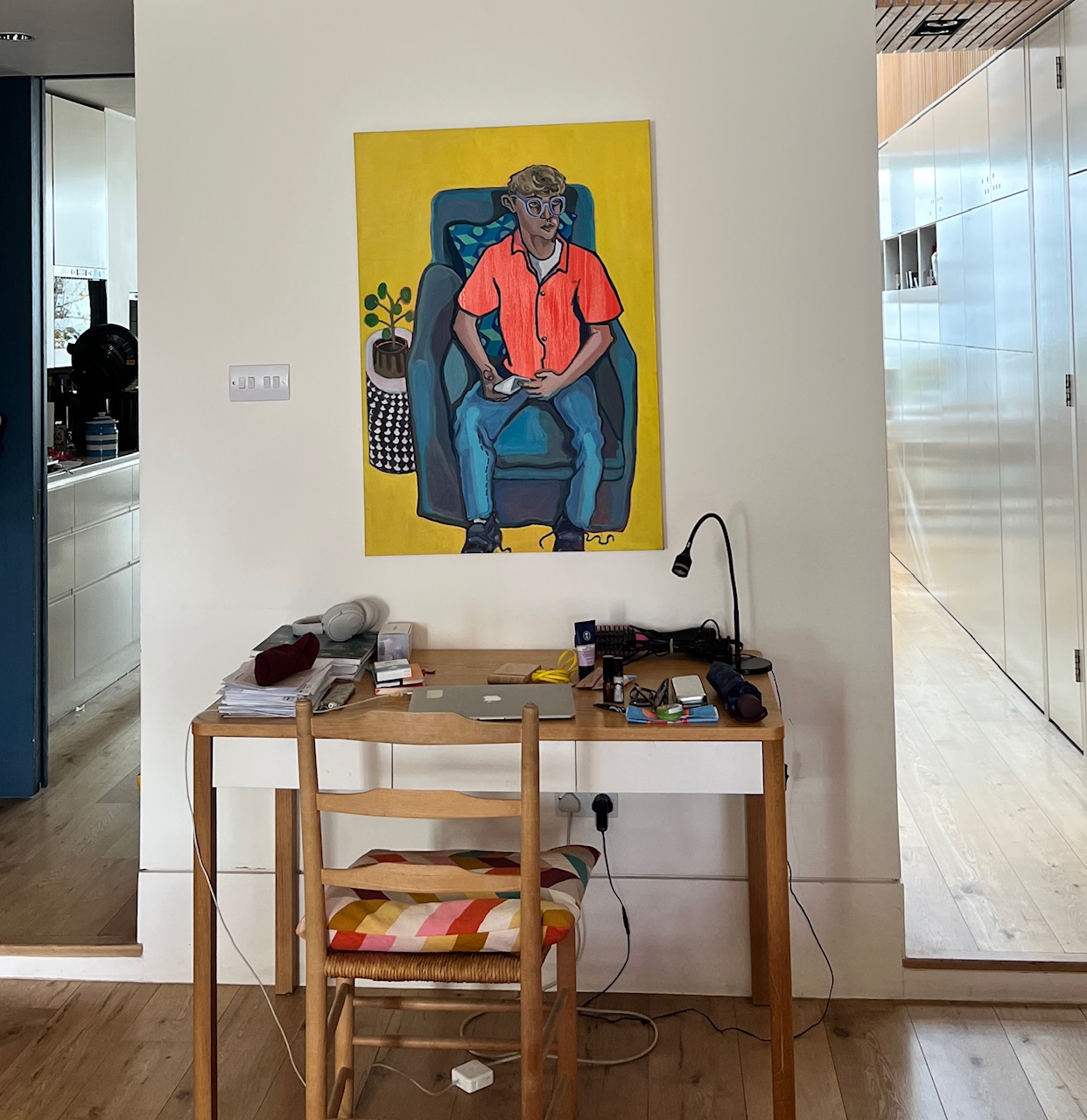
I have a study, but as most of this year has been spent recovering from major surgery I haven’t been in there much. In my absence the study has been commandeered by my children, who have repurposed it as a Vinted warehouse/photographic studio/dispatch hub, an art storage facility, and a place to park gigantic wheely suitcases. I’ve adopted a new (hopefully temporary) workspace at the back of the sitting room.
What do you have on your desk?
Piles of unopened mail, (clean) socks, umbrella, Tirzah Garwood catalogue, four tubes of hand cream, headphones, lavender oil roller, charger, heated brush, notebooks, three pairs of specs, task lamp (broken), MacBook Air.
Which is the most inspiring object in your workspace?
My daughter Poppy Critchlow is a painter, and her portrait of her brother at 17 hangs over my desk in the sitting room. She painted him in the summer of 2022 when she was still at university, two years before she started her master’s at the Royal College of Art. It shows her growing confidence as an artist and gives me so much pleasure on a daily basis. The colours, the patterns, his attitude, the wormy wiggle of the undone shoelaces at the very edge of the canvas.
What does your writing process, from gathering ideas to finishing a manuscript, look like?
I am not someone who presses ‘send’ and immediately creates a new document for the next novel: I find the editing and publication process pretty absorbing/demanding and can only properly inhabit one world at a time. But at some point, an idea will catch my attention, I’ll notice myself idly collecting names or overheard remarks, and I know it’s beginning again. It’s a matter of finding a character I’ll be able to spend months with, someone with a clear, compelling voice and an interesting story. I make a rough plan and write from start to finish, scene by scene (I think in scenes rather than chapters). I need to know how I’m going to end it, what I’m working towards.
What can you see from your window?
My back is to the sitting-room window but if I turn around and look out at my unremarkable north London street there’s always something going on: children throwing tantrums on the way to school, drug deals, couples hurrying to the labour ward over the road, a blackbird on a chimney pot, traffic wardens, foxes.
Have you ever had a particularly good piece of writing advice?
In On Writing, Stephen King recommends a walk or a nap when you’re stuck. He says a solution often presents itself when you take a break or get busy with something else (I go to the cinema). He calls this ‘leaving it to the boys in the basement’.