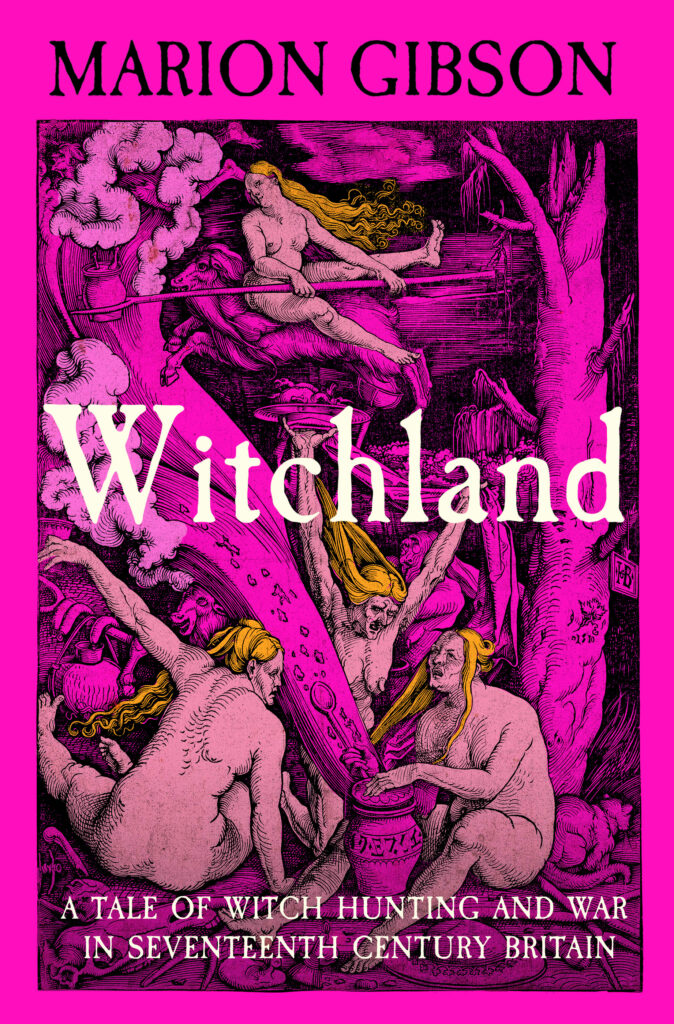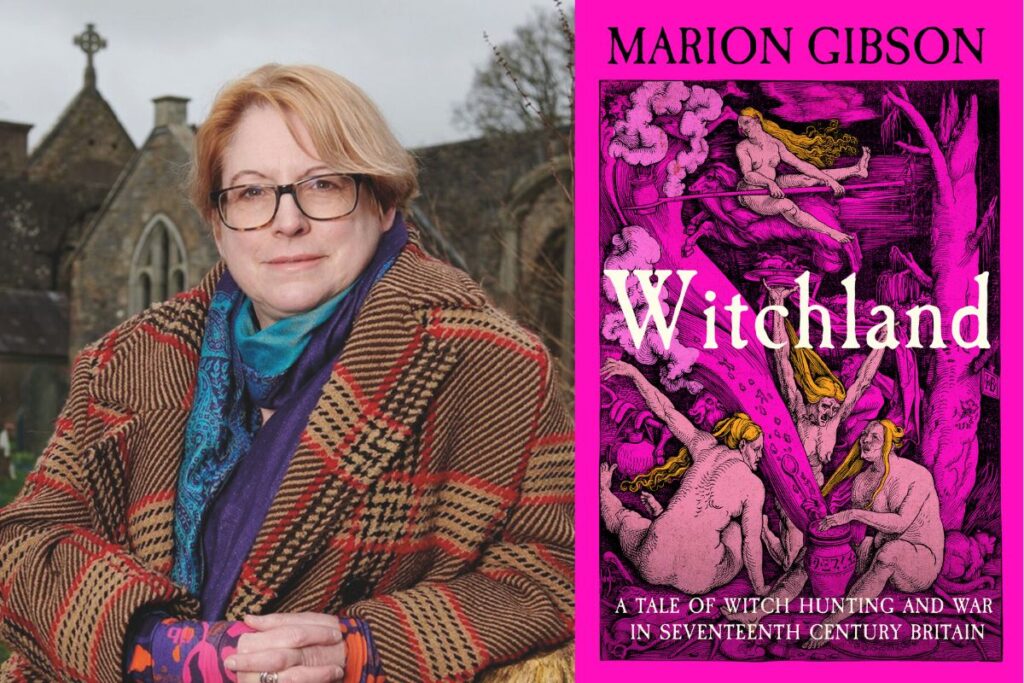
To mark the publication of her new book Witchland, Marion Gibson shares with us her passion for writing about witch trials, the duty she feels to bring to light people’s stories from the past, and where to start if you’re looking to build a wider readership for your research.
There’s nothing complex about my motive for writing non-fiction history books. It’s simple: I’ve always loved researching the past and telling the true stories I find there. Research is a passport to a different world, a time-travel machine, a lifeboat when things get tough here and now. There’s something freeing about researching someone else’s experiences, lived and recorded several centuries ago. It forces me to pay attention to the things that mattered to them. What were the threats in their time and place? What pleased or vexed them? Were they stressed, bored, frightened, angry, triumphant, joyful? As I empathise with them, my own troubles recede into the background. And I ask myself: what would I have felt – and done – in their place?
This is especially helpful when I’m writing histories of witch trials. I feel empathy primarily for those accused of witchcraft, of course, but I can enter imaginatively into the worlds of their accusers too. They had suffered bereavement, illness and financial loss, and thought they were being attacked by supernatural forces: in a world saturated by religiosity and fearful of the devil, I might have thought the same. Few people had the courage to think differently, although in Witchland, I write about some that did: defenders of accused witches, people who tried to turn the tide of hate and persecution.
Every now and again, I find a story so moving or surprising that I can’t stop thinking – or feeling – about it. In Witchland, there’s the case of a woman with the same name as me: Marion Gibson. She was accused of witchcraft in Scotland in the 1640s. My name’s unusual: what are the chances of there being another “me” out there in history, waiting for her story to be found? Even when, as in Marion’s case, there are few sources to help me recreate her world, her life still matters and, since it interests me so much, I know other people will want to read about it too. That sense of duty to the people of the past – people like me and you – keeps me writing. I trust that the stories I find will matter to readers, because they grip me so tightly.
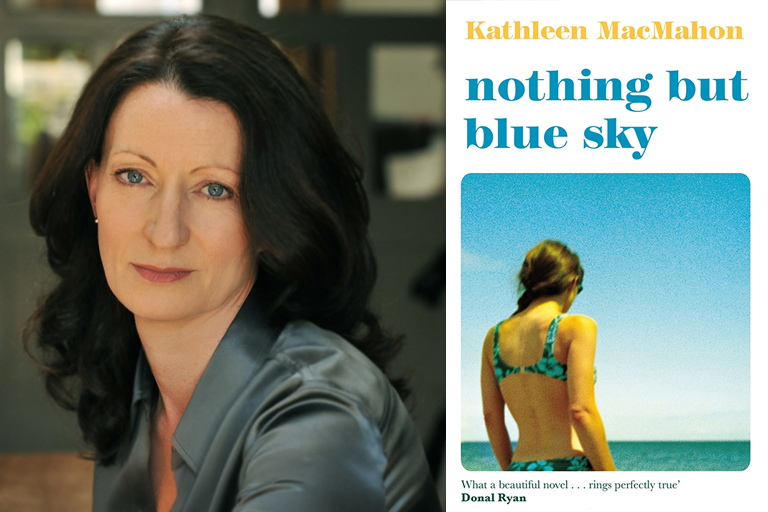
I learnt to research and write at university, both as a student and as a lecturer. In all, I spent 30 years thinking about English Literature and history: reading the best fiction, from Macbeth to Middlemarch, and getting excited about historical facts. All of that can be done outside academia and I recommend it. In 2025, I decided to leave employment and write full time, building on the reception of my first trade non-fiction book, Witchcraft: A History in Thirteen Trials. I was lucky to be the right age and in the right position to do that – and luck plays a big part in any such process – but it was still a terrible severance, cutting away a professional self that I’d inhabited for three decades, leaping into an uncertain future.
There have been 30,000 redundancies in Britain’s universities in the past two years and a new wave is building. The same is happening in other countries, mostly to the subjects grouped under the titles “humanities” and “arts”. Some of you reading this will be swept up in this wave, struggling with grief and panic and not sure what comes next. Others will already be out of academia, swimming hard towards calmer waters. Some of you will have studied at university in the past, others will be working on essays, creative writing or a PhD right now. And if you’re reading this, you probably want to do something more with your work – the research you’ve done, the unique stories you have to tell. If you’ve got this far, you’re moving towards doing it for real.
Consider next steps, if you feel ready. To help you see your work clearly, can you sum up in a sentence what you might offer to a wider readership? Could you sign up with a website that lists experts, so media researchers and publishers can find you? Could you take an online course on writing trade book proposals? Could you publicise yourself: on social media, a podcast or blog, local radio or TV, to start telling your stories? Could you make connections to help you write in new ways: journalists, publishers, agents, content producers? If you love your research and writing, and know you do it well, what can you do with it next?